
Down the hill from the Davis Building at UTM, past the rustic Alumni Building and through the surrounding woods, lies a hidden-in-plain-sight cemetery that has been in use since 1827.
This is the cemetery of St. Peter’s Anglican — a church founded in 1825 by the pioneers of Erindale, a township you may recognize as the source of UTM’s original name: Erindale College. The building has remained a community hub for 200 years since then, through world wars, the Rebellion of Upper Canada, pandemics, and everything else that has made Mississauga into the city it is today.
The church is tied intrinsically to the land on which we study. And to some people, the connection is spiritual — and I’m not talking about religion.
Rumors
“I bike by there, and sometimes, I see something out of the corner of my eye, and I get a shiver up my spine,” confided one third-year UTM student, who told me there are rumours that St. Peter’s is haunted.
She’s not the only one who has heard these stories; I spoke with Matthew Wilkinson, a historian who develops the popular Haunted Mississauga tours. Wilkinson works with Heritage Mississauga, an organization that aims to celebrate the city through research and learning. This year’s sold-out event took place at none other than St. Peter’s itself, and advertised the opportunity to explore “the legends and mysteries” tied to the church.
I spoke to Wilkinson about the event and his thoughts on the alleged hauntings.
Haunted Heritage Mississauga
“Haunted Mississauga is the worst descriptor,” Wilkinson said. The focus is on the historical setting and people — the real local legends.
“It’s never been about just telling ghost stories.”
Is St. Peter’s haunted?
Wilkinson has heard this question many times before, and says his answer remains the same:
“Do I believe in ghosts? No. Are there things I can’t explain? Yes.”
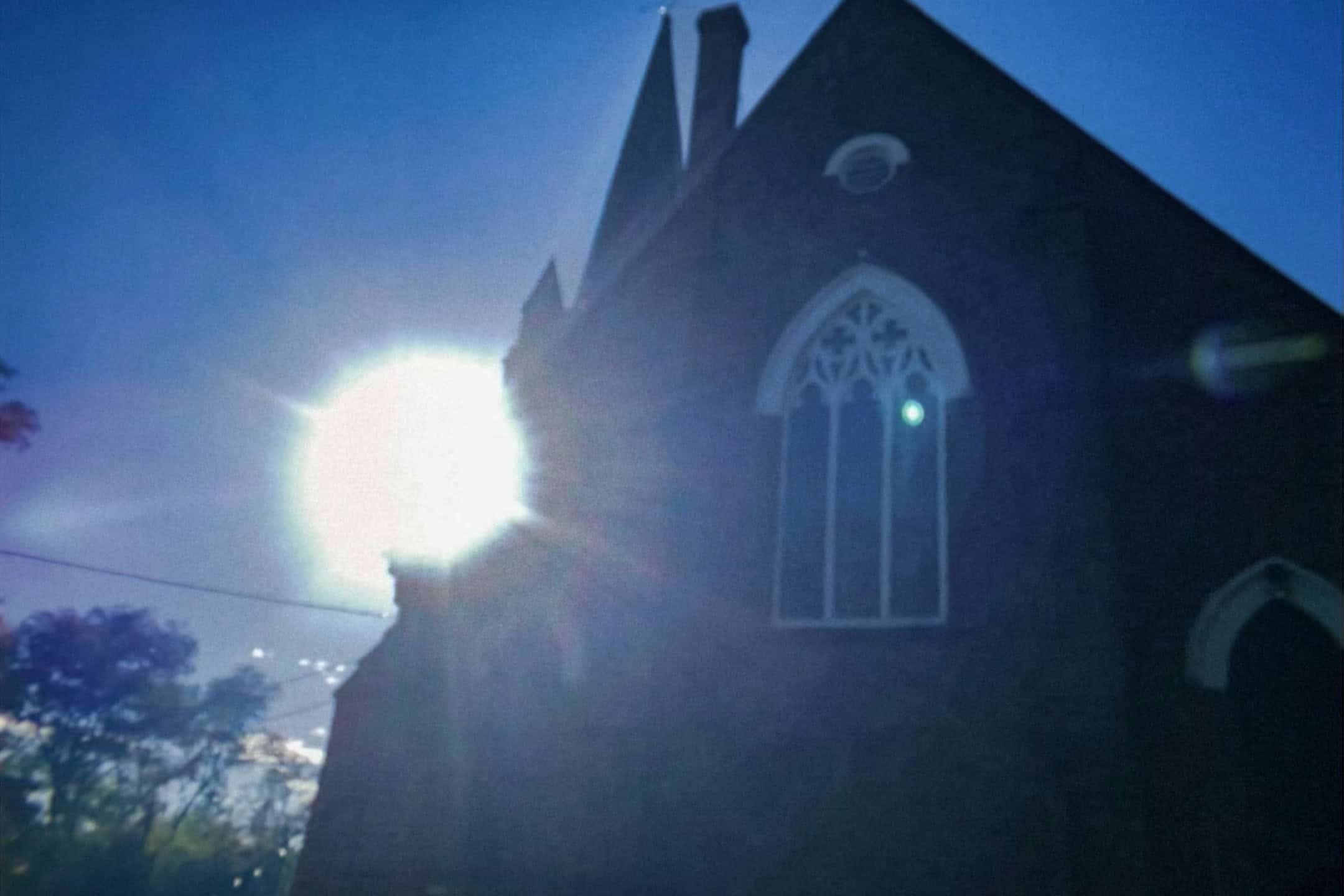
Most of the chilling supernatural occurrences shared with Wilkinson came from locals exploring the church grounds. While he can’t verify any accounts, alleged evidence includes “orbs and energy” at St. Peter’s. According to him, some believe that the deceased leave behind “residual spirit energy,” which manifests in photos as balls of energy, sparkles of green light, and shadows.
Visiting
Hearing all this, I knew I had to explore St. Peter’s myself. On a sunny fall day, I trekked all the way up the infamous hill.
My first impression of the cemetery was how beautiful it was — nineteenth-century graves stood tall, with clean and smooth headstones that matched perfectly with those from recent years, all nestled in trimmed green grass. Among them were numerous benches and even birdhouses, creating a comforting environment for the bereaved.
The state of the grounds should come as no surprise; St. Peter’s Museum and Archives Chair, Kimberley Lemiski, informed me that their Cemetery Committee, headed by Thom Wigle, regularly cleans and repairs headstones, honouring the memory of the parishioners, veterans and others who are buried there.
Ghost orbs
I still had to investigate the allegations of ghostly orbs myself, so before leaving, I snapped a photo of the back of the church.
Lo and behold, there it was: a glowing green sphere in each photo, just like Wilkinson said. Right there, parallel to the sun.
These “orbs” are what photographers refer to as lens flare: the reflection of sunlight through the multiple pieces of glass that modern camera lenses are made out of, appearing as spheres in different colours.
So, with the warm atmosphere and no convincing photographic evidence, I can’t say that I found St. Peter’s to be particularly eerie.
So why all the haunting rumours?
While culturally, people associate hauntings with tragedy, what Lemiski explained about the church’s history was anything but tragic. From the volunteer labour that built the church and continues to maintain the grounds, to the community supports such as The Deacon’s Cupboard food program, the church is what Lemiski describes as “full of life and powerful faith.”
So how exactly does a place with such a history get associated with ghastly hauntings? Wilkinson attributes it to a desire for connection.
“Exploring the spirits is a different way of connecting to the place in which you live, just like genealogy and property research.”
Perhaps that’s all there truly is to “haunted” historical monuments: the human desire to connect with those before us, meshed with cultural notions of spirits and ghosts.
I can’t tell you what to think. All I can say for certain is that St. Peter’s has been, and continues to be, a foundational pillar of the Erindale community.
