
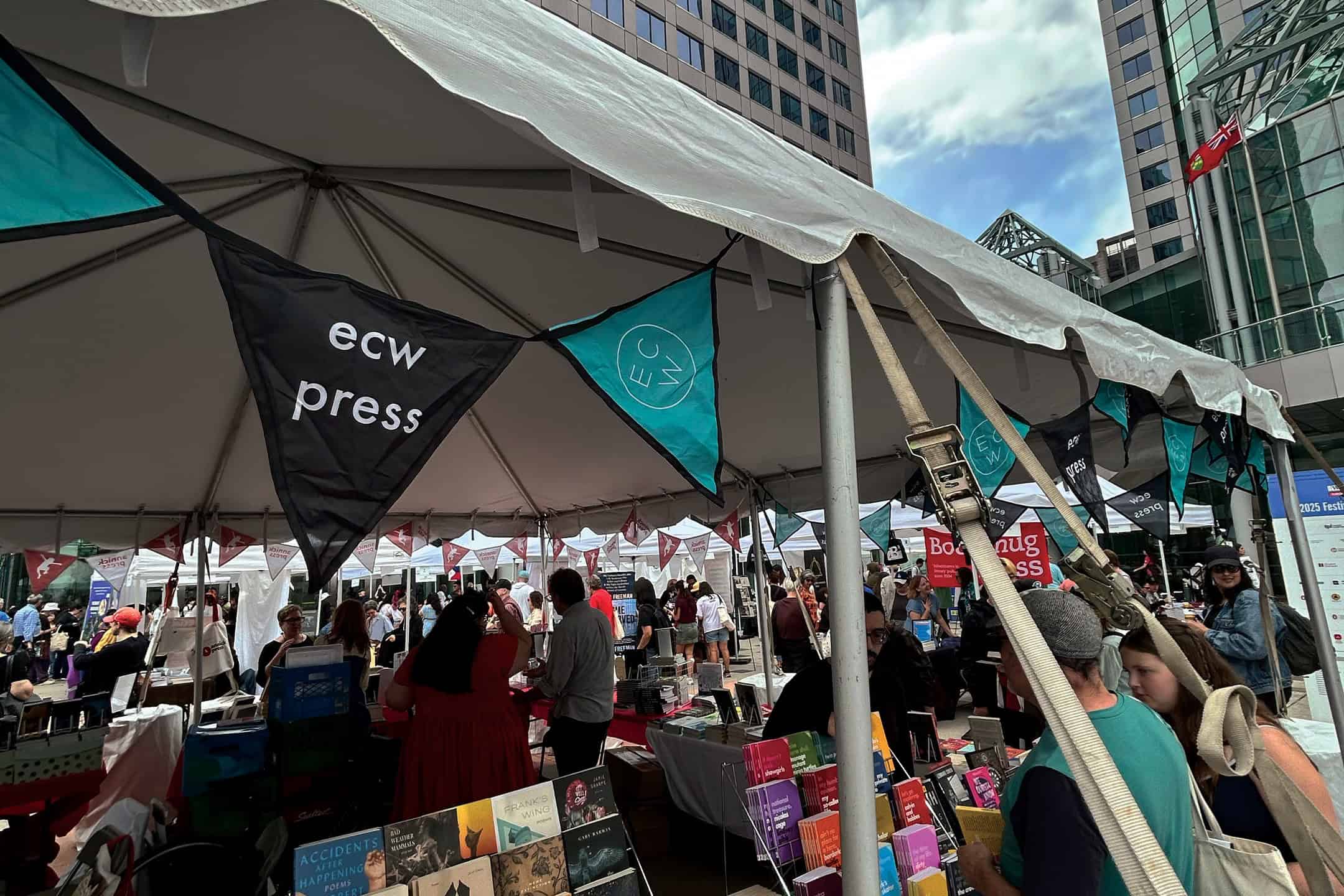
On the last weekend of September, the Word on the Street (WOTS) festival took place at David Pecaut Square in downtown Toronto. WOTS is a free annual outdoor event and marketplace for bookstores, readings, author signings, and other programming for literary enthusiasts.
The two-day event was attended by a large crowd from Toronto and all over Canada. The festival brings together different corners of the Canadian literary scene and is the perfect introduction for newcomers to the industry. This year’s programming platformed a diverse group of publishers, businesses, and publications.
Independent Canadian publishers
Independent publishers took centre stage at WOTS and represented the variety in the readership of the country. Brick Books — a Kingston-based poetry publishing house that aims to highlight urgent voices in poetry and reconnect the aesthetic of words with their political meaning — had a table full of Canadian poets.
Alayna Munce, their publisher, said in an interview with The Varsity that WOTS is great for their business. The festival boosts sales and provides exposure to their poets. It also allows the press to interact with customers and authors in person, which facilitates much-needed human connection. This connection, she said, is “really important to have a thriving, grassroots literary discourse.”
One of their poets, Ronna Bloom, author of In a Riptide, held a poetry prescription workshop on Saturday. In the workshop, Bloom would invite you to sit across from her, close your eyes and reach for an emotion inside that was bothering you.
I asked for a poem for some personal bravery. Bloom’s face lit up at my request, and she shuffled through her poems to retrieve the first stanza from “Variation on a Theme by Rilke” by Denise Levertov. She recited the stanza unfalteringly and instructed me to use the poem as many times as needed. This act of poetic theatre reinforced Brick Book’s mission to voice the feelings that cannot be expressed outside the literary form.
WOTS is also a great opportunity for literary newcomers to connect with employers. Britt Landry, a Publishing Assistant at Book*hug Press — a Toronto-based publisher of Canadian literary fiction, translated literature, poetry, and narrative nonfiction — got her start by interacting with the press as a festival-goer. She sees the festival as “… a safe space for literary people of all types,” and thinks it’s important for the community to see where the books are coming from.
The festival also allows small publishers who specialize in literary niches to promote their businesses and writers. Two such publishers at WOTS this year, Gordon Hill Press and Sick Stories, both centre disabled voices. Gordon Hill Press, who publish poetry, innovative fiction, lyric non-fiction, and literary criticism in Guelph, emphasize writers living with invisible disabilities.
Sick Stories is a Toronto-based micropublisher and bookstore that focuses on disability, chronic illness, and mental illness, and is rooted in the discipline of Mad studies. Sophie Lyons, their founder, told The Varsity, “Our mission is really to amplify disabled voices and give them more visibility in the bookshelf.”
She also mentioned how important WOTS was for raising awareness for them as a disabled-owned business. “We’re often seen as a charity place or expected to be a non-profit just because we’re disabled. We don’t get access to government benefits very easily and have to support ourselves with paid work just like everybody else.” WOTS is an avenue for businesses like theirs to meet new customers and build connections that they wouldn’t otherwise.
Magazines
The festival also dedicated a section to Canadian magazines in Zone A. Eleni Zaptses, the managing editor of literary magazine The New Quarterly, told The Varsity, “I think there is something to be said of that face-to-face connection and really impressing on people the importance of the magic of literature.” She emphasized the importance of funding free events like the festival so that readers can continue to be exposed to the Canadian literary marketplace.
Riddle Fence Magazine, a literary magazine from St. John’s, was able to exhibit at WOTS through a grant from the Canada Council for the Arts. Executive Director Elisabeth de Mariaffi told The Varsity that exhibiting for even a day last year was such a success for the magazine that they decided to commit to both days this year.
“Something that I think is really important for people to understand is that in order for us to have literary cultural output, we have to support emerging writers, and literary magazines like ours are the first stage publication for emerging writers,” she added, on the role that small publications like hers play in the landscape.
Bookstores
WOTS also introduces festival-goers to independent bookstores that are an essential part of Toronto’s literary culture. One such bookstore, Another Story Bookshop, with a reputation for championing social justice and community, is dedicated to highlighting books and literary events that truly reflect the diversity of Toronto’s population.
Saul Freedman-Lawson, a bookseller there, told The Varsity that the downtown location of WOTS allows the Roncesvalles-based business to connect with people who might not visit the East End frequently.
They echoed the importance of free events like this by saying, “I would love to see less funding going to prizes and awards and more going into grants and community events. Things that bring a lot of people together and raise the arts a lot of money.”
The role of the festival
The sizable impact of WOTS on the Canadian literary community is seen in how many people, publications, and artists diligently attend the festival every year. Because the festival is free and accessible to the public, it draws in a varied and ever-expanding audience.
WOTS helps to shape Toronto’s identity as a city by providing its artists with opportunities, connections, and jobs. Author and illustrator Jillian Tamaki said to The Varsity, “People want to visit big cities like Toronto for the culture, for the food, for the people, literature, for the art!… Give all the money to artists and make the rent cheap, and cool culture can happen that way!”
Festivals like WOTS are integral to keeping the industry full of new blood. The importance it holds in Torontonians and Canadians shows how the arts can unite different communities in building a future that allows for difference and innovation.

No comments to display.