
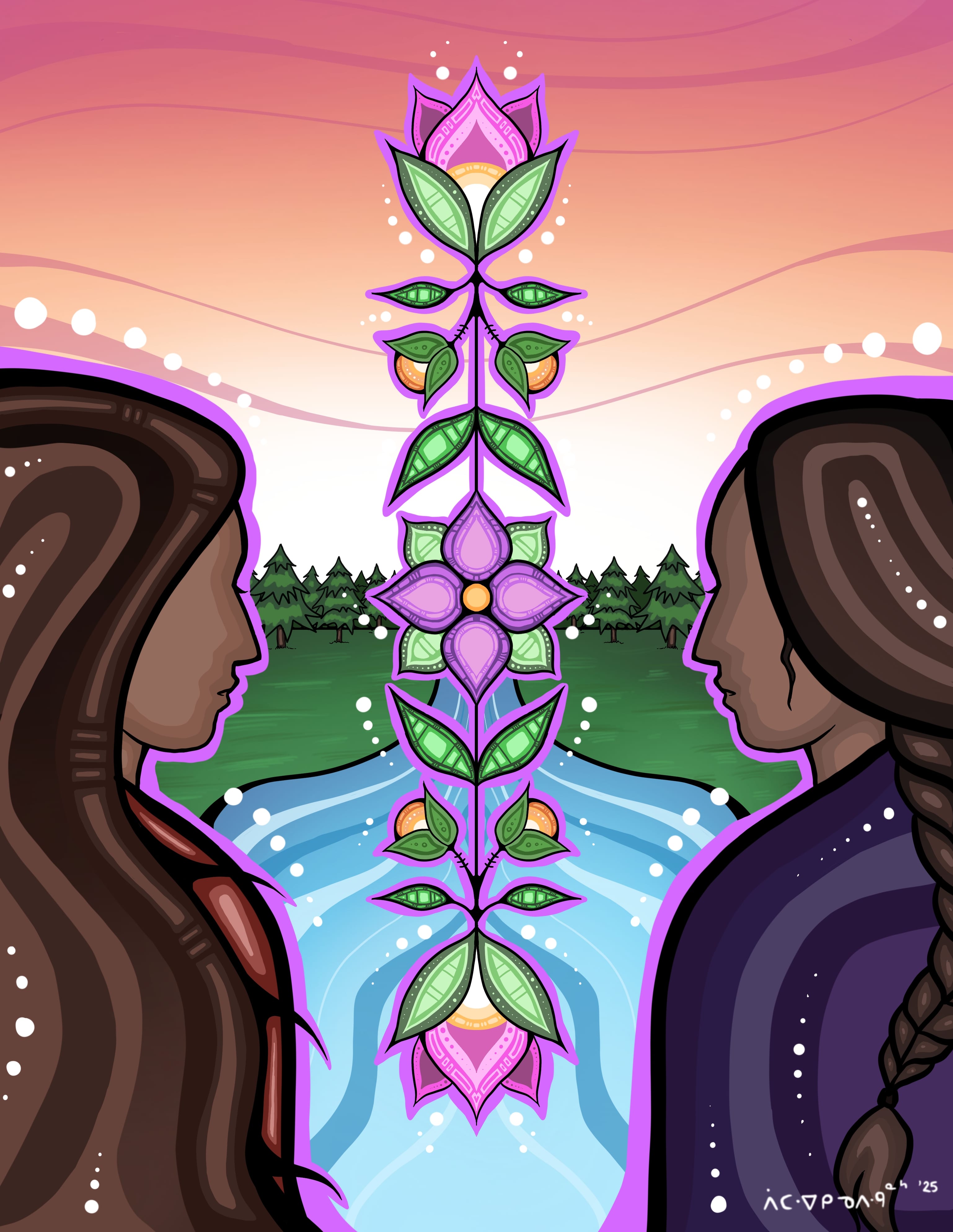
My relationality to the land is accumulated through my lived experiences as a Two-Spirit Anishinaabekwe, realities of mobilization to an urban space, and my encounters with spirituality.
Over the past year, I have spent much thought about how I exist on nimaamaa-aki, Mother Earth. I had the opportunity this summer to participate in SOC437H5 Mnidoo Mnising Indigenous Field School led by Paul Pritchard and Dani Kwan-Lafond this summer. This course provided access to closed-ceremonies, cultural activities, and land-based education that I would not have access to here in Tkaronto.
A prominent theme amongst my educational journey during this trip was my reconnection with water. I spent time in the water ceremony, swimming, and releasing tears. Having spent time learning from water’s teachings, I felt this connection deepen even further during our time at Wikwemikong’s Annual Cultural Festival. I had the opportunity to dance in my jingle dress during the Jingle Dress Special Honouring Nibi.
My piece, titled “nibi bimijiwaninig” or “ᓰᐱ ᐱᒥᒋᐗᓂᓂᒃ”, focuses on the movement of water bodies and the sacredness that water carriers hold. Female-bodied individuals are described as water carriers, as our ability to give life and hold specific knowledge in relation to the spirit of water remains distinct. Water, or nibi, holds spiritual and physical healing properties. My learning journey on the land has been guided by witnessing the healing power of water, to honour water.
It is more important than ever that I encourage my Indigenous peers to honour waterways and reciprocal relations to the land. Referring back to traditional teachings and passed-on knowledge of reciprocity has been a grounding practice in my time at university. Honouring the land offers clarity in my positionality within the intricacies of my academic experience. Holding true to my relationship with the land guides me in how I move, learn, and grow within my surroundings.

No comments to display.