
Canada prides itself on upholding the Rule of Law, presenting its constitutional framework, democratic principles, and commitment to human rights as defining components of the country. Despite promoting this image, a closer look reveals a different reality. Canada has not consistently honoured the treaties that laid the foundation for its formation.
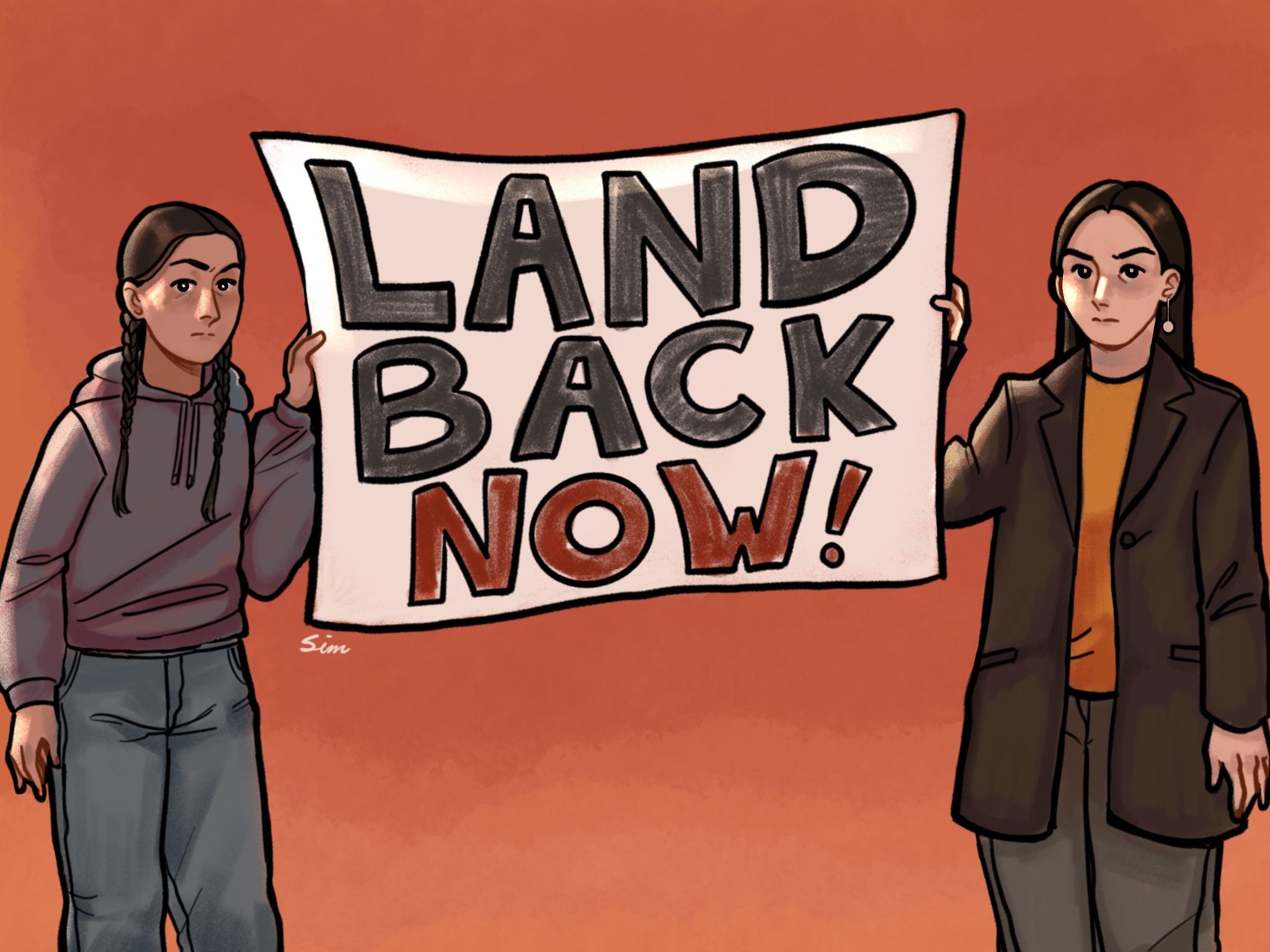
I believe that the Land Back movement –– an ongoing Indigenous-led movement which calls for the return of land to Indigenous communities –– draws attention to the tension between the Rule of Law and Canada’s lack of respect for treaties, as a constructive call for accountability and transparency. True justice requires more than performative acts of reconciliation. Land Back necessitates that Canada honour the treaty agreements and commitments made to Indigenous nations and to return land to Indigenous communities.
Canada’s constitutional framework, established through the “British North America Act, 1867,” and reaffirmed by “the Constitution Act, 1982,” advocates the principle of equality under law. However, Canada’s inability to uphold treaty rights reveals a gap between principle and practice.
The Rule of Law forms the foundation of the Canadian legal system, and is meant to ensure that no person or entity is above the law. Upholding the Rule of Law, therefore, requires honouring treaties and respecting Indigenous sovereignty, treating these obligations as equal in importance to the rights of every citizen in Canada.
The Land Back movement is more than a social cause. It is a call to align Canadian law and legislation with the principles that the country claims to uphold. Canada is a nation where millions come seeking opportunity and a better life. That vision must begin with justice for the first communities that called this land home.
Upon closer examination, Canada’s commitment to the Rule of Law begins to unravel in the face of Indigenous land rights, revealing a contradiction that the Land Back movement does not allow us to ignore.
The British North America Act and the Constitution Act were primarily enacted to create and regulate state power. However, rather than serving states, treaties were nation-to-nation agreements that guaranteed the recognition of Indigenous authority and protection of territories.
Despite these agreements, the Crown’s actions in violation of treaties, including resource extraction and the use of force against land defenders, reveal a political system that prioritizes state power –– colonial power –– over nationhood.
Canada’s Rule of Law stems from King George III’s 1763 royal proclamation, which outlined “Indian territories” where First Nations “should not be molested or disturbed.” These measures recognized Indigenous authority and established clear legal responsibilities that the Crown has often been unable to fully uphold.
For example, in 2022, the Canadian government allowed for the construction of the Coastal Gaslink pipeline on Wet’suwet’en lands despite the disapproval of Wet’suwet’en leaders. It was described by Ketty Nivyabandi, Secretary General of Amnesty International Canada, as a “brazen violation of the community’s right to self-determination” as the project was built on unceded territory.
Ignoring treaties does more than create injustice. I believe it weakens the nation’s moral and legal frameworks.
Movements such as Land Back demand justice, and U of T, situated on treaty lands, has supported Indigenous sovereignty through initiatives such as the Indigenous Research Network and the annual All-Nations Powwow.
These efforts should continue, as they represent a step toward progress and awareness while helping to uphold the legal and moral obligations owed to the First Peoples of this land.
In the past, colonial legislation wrongly defined Indigenous governance as inferior. Indigenous legal traditions are living frameworks rooted in community and reciprocity. These values demonstrate integrity and a willingness to negotiate.
Recognizing these systems as legitimate is important.
Supporting the Land Back movement does not attack Canada’s legal system, but it calls on Canada to fully honour its constitutional promises. True adherence to the Rule of Law requires acknowledging the historical and ongoing breaches of treaties. Accountability begins with accepting past mistakes and taking concrete steps to prevent their recurrence.
Land Back demonstrates that justice is achieved not through words or gestures, but through meaningful action and the restoration of what was unjustly taken.
If equality before the law, the foundation of Canada’s legal system, is to be more than a mere image, it must begin with the land and the people whose sovereignty is ignored.
Komal Kalia, a U of T Global Scholar, is a fourth-year student at the University of Toronto Mississauga, currently pursuing a political science specialist and certificates in politics, law, and social justice, and global perspectives.
