
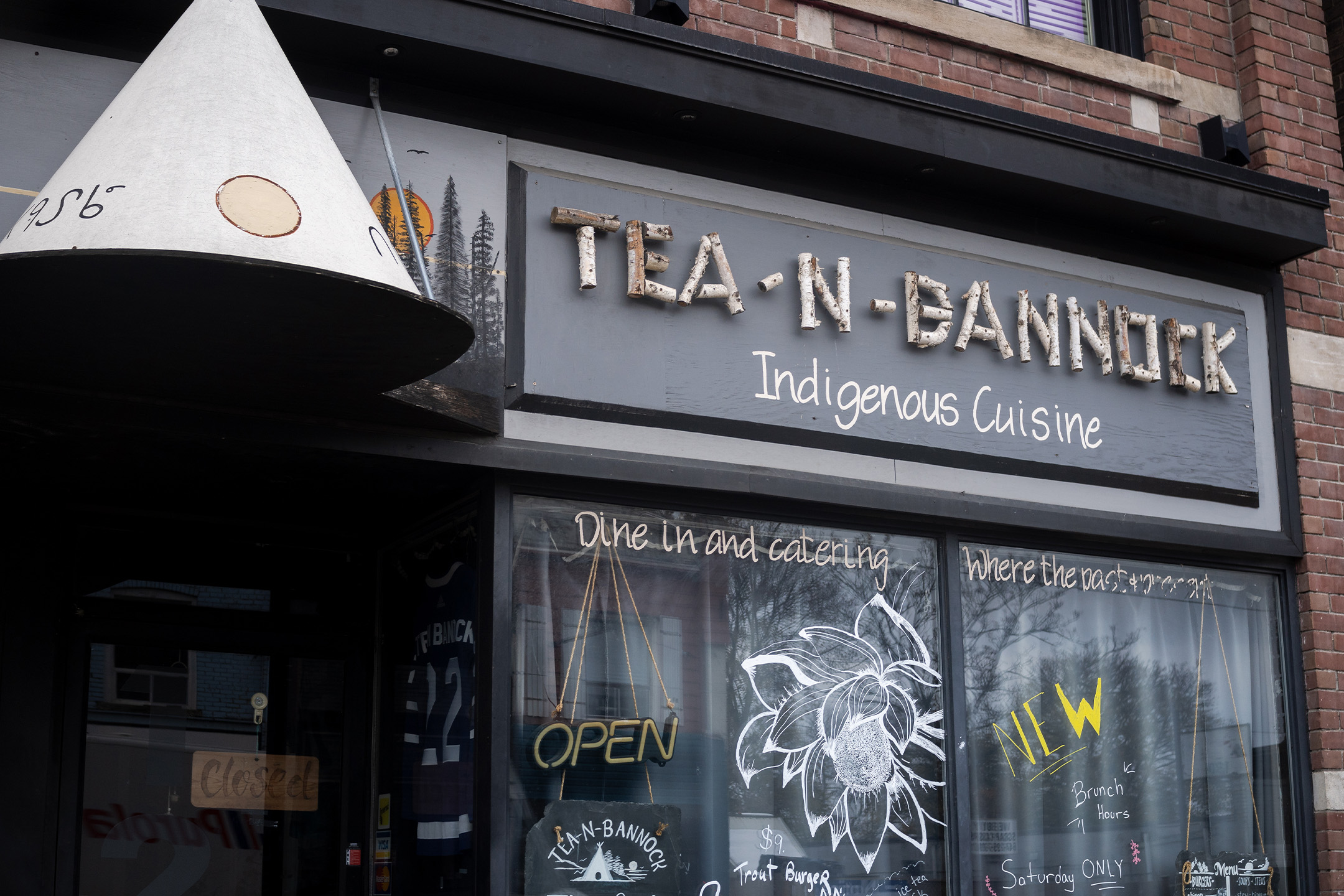
hen I researched Tea N Bannock online, I kept seeing identifiers on Google and the Tea N Bannock website that classified it as “Native American” and “Aboriginal,” which confused me — I wondered why the classification was so broad. I suspected that the restaurant was either appropriating or misclassifying Indigenous cuisine. Walking into the restaurant, I was hesitant, but upon diving deeper, I realized that this restaurant is the only one left in Toronto that classifies itself as Indigenous. I realized that the marketing wasn’t a result of my original assumptions; it was about survival.
I think that Tea N Bannock is a symbol of the unfair competition and scrutiny that Indigenous-owned businesses face in the GTA and Canada as a whole. While I’m happy to say that I absolutely loved the food, there shouldn’t only be one restaurant left to preserve a timeless cuisine in one of the densest cities in North America.
I grew up beside Kahnawà:ke, Québec, and was raised in a family with several Kanien’kehá:ka or Mohawk cousins and extended family. From my lived experience, I’ve never had to make a distinction between traditionally Mohawk and traditionally Québécois foods.
The two have always been parts of the same meals. Even when eating at Indigenous-owned restaurants that incorporated both Mohawk and Québécois dishes back home, there was never a need to identify the restaurants as “Indigenous” or “Native American,” because the foods and spaces are an unquestioned part of the community.
A quiet restaurant on Gerrard
Tea N Bannock is in Leslieville, right outside a 506 streetcar stop, a bustling neighbourhood in the east end of Toronto. My partner and I visited on a Saturday, and I had anticipated a long wait for a table, like other restaurants in the area. But when we walked in, we were the only customers.
The decor and overall vibes of the restaurant were a little sterile. The tables were simple and made of wood, with some natural branches preserved in the bases, and the walls of the restaurant were a very 2000s orange.
While the decor definitely wasn’t ‘Instagram-worthy,’ it really solidified that home-cooked, kitchen feeling. The restaurant displayed Indigenous artwork and animal hides on the walls, and additional wares, such as honey, from Indigenous-owned businesses.
Even though I didn’t connect with the decor, I appreciated the original artwork. I believe that it is so crucial to support independent artists, especially in an evolving art climate full of AI, and a world of art increasingly devoid of nature.
Fair prices and comforting meals
The staff were kind and almost seemed surprised to have customers. We sat ourselves, and were promptly given menus, and served water and popcorn. This was our first time being offered popcorn instead of bread or chips, making it a standout point of our experience. My partner — who ate all the popcorn, thinking there would be more — described it as “Really, really good. It’s kind of salty, and the salt just kind of sneaks up on you.”
The rest of our meal followed that same trend. The flavours were subtle, and snuck up on you after every bite. We ordered the stew of the day made with bison meat, the Three Sisters soup, and took some bear paws to go.
The prices were incredibly fair and budget-friendly. For example, the large Three Sisters soup was only $8, but it was extremely filling. The squash was soft and melted in your mouth. The dishes really focused on letting each ingredient shine, rather than trying to overcompensate with spices and oils.
The bison stew was more expensive than the soup, about $10 more for a small, but it was definitely worth the difference. The meat was relatively gamey, but as someone who grew up eating game meat, it had a familiar, home-style taste, rather than something distinct. My partner, on the other hand, noticed the earthy taste right away.
Each of our dishes came with a side of bannock, so we tried both the fried and the regular. I recommend the fried bannock. It was crispy yet pillowy in the centre. The bear paws — fry-bread rolled in cinnamon sugar — tasted similar. They came out still warm, coated with sugar, and had a light cinnamon taste to them.
I definitely plan on revisiting Tea N Bannock. With every dish we ordered, we could taste that it was made in-house. It felt like it had come out of a home kitchen, rather than a restaurant.
As a student living on my own, I’m still finding my feet with cooking and am always craving something that tastes like home. It’s rare to find a restaurant that cooks food with the level of care you would find in someone’s kitchen, but Tea N Bannock accomplishes that stupendously. For me, it felt like a place of connection, where you could enjoy the simplicity of the conversation around you and the warmth of the food.
While eating, I could feel the love and effort that was put into making our meals. We left so full, didn’t break the bank, and really enjoyed our experience. I will definitely be back to Tea N Bannock. This space deserves to be preserved and uplifted; the fresh quality and affordability of the food are unbeatable, especially considering today’s rising prices in the food industry.
Supporting Indigenous businesses is crucial for community survival. Overall, this experience was a win for me!

No comments to display.