
Imagine you’re a student at the Chinese University of Hong Kong. You’re scheduled to attend a lecture downtown the next morning, so you check your route the night before. A taxi would take about 25 minutes, but could easily get caught in traffic. The metro, at 34 minutes, is a bit slower but cheaper and, most importantly, reliable. You’ve never experienced a shutdown, so you feel confident you’ll arrive on time. The assumption feels entirely reasonable.
But if you’re a U of T student living in North York, your experience with transit is almost the opposite. The 16 kilometer trip is a 45-minute taxi ride, so you choose the 40-minute Line 1 ride to Queen’s Park instead. The next morning, you get to the station and boom — Line 1 is shut down for maintenance. Now your only options are taking a one-hour shuttle bus, or spending $30 on a last-minute Uber, and either way you’re going to be late.
You learn the lesson all commuters must know immediately: when something really matters, you leave early or take an Uber, but you never rely on the TTC.
Transit reliability
In most major cities, the transit experience is reversed. Hong Kong’s Mass Transit Railway system (MTR) operates at a 99.9 per cent on-time rate; Dubai reaches 99.7 per cent; New York, even with its aging system, sits at 84 per cent. Vancouver operates around 96 per cent. And Toronto? A striking 57.98 per cent. This gap in the number of trains arriving on time represents not just a statistical difference, but an entirely different way of living, one in which public transit is the most trustworthy option, not the least predictable one.
Public transit is essential for Toronto because road traffic is notoriously bad. Major corridors like Highway 401, Allen Road, and the Don Valley Parkway are congested every day, and the city’s large population only intensifies the pressure. Buses have been proven to use urban space far more efficiently than private cars, meaning the whole city moves faster when more people choose transit.
I believe that in a fast-paced city, reliability matters more than anything else. When the subway feels just as unpredictable as driving, its only real benefit becomes the lower cost — and once people can afford a car, many will choose to drive.
I believe that if more residents turn to cars, Toronto would drift even further from the goal of creating efficient and accessible mobility for everyone. That’s why, in my view, the city urgently needs a transit system people can consistently rely on.
I believe that for the TTC’s new CEO as of June, Mandeep Lali, the most urgent problems to address are not expansion or marketing, but the frequent emergency incidents and maintenance work that riders often discover only at the station, issues that produce sudden, unpredictable delays.
Avoiding shutdowns
One clear way to strengthen reliability is to address the specific causes of sudden, unpredictable shutdowns. Among these, track intrusions have become one of the most disruptive yet preventable issues. This is where Platform Edge Doors (PEDs) –– doors that separate the platform from the subway tracks –– become important. PEDs sharply reduce intrusions, which is an issue that has repeatedly triggered full-line closures, emergency braking, and safety investigations.
In 2024 alone, TTC data recorded 711 such incidents, resulting in more than 90 hours of delay. In order to circumvent this issue, a March TTC business proposal outlined the projected safety benefits of building PEDs on the TTC. Although the TTC had proposed a pilot PED project at Dundas station, the TTC cancelled the project in June .
If Toronto is serious about building a transit system people can rely on, PEDs must shift from a distant possibility to an immediate priority. Their cost is estimated to be $4.1 billion, but the payoff — fewer disruptions, lower emergency response expenses, and restored public trust — is far greater.
Communication and planning
A second way to strengthen reliability is to change how the TTC communicates planned repairs and service interruptions. Right now, I find that, despite existing service alerts, I only discover this information when I am at the station. That kind of unpredictability directly undermines public confidence; people can’t rely on a system when they don’t even know what they’re walking into.
The truth is, riders are not asking for perfection; they simply want predictability. If I know a day in advance that Line 1 will be shut down, I can plan for a two-hour trip instead of one. What destroys trust is being promised a reliable system and having those expectations disappointed. A centralized, intuitive platform that lists all planned maintenance, shutdowns, slow zones, and expected timelines would give riders the transparency they currently lack. Improving communication may seem simple, but I believe it is a foundational step toward rebuilding reliability.
Transit future
Now imagine another future in Toronto, one in which the struggles commuters at U of T face today are obsolete. You still live in North York, and you still have something important downtown the next morning. But this time, you check the TTC website and see clear, reliable information: Line 1 is fully operational, with no hidden shutdowns or surprise slow zones. You know the 16-kilometre trip to Queen’s Park will take exactly 40 minutes, not 40 minutes unless it suddenly changes again.
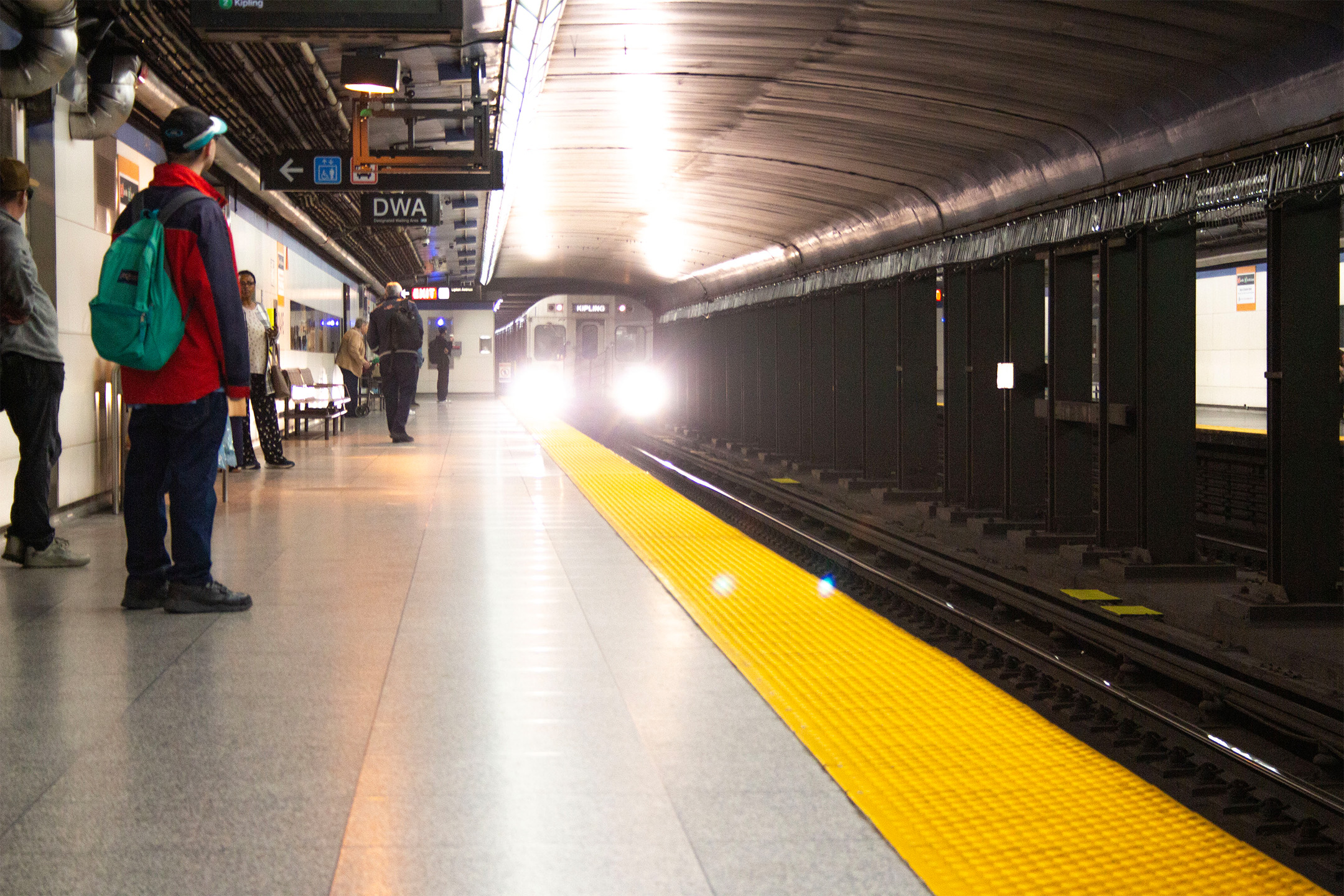
In the morning, you arrive at the platform to find doors that keep the station safe, the train arrives exactly on schedule, and you reach Queen’s Park without stress. Instead of being forced into last-minute Ubers or hour-long shuttles, public transit becomes the option you trust first, not the one you turn to only when there is a lack of urgency.
In that future Toronto, no one misses classes, milestones, exams, and other important events because of sudden transit shutdowns; no one wonders whether Line 1 will run into problems again; and no one has to budget extra time out of fear that the system might fail. That is a transit system built on trust — and the first step toward it is simple: make the TTC’s existing lines truly reliable.
Ziqian Zhang is a journalism and political science student at U of T whose work focuses on international politics, with a particular interest in East Asian political dynamics. He is also engaged in questions of urban planning and policy, exploring how cities shape governance and social experience.
