
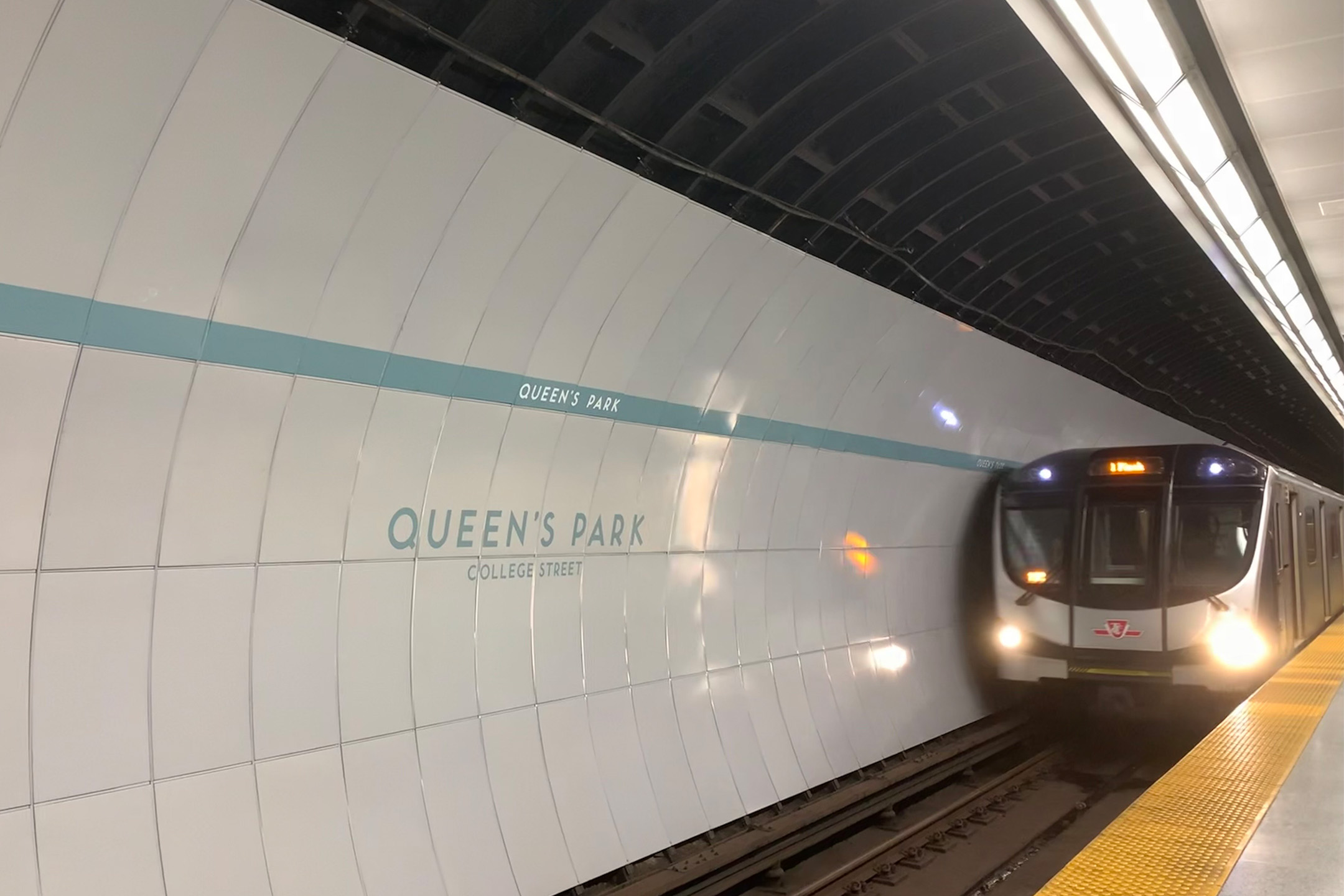
U of T’s commuter students may be impacted by changes to the TTC following Ontario’s passage of Bill 98 — the Building Homes and Improving Transportation Infrastructure Act. Transit advocacy groups at U of T and elsewhere have expressed concerns about how the bill will impact TTC policies and operations.
Under Bill 98, Ontario’s minister of transportation has the authority to make regulations that set fare prices, establish transfer and discount policies, and define fare zones, to approve a unified fare payment system for prescribed transit systems. Previously, these powers lay with Toronto’s City Council through the TTC Board.
Impact on commuter students
According to an estimate from U of T’s Government Relations Office, over 55 per cent of U of T students live with family and commute to one of the three campuses.
While there are no exact statistics on how many U of T students commute to the St. George campus, a 2024 estimate by The Varsity combined data from campus residence websites to find that U of T only has the capacity to house 16 per cent of the St. George undergraduate population.
It is unclear at this time how exactly commuter students and the TTC will be impacted by Bill 98’s passage. University of Toronto Students’ Union President Marie Kinderman said in an interview with The Varsity that “ultimately we don’t know what [Doug Ford’s] intent is, and that’s the most threatening part of this.”
Bailey Wu, co-president of the University of Toronto Rocket Riders, emailed The Varsity to discuss the impact of the bill. Wu wrote that removing the TTC’s ability to set fare policies is “likely to complicate Toronto’s [plans to cap fares] and potential student fare plans, and could cause future fare policies to inadequately meet Toronto’s needs.”
Wu also wrote that the bill presents the opportunity for Toronto to better integrate with Metrolinx and other transit agencies, potentially resulting in fewer issues with transfers between transit systems.
Transit advocacy group TTCriders voiced concerns over the passing of Bill 98, writing in a press release that the bill puts “affordable fares, local accountability, and the future of Toronto’s transit system at risk.”
TTCriders also warned that the new legislation may threaten the overall affordability of the TTC, possibly jeopardizing fare capping, the TTC’s two-hour transfer window, discounted youth and senior fares, and the city’s single-fare system.
One Fare expansion
While it is possible that fares, routes, schedules, and transfer windows will be negatively impacted, Kinderman added that the bill will not necessarily have a bad outcome: “For instance, [Doug Ford] could just continue to promote and extend One Fare.”
In a news release, Ontario’s Minister of Transportation Prabmeet Sarkaria, said that Bill 98 will “support the future expansion of the One Fare program.”
Ontario’s One Fare Program eliminated double fares for riders transferring between TTC, GO Transit, and other GTA transit systems. One Fare 2.0 has been proposed as an expansion to the program and would create a single fare structure in the Greater Toronto and Hamilton Area.

No comments to display.