
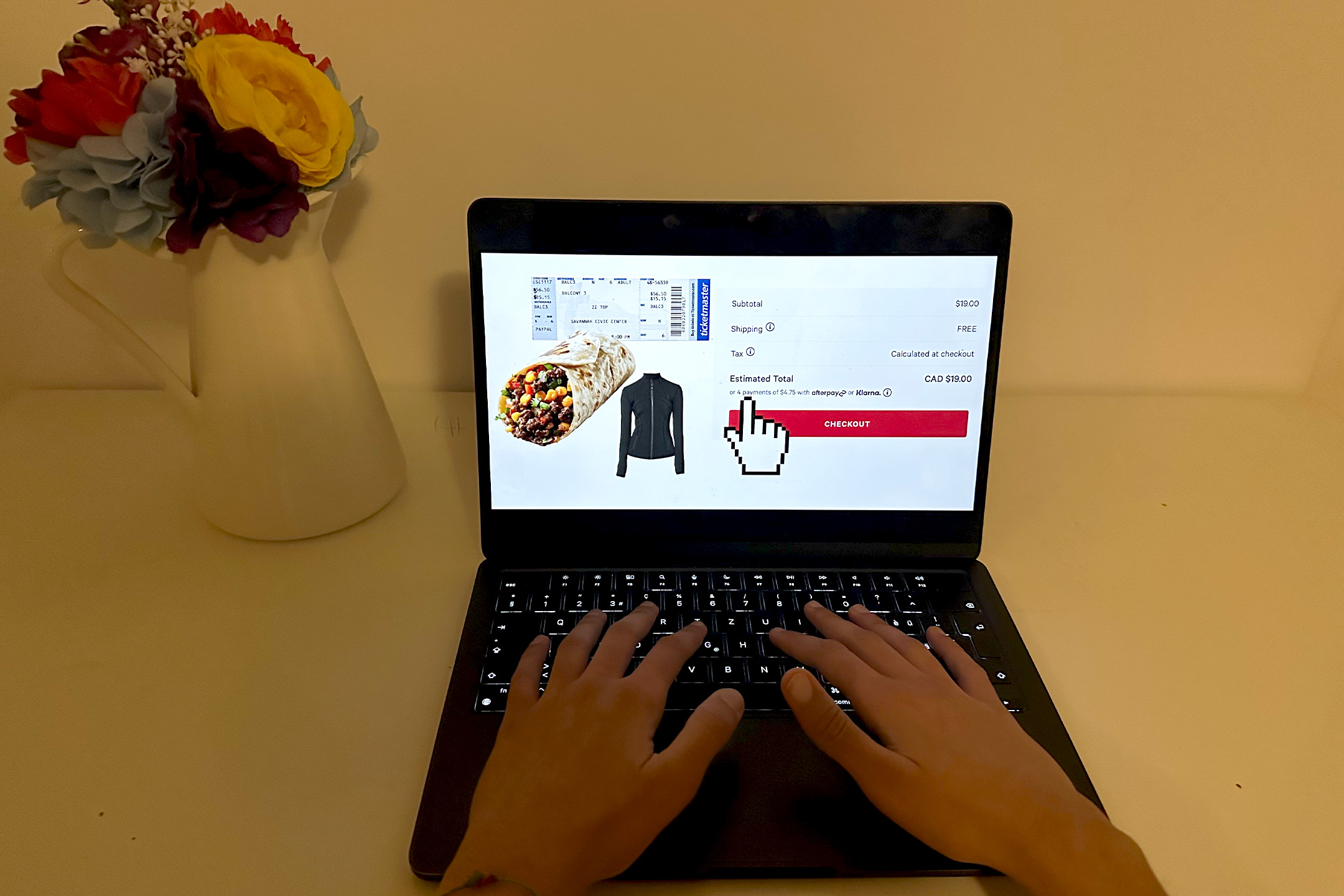
For many students, balancing expenses such as tuition, rent, groceries, and transportation alongside non-essential goods can feel financially burdensome — especially amid high youth unemployment rates, where one in five young people is unemployed in Toronto. This pressure has pushed some students to use, or at least consider, Buy Now, Pay Later (BNPL) services as a way to access purchases immediately without paying the full cost upfront.
What is BNPL?
This past holiday season, online shoppers were increasingly likely to encounter a “Buy Now, Pay Later” option at checkout, often appearing just below the cart’s estimated total. BNPL is a financing option that allows consumers to split purchases into smaller, typically interest-free payments over a short period. Its recent rise in popularity has been led by fintech providers such as Klarna, Sezzle, Afterpay, and Affirm.
The evolution of BNPL
While BNPL services may appear new to consumers accustomed to cash, debit cards, or credit cards, the underlying concept is not novel and predates the 2010s. Earlier installment-based payment models — most notably layaway — were widely used throughout the twentieth century. Layaway required customers to make a deposit followed by smaller payments, with ownership of the product granted only after full payment.
During periods of economic hardship, such as the Great Depression, these models allowed credit-constrained households to continue purchasing goods despite limited cash. Although the widespread adoption of credit cards in the mid-to-late twentieth century largely displaced layaway, BNPL has reemerged as a digitally integrated alternative to traditional credit. Unlike layaway, BNPL allows consumers to receive goods immediately while deferring payment, financing purchases ranging from essential items such as groceries to non-essential goods and experiences.
BNPL’s rapid growth
BNPL has grown into a multi-billion-dollar industry with strong growth projections, with user adoption accelerating following the COVID-19 pandemic. Within 18 months of launching in Canada in February 2022, Klarna gained 640,000 active customers and processed over two million orders. The expansion has been further reinforced by the entry of established payment companies. For example, in November, PayPal announced plans to expand its BNPL services into Canada through partnerships with major retailers, including Home Depot and Ticketmaster.
Is it too good to be true?
BNPL’s popularity has been driven largely by its accessibility, particularly among consumers with limited access to traditional credit. Unlike credit cards, BNPL approval processes are quick and minimally restrictive, typically relying on basic verification factors such as age, income, and credit history.
A small pilot study commissioned by the Financial Consumer Agency of Canada found that BNPL services — like other forms of credit — may be helpful for certain consumers when used responsibly, offering a cost-effective way to finance purchases and help smooth household finances during periods of financial uncertainty.
However, consumers must be aware that BNPL is ultimately a loan or debt agreement rather than just a payment method to spread out their costs over a specific time period. BNPL providers are increasingly making larger amounts of revenue from late fees charged to users missing scheduled payments. In 2024, Klarna reported approximately 254 million USD in revenue from late fees, representing a 28.3 per cent increase from the previous year. BNPL is fundamentally not a cost-free alternative if used by those unprepared to pay each installment by their deadline.
BNPL usage among university students
BNPL’s zero-interest framing and ease of approval make it particularly attractive to university students. According to Payments Canada, Canadians aged 18–34 are among the most frequent users of BNPL services. This trend coincides with broader increases in debt among younger consumers, with Gen Z experiencing about a 30 per cent surge in consumer debt last year, the highest growth of any age group.
Spending among younger BNPL users is concentrated in categories such as clothing, food, and electronics, which are typically considered non-essential purchases. Together, these patterns raise concerns about impulse spending, overspending, and the normalization of debt for everyday consumption. For many, BNPL poses a real danger as it warps the perception of one’s actual purchasing power.
For students managing multiple expenses and financial responsibilities for the first time, BNPL can quickly shift from a convenient payment option to a financial trap. Missed payments and accumulating late fees pose a real risk. For example, it can result in a lower credit score. Moreover, while individual fees may appear small, they can add up quickly, with students spending more than they realize.
For students considering BNPL, it is vital to read the fine print, understand repayment timelines, assess all options, and consider whether taking on another payment plan makes sense given their current financial situation.

No comments to display.