
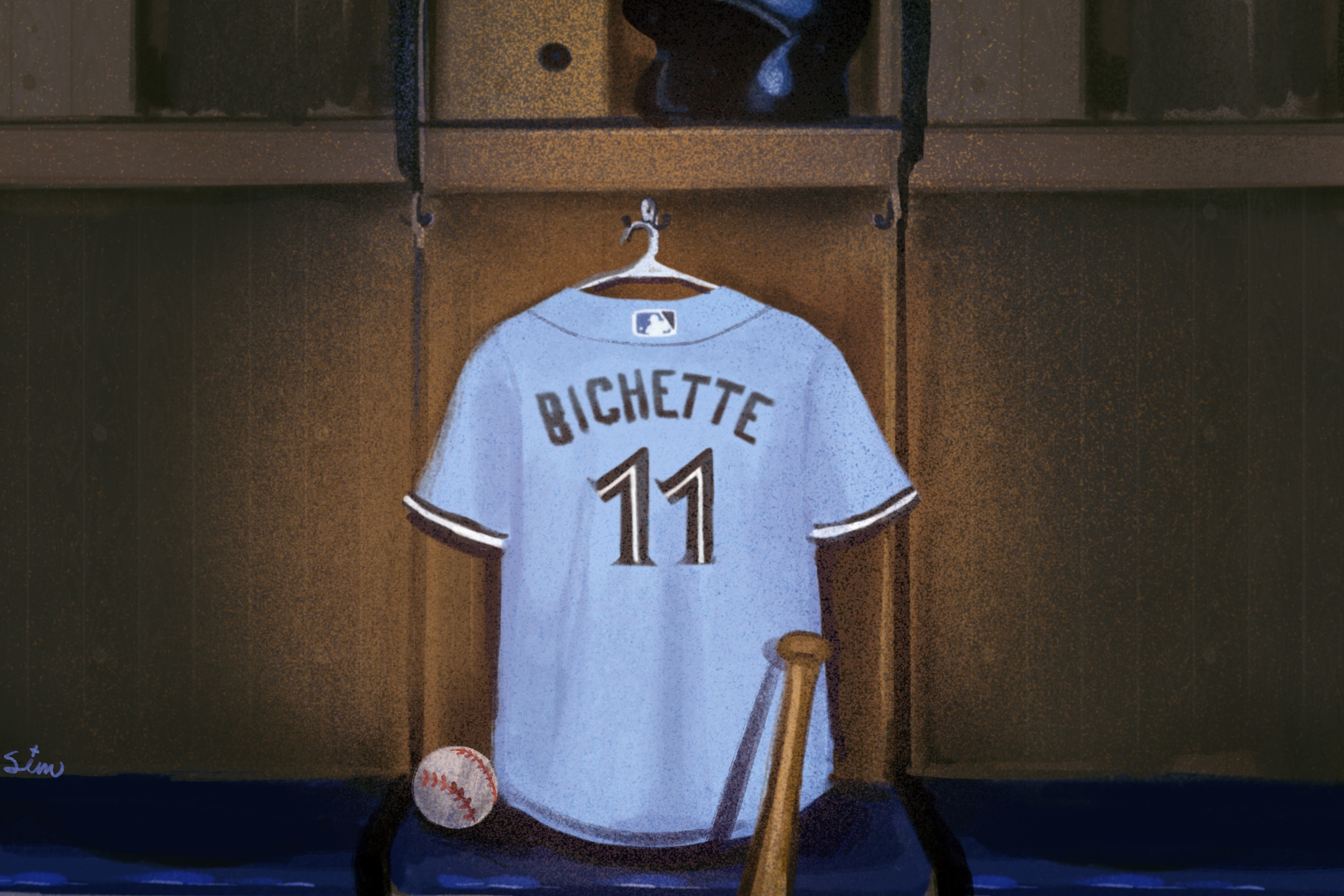
The Toronto Blue Jays are undergoing one of the most significant transitions in team history. Bo Bichette, the franchise’s longtime shortstop and a defining face of the team, signed a three-year, $126 million contract with the New York Mets on January 20.
This move was surprising, in part due to how close Bichette came to joining a different team. The Philadelphia Phillies were among the frontrunners for Bichette, offering a seven-year, $200 million contract before the Mets made their late offer, impacting the free agency market.
For years, Bichette was central to Toronto’s lineup. He excelled in high-pressure moments, led the MLB in hits more than once, and demonstrated a calm, dedicated style of play that connected with fans.
While opinions varied on his defensive skills at shortstop, there was broad agreement among critics and fans on his importance at the plate. Bichette consistently set the tone at the top of the order and was a stable presence on a team that experienced both strong performances and challenging periods. His departure not only means the loss of a key player but also signals a significant change in the Blue Jays’ identity.
Losing a player of Bichette’s calibre is never solely about replacing statistics. He was a pillar of continuity through many roster changes, managerial adjustments, and playoff runs that ultimately fell short of a championship.
Bichette’s move out of Toronto shows that the Blue Jays can no longer cling to the same blueprint that has fuelled their recent success. Instead, they are attempting to reshape their roster in a way that allows for balance, flexibility, and even a different offensive profile.
This reshaping began before Bichette had even signed with the Mets, with the Blue Jays signing Japanese star Kazuma Okamoto.
Okamoto is a six-time Nippon Professional Baseball (NPB) star who signed a four-year $60 million contract with Toronto. He is coming to Canada after spending more than a decade with the Yomiuri Giants and shaping up to be one of NPB’s most frightening hitters. Additionally, his ability to play both third and first base gives the Blue Jays options as they work towards reconfiguring the infield without Bichette.
Although the comparison between Bichette and Okamoto is inevitable, it is incredibly misleading. Bichette’s value came from his ability to hit anywhere in the field and consistently get on base. In contrast, Okamoto’s strength comes almost entirely from production at the plate. He is a hitter who has the ability to change a game with just one swing, which is a talent the Blue Jays lacked when their offence went through cold stretches.
Rather than trying to replicate Bichette’s unique blend of skills, Toronto appears to be diversifying its offensive approach to spread responsibility across the lineup.
Platinum glove winner, Andrés Giménez, is projected to take over as shortstop, while players such as Ernie Clement and Addison Barger provide depth and utility while playing where they are most needed. This defensive approach could be incredibly successful if the new infield hits its stride and contributes consistently on both sides of the ball.
Internally, the Blue Jays are betting on increased depth and improved health of players, such as Anthony Santander, compensating for the loss of a big name like Bichette. Players who were once used to complement Bichette, or even Vladimir Guerrero Jr., will now have to take on more work both offensively and defensively.
Although this transition brings a lot of risk, it will ultimately be beneficial for the Blue Jays to stop relying on a couple of powerful players. Bichette’s departure is pushing the team towards utilizing a more balanced approach on the field.
For fans, the loss of Bichette is undeniably emotional. He was drafted, developed, and embraced as a cornerstone of the team. In the dark days of missing playoffs and having no star players, fans looked to him in the farm system, waiting to watch him play at a major league level. Watching him leave creates uncertainty surrounding whether or not the Blue Jays can follow up their World Series-calibre season successfully and stay competitive in 2026. Although transitions like this are unavoidable in baseball, how a team responds to adversity separates postseason contenders from teams that won’t be playing in October.
Whether or not Toronto’s new approach leads to sustainable success will be determined on the field, but for now, Toronto is making it clear to fans that building a roster after Bichette is not about finding the next Bo but rather building a team that no longer depends on a single player.

No comments to display.