
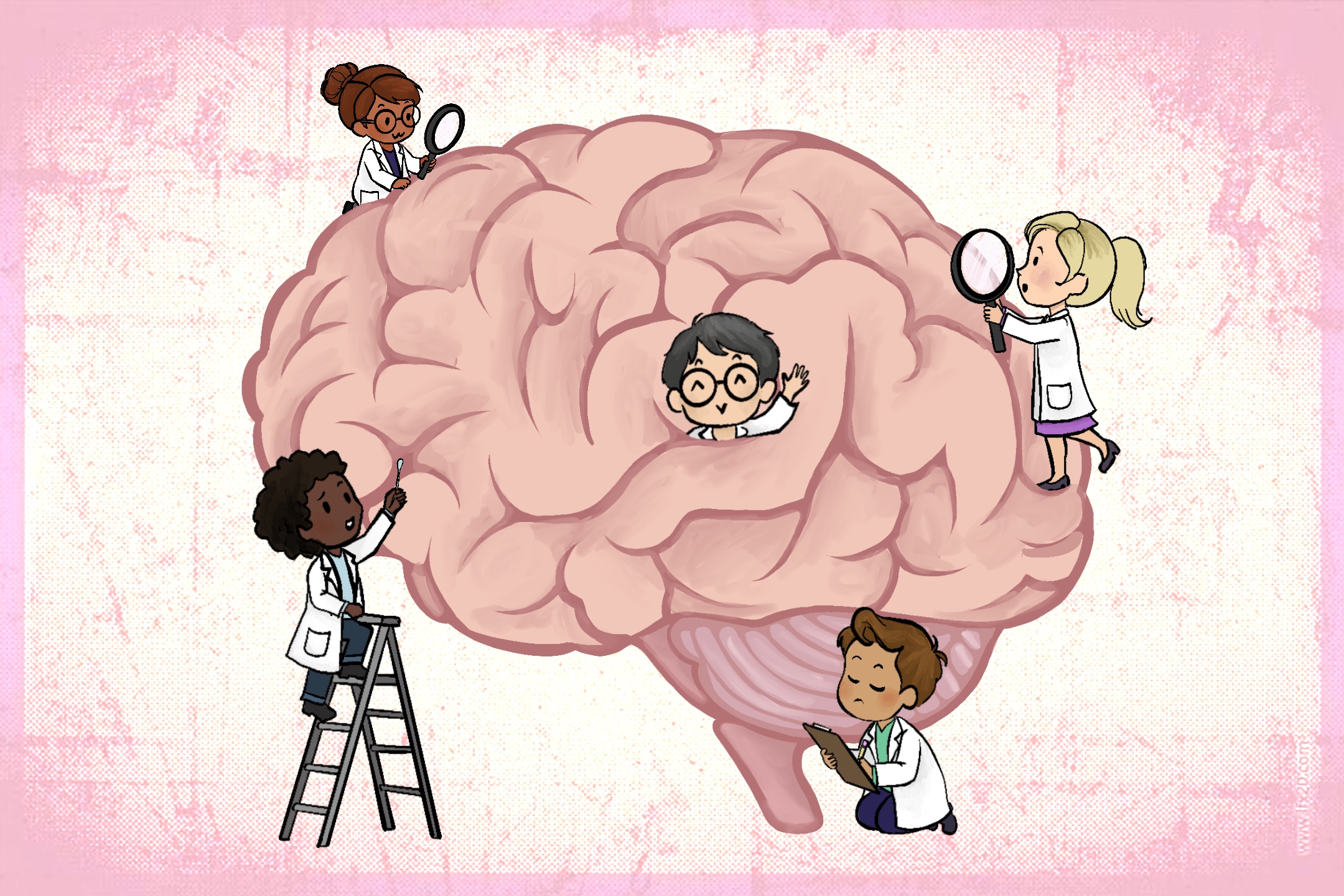
The Canadian Association of Neuroscience (CAN) conference gathered neuroscientists from across Canada, including researchers from U of T, in Montréal from May 18–21. The Varsity attended the presentations of two U of T professors at CAN to learn more about the inner workings of the brain.
SLD cells and how we dream
While we are dreaming, our bodies remain still due to a temporary loss of muscle reflexes known as muscle atonia. This lack of movement prevents us from injuring ourselves by sleepwalking or acting out dreams.
U of T Assistant Professor Jimmy Fraigne presented his research examining sublaterodorsal tegmental nucleus (SLD) cells, the cells that trigger muscle atonia, at the CAN conference.
In brief, the SLD is a small region in the brainstem. When SLD cells fire, they may help to initiate a specific sleep phase known as rapid-eye-movement (REM) sleep, which is important for improving memory.
In fact, REM sleep is so critical that if the brain doesn’t receive enough REM sleep one night, it will naturally increase the amount of REM sleep the next night. In a typical night’s sleep, the brain will go through REM sleep multiple times, each cycle ranging from a few minutes to an hour or two.
How does the brain regulate REM sleep?
In his presentation, Fraigne explained that the brain’s desire to enter REM sleep is like steam building in a pressure cooker. During non-REM sleep — which is characterized by relaxed muscles and reduced eye movement — the body’s need for REM sleep starts accumulating. The need builds until REM sleep begins, relieving the ‘sleep pressure steam.’
Fraigne and his lab found that SLD cells, which trigger muscle atonia during REM sleep, may also be responsible for tracking this sleep pressure. During periods of sleep deprivation, these cells fire rapidly, communicating to other parts of the brain that the sleep pressure is high. In REM sleep, however, these cells stop firing since the sleep pressure has dissipated.
Studying how REM sleep is initiated and maintained is especially relevant to predicting future health outcomes. REM sleep disorders are the best predictors of disorders like Parkinson’s disease, often preceding the disease by several years to decades.
Sex-based differences in depression
In 2022, over one in five Canadians met the criteria for a substance use, anxiety, or mood disorder, including depression. In 2021, the prevalence of a major depressive episode was greater among adult females compared to males.
Professor Etienne Sibille, a member of the Department of Psychiatry and the Department of Pharmacology and Toxicology at U of T, presented his study on the molecular basis of Major Depressive Disorder (MDD) in humans and mice to better understand these sex-based differences.
Studying the brains of human patients with MDD revealed a consistent pattern. Researchers found differences in the signalling of brain-derived neurotrophic factor (BDNF), a protein that supports the health of brain cells. Another pattern involved somatostatin interneurons (SSTIs), a specialized group of brain cells that help the brain to maintain a healthy level of signalling activity.
SSTIs release GABA, a chemical messenger that prevents brain circuits from becoming overly active. When SSTIs function poorly, the brain may become less able to regulate emotions and stress responses. Sibille and his lab found that reduced BDNF signalling weakens the function of SSTIs, disrupting the brain’s ability to regulate emotions.
Sex-based differences may play a role in the brain’s ability to regulate emotion in MDD. In male mice, GABA signalling was comparatively lower than in female mice, and accompanied greater displays of anxiety-like behaviours.
The study also identified an inherited genetic component that may influence somatostatin (SST) gene regulation, controlling how much SST is available for signalling. Based on these findings, researchers developed a risk score to estimate a person’s inherited MDD risk depending on small inherited genetic differences that influence how SST cells function.
Individuals with higher scores were predicted to have fewer SSTIs and have more severe MDD symptoms. Overall, these relationships were strongest in human males with late-life depression. Currently, Sibille’s lab hopes to use this new understanding of depression to engineer new antidepressants.

No comments to display.