
In December 1891, a physical education teacher born in Almonte, On., named James Naismith was given the assignment of creating an indoor sport to channel the rowdy energy of students at the Springfield, Massachusetts YMCA training school during the cold winter months. Naismith composed 13 rules for a sport he called “Basket ball.” It would have been impossible for Naismith to understand at that moment how popular and influential the sport he created would become. YMCA’s throughout the United States soon instituted basketball as part of their curriculum, and the students who studied at those institutions took the sport to the countries that they visited. In 1898, Naismith accepted a faculty position at the University of Kansas where he would remain for the duration of his life, overseeing the growth of his sport around the world.
I was born and raised in Kansas City, Missouri, and started playing basketball at age 11, after my father set a hoop up in our driveway. Every other year during summer vacations, I would travel with my family back to our ancestral homeland of Srinagar, in the Jammu & Kashmir state in India to visit family and re-connect with our heritage. The srinagar of the early and mid 80s was an idyllic tourist haven, popular with westerners for its trekking, skiing, houseboats and shikara rides on the placid Dal Lake. Cricket, soccer, and skiing were the most popular sports.
However, in 1989 a political conflict developed which made travel unwise. Unable to travel to Srinagar, my summers were now devoted to playing basketball. I played for my junior high and high school teams, and attended the University of Kansas basketball camp. I later attended U of T and KU for college, and made frequent trips to Canada, staying in Brampton.
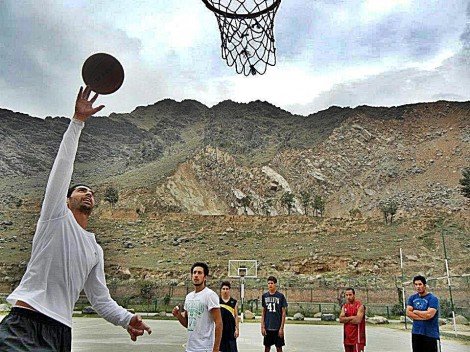
In 2009, I visited Kashmir for the first time in 18 years. Midway into my 14-day trip, a casual conversation turned fateful. While talking to a family member, at that time a student in Srinagar’s largest school, I asked if the school had a basketball court, and, if so, would it be possible to use it. Two days later, after speaking with the principal, I found myself in a taxi on my way to Delhi Public School Srinagar, where I arrived to find a few students shooting on the school’s outdoor court.
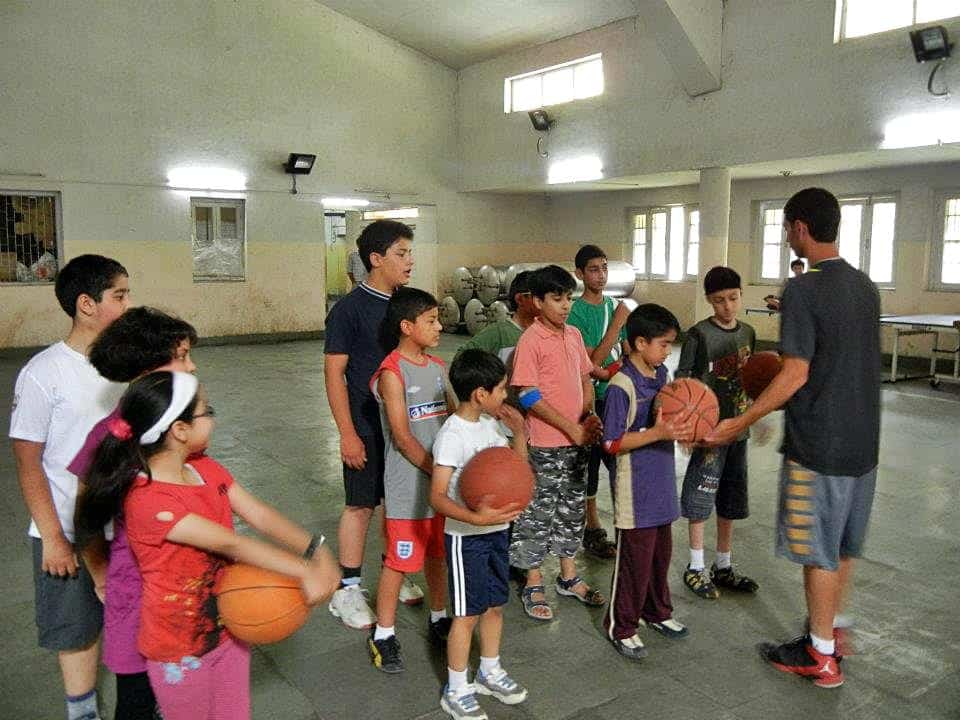
I walked over to the students and introduced myself. A curious player asked if his shooting form was right, and when I corrected him and showed him a practice method for improving his mechanics, another question followed. One hour later, 20 players had gone through a full practice, and I agreed to return the next day to work with girls who were interested in basketball.
After returning home, I maintained email correspondence with a few students who sought advice on basketball training. Intrigued by my experience, I made it a priority to return in 2010. My visit coincided with a tournament being organized for boys and girls from local high schools. Asked to participate by the host school, I helped coach the host team, refereed every game of the tournament, and in the remaining days of my short visit conducted practice sessions at Tyndale Biscoe Boys school and Mallinson Girls School.
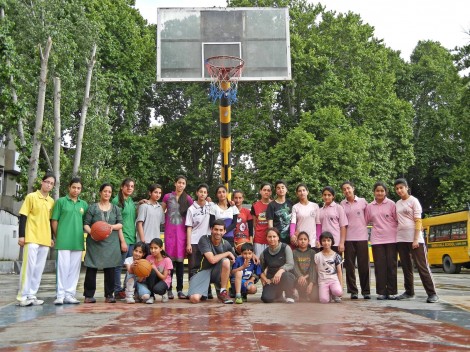
In 2011, I visited Kashmir for over two months. Seeing the need for more organization and structure, I created the SKBA League, a Sunday Recreational League for high school, college, and men players. Teams representing the major educational institutions of Kashmir signed up. I refereed every game of the league for eight weeks, handling all responsibilities. At the same time, I was holding city-wide skills training sessions for girls and boys.
However, many players soon tired of being told that they were dribbling, shooting, passing, and playing defense wrong. Conditioning and coaching were not what most had come to the court seeking. Although there was a large number of people in Kashmir who liked to play basketball, and who wanted someone to organize tournaments, I saw only a small handful of disciplined, dedicated, and talented players.
I found himself hanging off the back of over-crowded city buses, arriving at dilapidated courts with slanted rims and hot tempered coaches and players. Events were canceled due to rain or hartal (strikes); meetings with institutions I hoped would build modern basketball courts went nowhere; miscreants followed me to the court and attempted to interfere in my successes; several threats and blackmailing letters arrived in my inbox.
Realizing the limits of basketball in Kashmir, in 2012 I traveled to Delhi to meet players from throughout India, who were participating in the Delhi University Basketball system. I also met the Indian national team head coaches who encouraged me to continue my efforts in a country looking to popularize Basketball.
By 2013, I had visited the major educational institutions of Kashmir, both high school and college, to train players. I also met Dr. Zeenat Farooq Khan, a local physician and a great basketball player for Kashmir during the 1980’s. With her assistance, I held Friday practices for children at a local hospital, and Sunday camps for only girls.
Coaching at Burn Hall School in the mornings, I committed himself to working with youth.
James Naismith’s sport has been responsible for countless memories, stories, friendships, and rivalries across the world. My experience is one of those stories. It has enabled me to have experiences and friendships which would have never otherwise been possible . It has taken me places and introduced me to people who would otherwise have been strangers. It has helped me to understand myself, and the people of my homeland of Srinagar.
Shahid Bhat began his degree at the University of Toronto, and completed it at the University of Kansas.
