
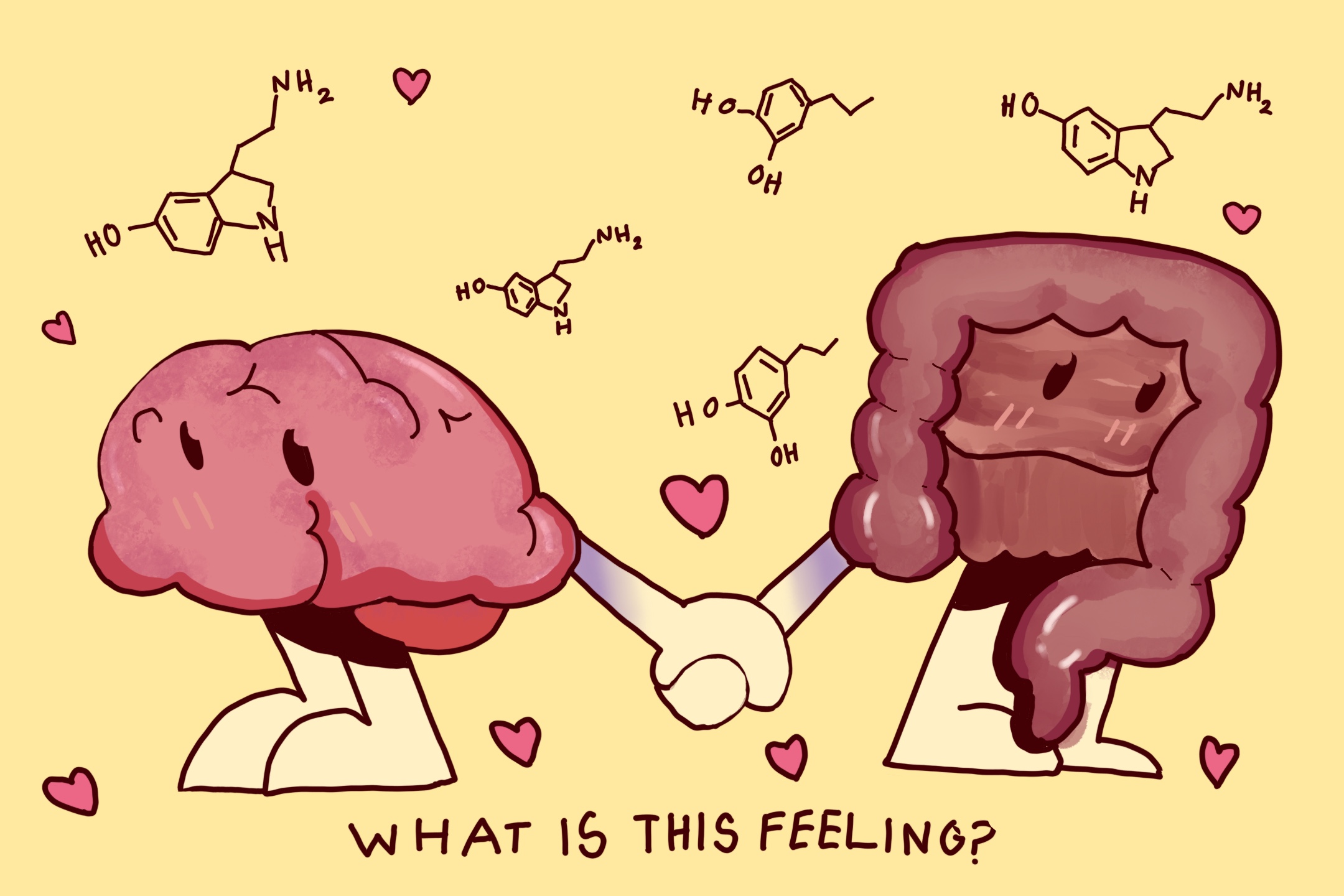
Have you ever gotten the feeling of butterflies in your stomach? Perhaps some stressful situations make you feel nauseous, or even trigger the ‘nervous poops,’ an anxiety-induced lack of bowel control. These aren’t just quirks, but rather speak to the profound connection between the human mind and gut that scientists are still trying to understand today.
Amongst the most beautiful forests and the most mesmerizing oceans, we often forget that our guts harbour a lively ecosystem of their own: a miniature ecosystem where trillions of microorganisms like bacteria, fungi, and viruses thrive. The gut is key to digestion, immunity, and even your mental health. You can think of it like a personal garden. What you plant — your genes, diet choices, environment, and even whether you were born vaginally or via C-section — determines what grows there. And just like no two gardens are the same, the collection of microbes that make up your gut microbiome is totally unique to you.
What (and who) are the key players?
Spanning from the esophagus to the anal canal, the human gastrointestinal tract (GI) is a winding, hollow tube that moves food through your body for digestion. The GI is also where the enteric nervous system (ENS) operates. The ENS comprises approximately 400–600 million brain cells, which allow the gut to ‘talk’ to the brain, forming the basis of the ‘gut-brain connection.’ In fact, due to the complexity of the ENS, it is often referred to as the ‘second brain.’
Over millions of years of evolution, our bodies have developed a physical and chemical communication system between the gut and brain. When gut microbiota communicate, their message is detected by the ENS. The vagus nerve — one of our 12 cranial nerves — relays the message from the ENS to the brain. One major way this interbody messaging works is through the use of neurotransmitters.
Neurotransmitters are chemicals in the body that communicate information about bodily movements, sensations, and perceptions. Due to their role in neural functions, one might think that these would then be manufactured and circulated by neural cells within the nervous system alone. But what if I told you that many neurotransmitters are synthesized by the gut microbiota themselves? About 90 per cent of the neurotransmitter serotonin is synthesized in the gut. Cells in the intestine absorb tryptophan — a building block of serotonin — from protein sources absorbed from what we eat. Bacteria such as Clostridia control the quantity of tryptophan that is converted into serotonin for excretion and inflammation.
The gut makes other neurotransmitters too. In fact, around 50 per cent of the body’s dopamine –– a neurotransmitter involved in reward, motivation and movement –– is synthesized by bacteria in the gut. Additionally, Parabacteroides synthesize the neurotransmitter gamma-aminobutyric acid (GABA), which regulates anxiety and fear responses, while Lactobacilli produce acetylcholine, a neurotransmitter involved in many processes like digestion and attention.
Thrown off balance
We have over 3000 different species of bacteria living in our guts, each playing its own niche role in maintaining our bodily functions. Just like any ecosystem, the more diversity the better, and if our gut microbiota is a peaceful ecosystem, stress is an invasive species.
In a variety of ways, stress can cause gut dysbiosis, a term referring to the imbalance in gut microbiome diversity. For example, catecholamine, a hormone released during stress, can cause the increase of gram-negative bacteria –– which are particularly resistant to antibiotics and can cause illness –– by 10,000! Cortisol, another hormone released during stress, can weaken intestinal linings and cause the development of a ‘leaky gut,’ where toxins, bacteria, and food particles can contaminate the bloodstream. This can trigger inflammation in the body and cause further microbiota imbalances in the gut. In fact, neurotransmitter dysfunction in the gut has been linked to Irritable Bowel Syndrome (IBS) and Crohn’s disease.
As we continue to learn more about our miniature gut microbiome, I have a few tips on how to maintain its diversity and keep those microbiota smiling. Incorporate a wide variety of foods in your diet. Studies show that certain nutrients in our food, such as carbohydrates and proteins, can proliferate specific types of microbiota. Prebiotic foods, such as garlic, and fermented foods, like kimchi, are also particularly great at increasing microbiome diversity. Having a diverse diet helps to maintain and restore a diverse gut microbiome.
Take some time to take care of your mental health as well. Finding ways of de-stressing in an inevitably stressful life through activities like meditation, indulging in hobbies, exercise, or whatever else you enjoy is not only incredibly important for mental well-being, but also for our gut health and the microbiota there, which are impacted by high amounts of stress!
I speak for all the microbes in your gut when I say, take care of them. There is so much more to know about how the gut microbiome affects our mental and physical well-being, but we do know that when you take care of it, you are also taking care of yourself.

No comments to display.