
Content Warning: This article mentions sexual violence, rape culture, institutional violence, and gender-based violence
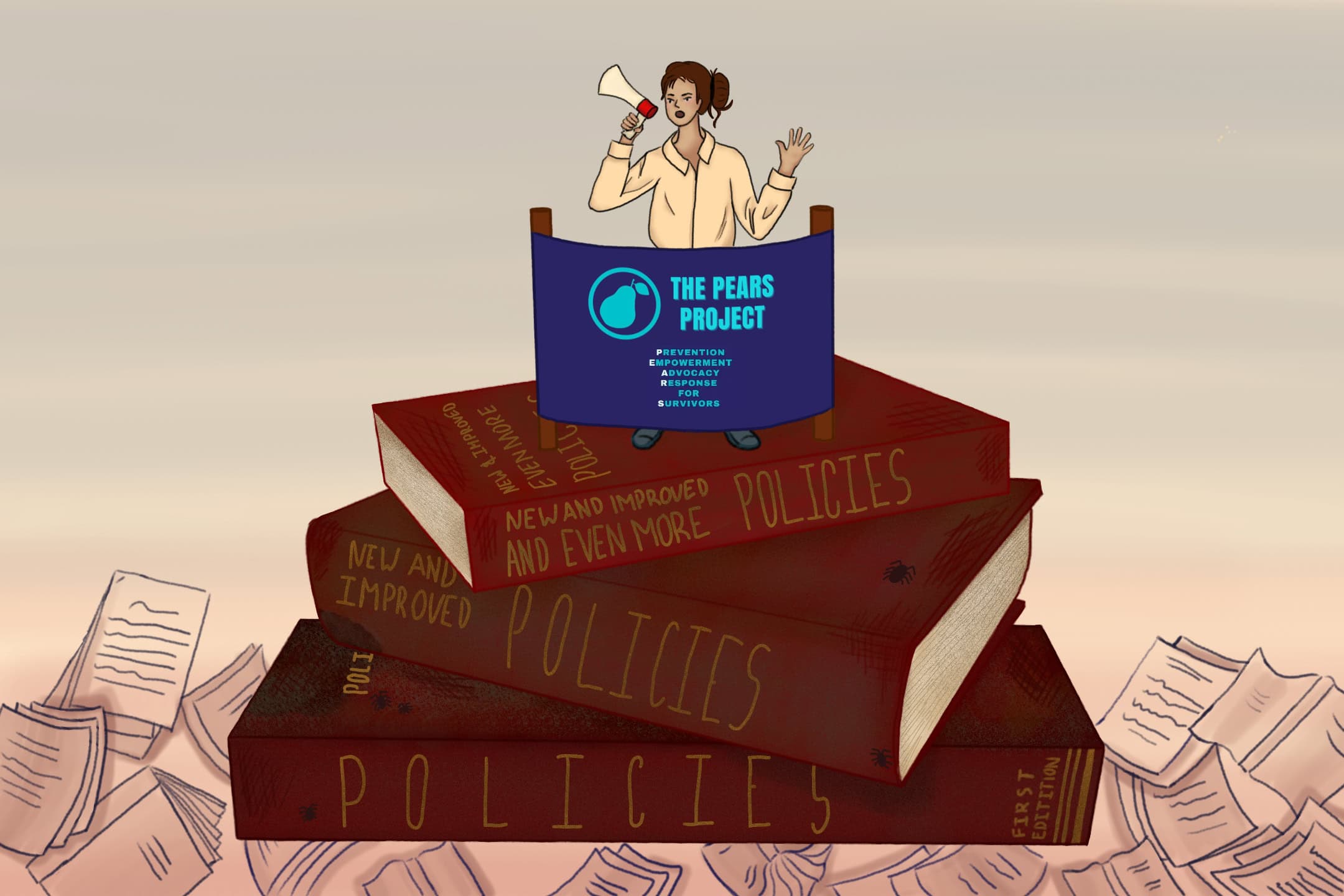
U of T has a long and well-documented history of reproducing violence and upholding rape culture. Survivors and groups like The PEARS Project and Silence is Violence have worked to create a growing archive which documents instances where U of T has been complicit in allowing violence against its community members. The archive shows a noticeable pattern: professors and staff found guilty of violence are allowed to remain at U of T, while survivors are often ignored, silenced, left to voicemail on helplines, and with nowhere to turn for support.
I believe the lack of prevention and response-based resources that address sexual violence available at U of T for survivors makes it clear: the continued failure of U of T to address sexualized violence has resulted in a sexualized violence epidemic at the University. As U of T enters another review of its Policy on Sexual Violence and Sexual Harassment — as required under Ontario’s Bill 132 every three years — it’s critical that we reaffirm what survivors already know: this policy is just one of the many ways the university fails us. U of T must do more, beyond policy, to ensure safety for survivors as no policy alone will ever dismantle rape culture.
I do not intend to disregard the significance of policies and organizations working to combat sexual violence on campus. I myself have worked in anti-Gender Based Violence (GBV) policy for several years and have been contracted by a range of Non-Government Organizations and non-profits to write and review their sexual violence policies. Policies are important as they can contribute in mitigating harm, but they are ultimately response-based resources that are only used after harm has occurred, and perpetuate bureaucratic models of governance designed to protect the institution. In other words, this policy is made by and for U of T; not by and for students or survivors.
U of T’s sexual violence policy is no exception. Despite containing several elements that appear promising on paper, the lived experiences of survivors tell a different story: that the University of Toronto Sexual Violence Policy and supposed supports have harmed many. The safety and security that is promised on paper is not always fulfilled in practice.
I’ve navigated U of T’s reporting process firsthand and have supported countless survivors as they’ve done the same. I’ve watched as the same cycle repeatedly unfolds: survivors painstakingly write their statements for the Sexual Violence Prevention and Support Centre only to have them reworded by the university. Then they meet with investigators to be interrogated, hear their experiences disputed by their perpetrators, and wait as long as a year for decisions to be made by an institution that controls the narrative of the violence and the reporting process at every turn.
The university is a massive corporation with a budget of over 3 billion dollars, access to unlimited legal counsel, and disproportionate power over student survivors, that can essentially warp a policy however they please. Even with the strongest policy, institutions that create and enforce these very policies can bend them to their will. I believe that to have an effective strategy to address sexual violence, U of T needs to act in good faith and put students and survivors first.
Even now, as U of T embarks on another legally mandated review, how can we trust that it won’t continue with the same minimal effort it always has? While this year marks the three-year review mark, it also marks another broken promise to the survivors who stood in a 2022 Governing Council meeting sharing their stories, and were told we wouldn’t need to wait another three years to fix this policy.
If U of T was truly committed to supporting survivors, they would go far beyond the bare minimum. They would fund and collaborate with community-based organizations like the Toronto Rape Crisis Centre and survivor-led groups like The PEARS Project. They would implement trauma-informed, community-developed reporting systems like REES. They would explore restorative justice practices led by those with lived experience.
They would implement clear bans on faculty-student relationships, stop referring to survivors as “complainants,” offer safety planning alternatives beyond campus police, and fully fund therapy and ongoing external support services. They would stop protecting powerful perpetrators whether faculty, staff, or wealthy students, and begin addressing the overlapping forms of violence that sustain rape culture, such as colonialism, anti-Blackness, transphobia, ableism, misogyny, and classism.
We must have a strong policy that is rooted in providing survivor-centric care, and avenues for safety and support. This also helps to provide clear processes and a paper trail to hold U of T to account. However, I also believe that we cannot rely on policies to relieve us of the work of dismantling rape culture. We cannot outsource the work of dismantling rape culture to institutional documents. Our safety and liberation will never be won through a U of T policy.
A sexual violence policy is still an important form of harm reduction. Having clearly outlined processes, and having written documents to hold the university accountable provide, for some, the strength and tools needed to report the violence they experienced. However, the policy of an institution must align with its practices, and survivors must be engaged and consulted in meaningful ways. U of T must stop prioritizing and protecting predatory professors and students with power, wealth, and privilege, and it must stop sweeping violence under the rug.
Policies can help, but only if they are paired with deep, sustained commitments to culture change, community care, and survivor-led transformation.
Micah Kalisch is a first year MA student in Women and Gender Studies researching the harms of western pathologization in the aftermath of sexualized violence. She is the founder of The PEARS Project and works in the anti-GBV sector.
