
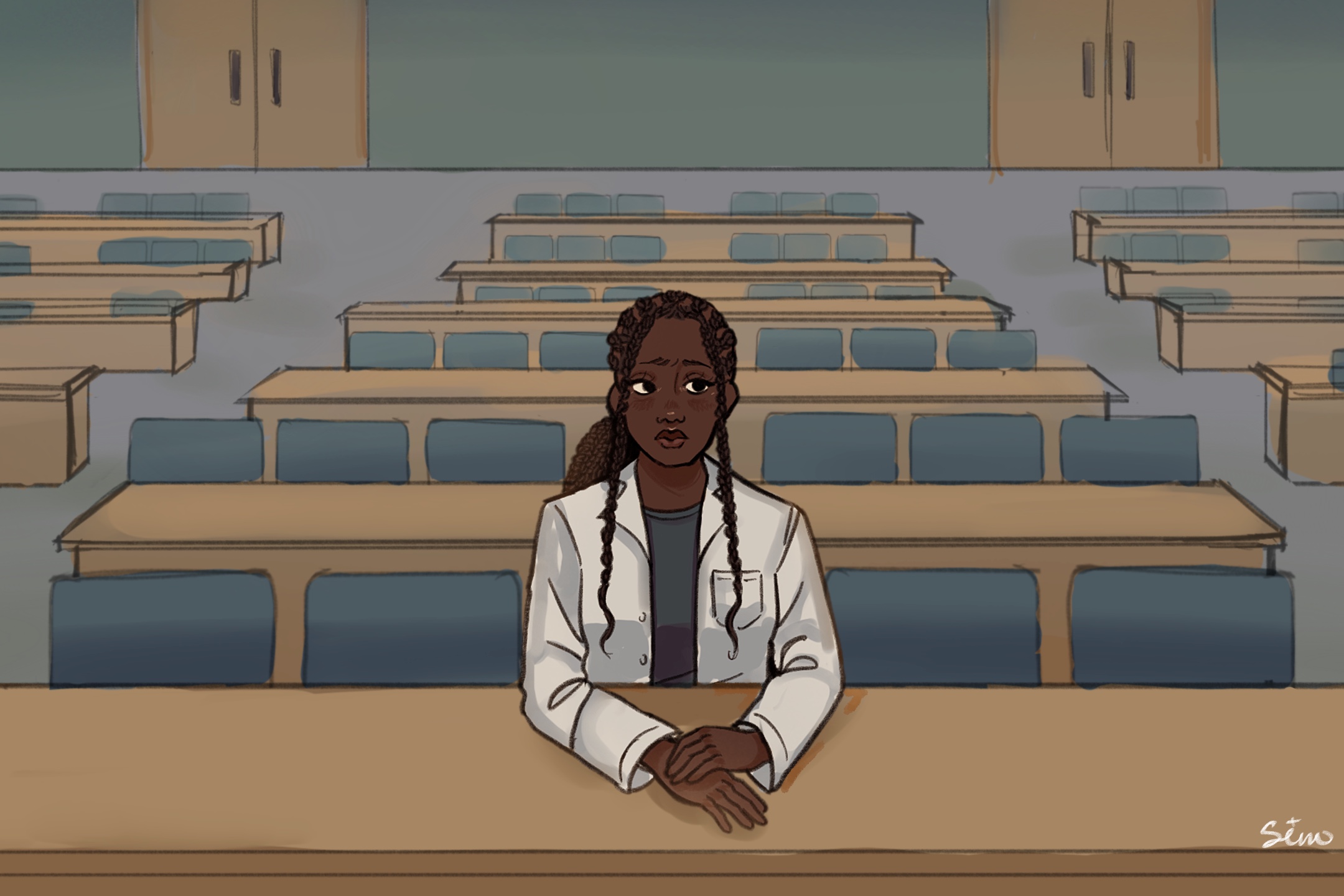
I am one of only two Black women in my Physician Assistant (PAs) program.
In a classroom of future healthcare providers, the absence of Black faces mirrors the broader landscape of Canadian medicine. Increasing not only the number of Black, Indigenous, and people of colour (BIPOC), but specifically Black PAs, is key to facilitating safer learning environments, improving patient care, and addressing systemic racism in medicine.
For the students
I remember the first day of classes like it was yesterday. Coming from a marginalized community, I’ve developed a habit of scanning a room ahead of time to mentally prepare myself to be the only Black person in a room, a routine I’ve known since childhood as a daughter of immigrants living in the suburbs.
With so few Black students in many health programs, microaggressions and isolation often go unnoticed and unaddressed. Students are frequently left to challenge outdated or biased content in the curriculum on their own. These experiences are not isolated but part of a larger trend among minority trainees. A 2020 Yale study published in JAMA Internal Medicine found that US medical trainees of underrepresented identities face disproportionate mistreatment from peers and supervisors. As Black Canadian students, we are not exempt from this racist and misogynistic treatment.
Despite this reality, PA programs have not developed dedicated application streams to support Black students, unlike many medical schools. Programs like the Black Student Application Program (BSAP) at U of T’s Temerty Faculty of Medicine are designed to reduce systemic barriers, offering Black applicants access to mentorship, targeted resources, and representation in admissions through the involvement of Black faculty.
I believe that similar initiatives must be implemented for pre-PAs, or else we risk reproducing a form of exclusion that has long existed in medical education in Canada.
For the patients
Anti-Black racism remains deeply embedded in our healthcare system. This is something I’ve witnessed firsthand and that research continues to affirm. Anti-Black racism contributes to disparities in pain management, mental health diagnoses, and maternal outcomes for Black patients. For example, a 2016 study by the University of Virginia found that a cohort of about 400 medical students rated Black patients’ pain to be lower than that of white patients, despite using the exact same description of symptoms. Implicit biases like these have contributed to the Black maternal health crisis in Canada.
According to the 2016 census, Black Canadians made up about five per cent of Ontario’s population in 2015, but only two per cent of physicians identified as Black. This gap isn’t just statistical. It means many Black patients never see themselves reflected in their providers.
A 2018 National Bureau of Economic Research study shows that Black patients are more likely to trust and engage with providers who share their backgrounds. By introducing more Black PAs, we create opportunities for improved rapport, better adherence to care plans, and stronger health outcomes for the underserved.
For the profession
To say the least, Canada’s healthcare system is overwhelmed. According to Statistics Canada findings, nearly 2.5 million people report unmet healthcare needs. Over five million Canadians struggle to access care. And as of December 2024, the country hit a record-high median wait time of 30 weeks between referral and treatment.
PAs are a proven part of the solution. PAs are advanced practice clinicians who work with physicians to deliver a wide range of medical services, from diagnosing and treating illnesses to improving access to care. PAs reduce length of stay, improve discharge rates, and increase continuity of care.
While the profession is growing, we need to be intentional about how it grows. Our workforce should reflect the diversity of the patients we serve. Hiring and supporting more Black PAs won’t just ease staffing shortages, but will help fill a deeper, more systemic gap in representation.
For the future
A healthcare system cannot be equitable if it does not reflect the people it serves.
We cannot build a stronger, more equitable healthcare system without ensuring that Black voices and perspectives are part of it.
Yes, increasing the number of PAs is important, but increasing the number of Black PAs is essential. By actively recruiting, supporting, and empowering Black students, our institutions can create a profession and a healthcare system that truly serves all Canadians.
Shelda Habyarimana is a second-year Physician Assistant student at the Temerty Faculty of Medicine, with a background in health sciences. She is passionate about advocacy, representation in healthcare, and inspiring more young Black women to pursue careers in medicine.
