
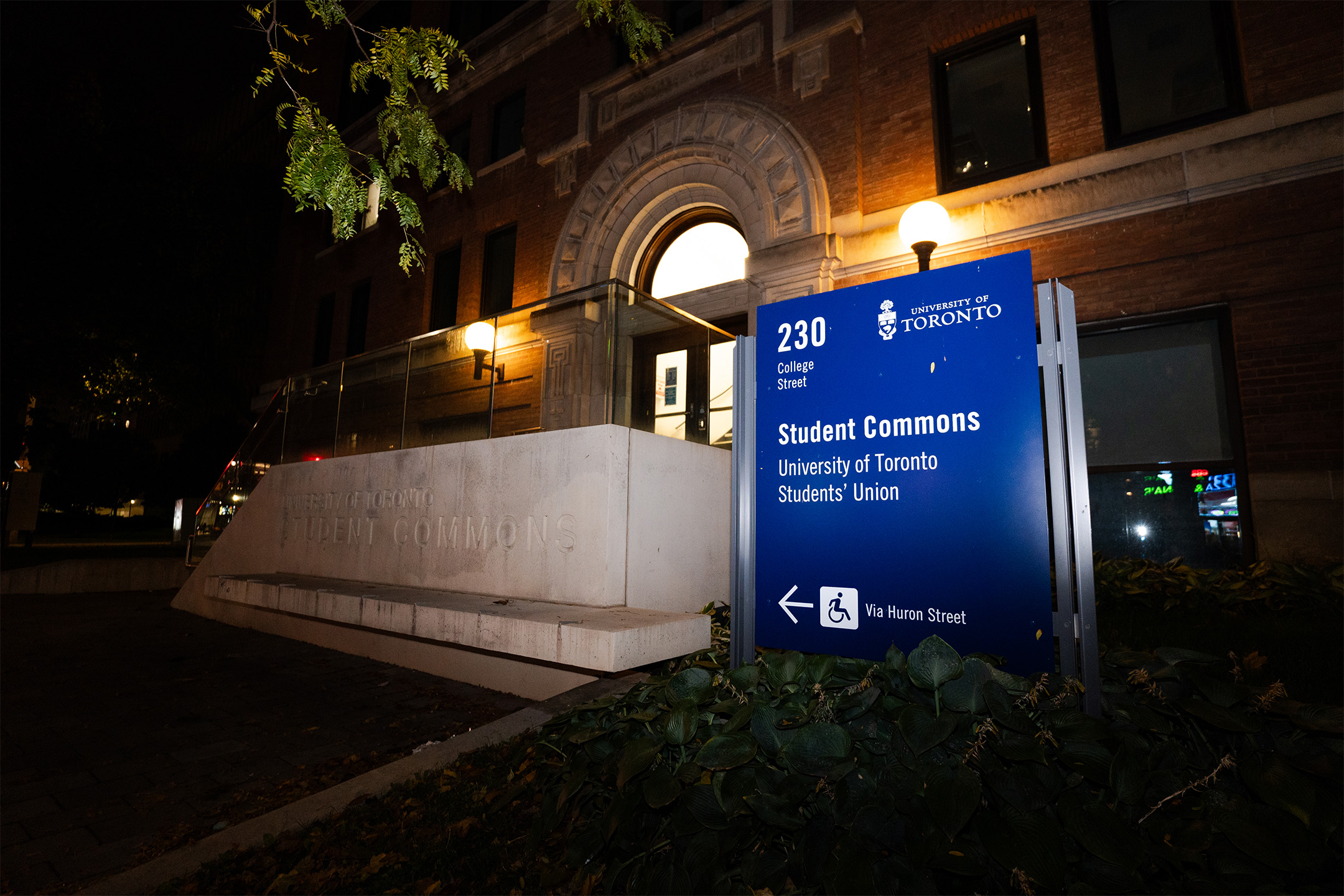
Are you a member of a club on campus? Do you enjoy events hosted by student groups at U of T? If you do, it is imperative that you hear about Bill 33.
Bill 33, the Supporting Children and Students Act, was introduced by Education Minister Paul Calandra in May of this year. Bill 33 is multifaceted as it will put cops back in schools, replace democratically elected school board trustees with government-appointed supervisors, require merit-based admissions without defining “merit,” and could give the government potentially unchecked authority over post-secondary research in the name of “research security.” I would like to focus on an aspect of Bill 33 that would especially impact student life on campus: incidental fees for student services.
Incidental fees, sometimes called ancillary fees, are fees levied by student organizations like the University of Toronto Student Union (UTSU) or the Engineering Society on its members to fund various groups and services. Some of these services include the UTSU Food Bank, the Sexual Education Centre, the Blue Sky Solar Racing design team, Orientation Week, and student union fees that fund campus clubs.
Some of these fees are compulsory, and some of these fees are voluntary, or opt-out. Currently, students can democratically decide which fees exist and whether or not they are compulsory through, either a direct referendum or indirectly through the UTSU board of directors. Bill 33 changes the system to allow the Ministry of Education, rather than U of T students themselves, to unilaterally decide which fees are opt-out. Based on the Ford government’s attempt to enforce a similar policy in 2019 with the so-called “Student Choice Initiative,” I predict that these compulsory fees collected by student organizations will be deemed “non-essential” by the Ford government.
My concern is that student groups like the UTSU, college associations, and Engineering Society (EngSoc) collect these funds not just for their own operations, but to finance the operation of the over 1,500 student clubs at U of T. Many of these groups are reliant on student fees; the UTSU covers up to 50 per cent of operating budgets for recognized clubs, and other bodies like EngSoc can cover up to 100 per cent of club budgets through direct funding and levies.
You might be thinking to yourself, “This is great, I can save money and stop paying for services I don’t need.” However, there are two problems with this line of reasoning.
First, there are direct benefits from having these clubs and services. From athletics to arts to advocacy, student clubs enrich campus life, allowing students to make new friends and build community. I’m grateful that we have clubs that run movie nights, student plays, concerts, bake sales, practices, networking events, field trips, holiday parties, and everything else that makes my time on campus that much better.
At a time of record unaffordability, where 29 per cent of Canadian students face food insecurity, food banks like the UTSU Food Bank or the Scarborough Campus Students’ Union (SCSU) Food Centre are literally life-saving for the hundreds of students who rely on them. I’ve thankfully never had to use Downtown Legal Services, but I’m more than happy to pay the incidental fee of $7.94 a year for the peace of mind knowing that my fellow students and I always have access to legal assistance if ever needed.
Student-run media like The Varsity, which is largely funded by an incidental fee, are essential for reporting news relevant to us, holding our student and university leadership to account, and giving us as students a way to make our voices heard.
A university without student groups would be dull, miserable, and barren of culture. That hurts all of us.
Secondly, incidental fees are not the culprit behind the affordability crisis on campus. While incidental fees are around $2,000 for full-time domestic undergraduates, tuition is three times higher for Arts & Science students who pay $6,100 and seven times higher for Engineering students who pay $14,200. The average undergraduate student in Ontario pays $1,150 more in tuition than the average student in the rest of Canada.
Meanwhile, Ontario has the lowest per-student public funding of universities in all of Canada: our universities receive $7,900 in provincial funding per full-time student, making up 29 per cent of operating budgets, compared to $14,800 per full-time student in the rest of Canada, making up 49.6 per cent of operating budgets. Clearly, the provincial government is starving our education system, and students, particularly international students, are being used by universities to make ends meet.
If Premier Ford were truly interested in putting money back in the pockets of students, he would prioritize funding our universities and lowering our rents, rather than going to war with our student clubs.
It’s not too late to fight back against Bill 33. Sign a petition, or better, write letters to Members of Provincial Parliament (MPPs) and Cabinet Ministers expressing your concern. Join a protest, like the one that happened on October 20 in front of Queen’s Park. If you’re part of a club, talk to the executives and general membership about how Bill 33 will threaten your operations. Pressure the UTSU and other student groups to follow the lead of the UTMSU and actively campaign against Bill 33. These actions aren’t for nothing: Premier Ford has shown a willingness to reverse course with enough public outrage, like he did with Bill 28 and the Greenbelt development.
Student groups are the beating heart of our communities on campus. Right now, they’re under attack. It’s up to us to defend them.
Raymond Bhushan is a first-year Master of Applied Science (MASc) student in the Civil and Mineral Engineering Department. He currently serves as the Policy Director for the University of Toronto New Democratic Party (NDP) campus club.
