
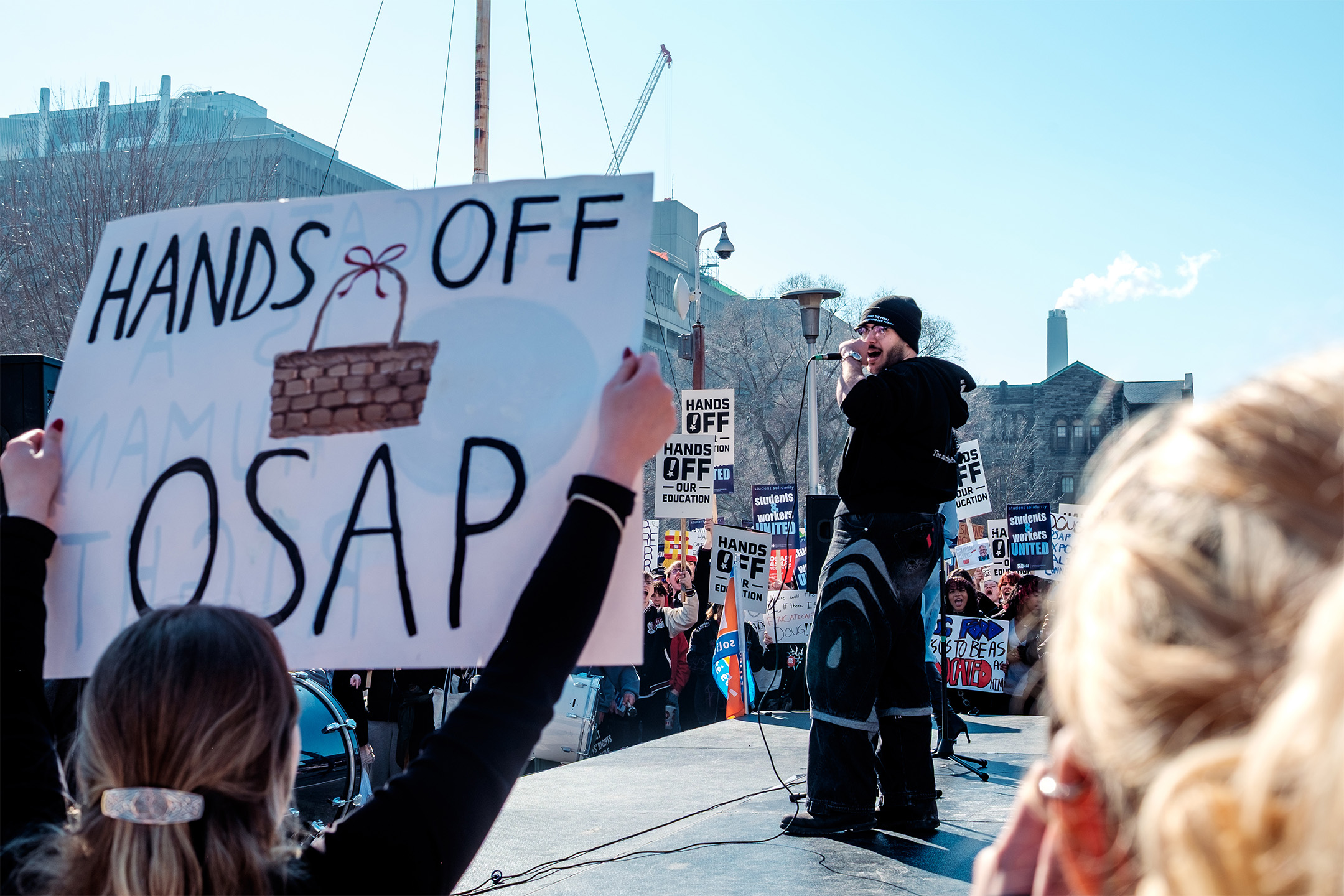
When Premier Doug Ford proposed cuts to education in 2019, much of The Varsity’s current masthead were in high school. We remember walking out of classes, joining over 100,000 students across 700 high schools in the province, protesting Ford’s cuts to education. Now, seven years later, many of these same students are once again walking out of classes, protesting Ford’s cuts to OSAP.
This new OSAP model will have major consequences for many students at U of T and across Ontario. Ford has reduced the amount of grants students can receive from a maximum of 85 per cent to 25 per cent of their OSAP aid, increasing reliance on loans. This increase in loans is bound to increase student debt levels across the province.
Although student loans are often considered an ‘investment,’ they are not a viable strategy for wealth accumulation compared to other loans, such as mortgages. According to Statistics Canada, households with student debt are more likely to be living paycheque to paycheque, fall behind on payments, and take out high-risk loans. OSAP cuts will also disproportionately impact racialized households, who are already twice as likely to have student loan debt.
Regardless of how you feel about Ford’s leadership, there is no denying this fact: Ford’s cuts to OSAP will only exacerbate the negative impact student loans have on Ontario households, deepening systemic inequities in our province.
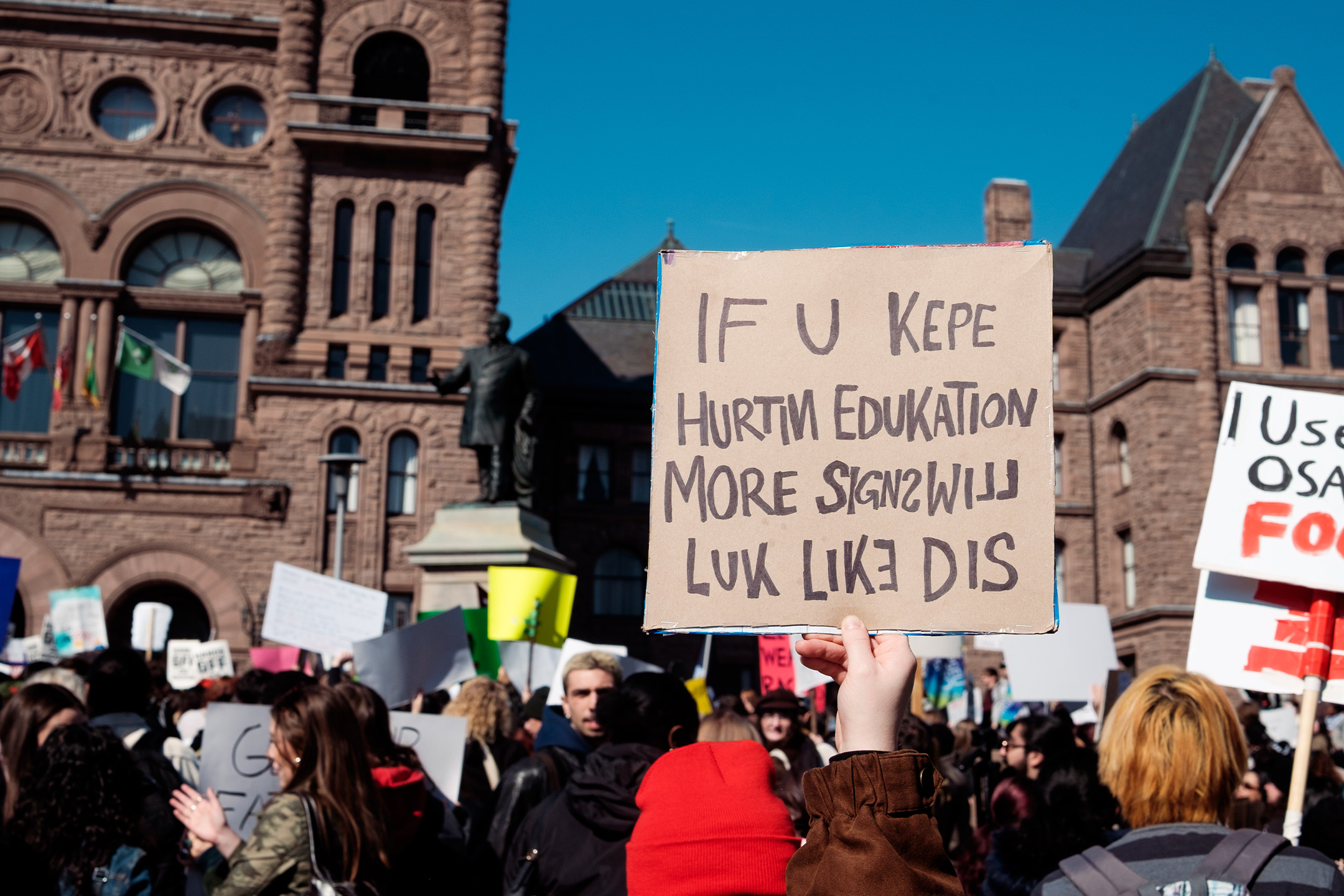
Although we could add another editorial to the plethora of student paper editorials criticizing Ford’s cuts to OSAP and calling for the provincial government to reverse this decision (all of which we highly encourage you to read), we want to encourage students to think about Ford’s attacks on OSAP as part of a larger pattern of Ford’s attacks on public education.
Why is it that we must remain vulnerable to Ford’s volatile education policy? Why is it that the same students who protested Ford’s 2019 cuts to education must return to the streets to protest cuts to our post-secondary education? Why is it that we must always beg for the bare minimum simply to complete our post-secondary education, let alone prosper in it?
This Editorial Board believes that we must do away with the crumbs that years of austerity politics have left us with. Since releasing his 2019 budget, Ford has been accused of promoting austerity — a political strategy that slashes government spending in an attempt to reduce government deficits. We, as students, demand a fully funded education system, one that offers free education for all its students and doesn’t leave us vulnerable to austerity measures. We must advocate for an education system that is immune to Ford’s and future governments’ volatile education policy.
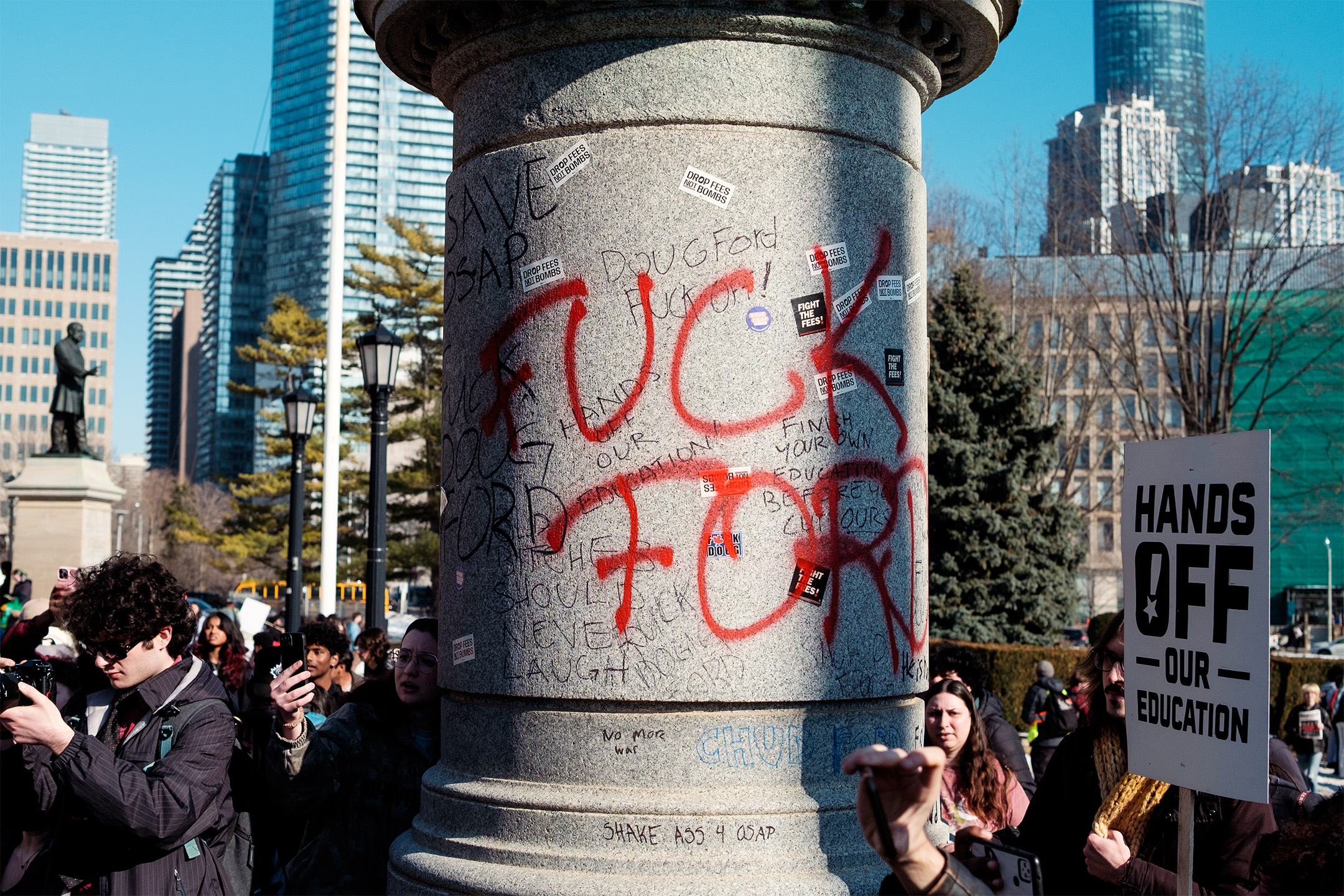
The politics of austerity
Ford’s cuts to OSAP are just another example of the austerity politics he has brought upon Ontarians. Although austerity measures are often framed as reducing public deficit, it has been proven that it increases inequality and slow down economic recovery by increasing the unemployment rate and cutting public sector investments.
In a press release, the Ford government justified its austerity measures as a means of strengthening “the long-term sustainability of OSAP.” In a press conference, Ford argued that these cuts would push students away from “basket-weaving courses” and would instead help “prepar[e] students for rewarding, in-demand careers that meet labour market needs.”
The Editorial Board believes that Ford is using colonial logic to justify his austerity measures, and that his comments are classist, sexist, and anti-Indigenous, as laid out in Landon Sanderson’s Opinion article from earlier this month.
In an official statement, Laura Walton, the president of the Ontario Federation of Labour, said that “downloading costs onto students is not fiscal responsibility, it’s austerity.”
We couldn’t agree more.
Mobilizing against austerity
U of T’s response to these austerity measures have been nothing short of disappointing. Instead of condemning Ford’s approach to education, U of T reacted to the province’s actions positively — particularly in reference to the additional 6.4 billion in funding for universities. In a message from U of T leadership, the university describes Ford’s plans for post-secondary education as “the biggest boost to higher education in this province in a generation.”
This positive response, which we believe sidelines the needs of students, leaves The Editorial Board bewildered as the university fails to adequately condemn the changes to OSAP.
How are provincial austerity measures good news? How is financial insecurity for students good news? How are cuts to OSAP good news?
This year, in The Varsity’s Opinion section, there has been no shortage of criticism of the Ford government’s approach to education in Ontario — particularly regarding Bill 33. Students must not solely advocate for a reversal of Ford’s cuts to OSAP, but for a free, accessible, and democratic post-secondary education system. Students must not be left at the will of any government, let alone Ford, who, since 2019, has made defunding education a personal ambition.
As in 2019, students this year have been unafraid to mobilize. On March 4, hundreds of students filled Queen’s Park to protest Ford’s cuts to OSAP, and students will once again protest in Queen’s Park on March 24.
But combatting these austerity measures calls for more than just mass mobilization. Now is the time for students to strategically organize against Ford’s austerity, to ensure once and for all that we never again have to take to the streets to demand our right to a dignified education — an education that does not leave students at the whim of a pathetic provincial government.
At U of T, student groups such as Climate Justice U of T, Tkarón:to Students in Solidarity with Palestine, and the PEARS Project have been organizing for years to help bring formative change to the university.
Students at other postsecondary institutions in the province have also taken action. At McMaster University, Students Against Austerity, an activist student group, passed a motion at their 2026 General Assembly to create a framework for student strikes to address changes to OSAP. At York University, the York Federation of Students conducted a sit-in in the Bennett Centre for Student Services until they were able to secure a meeting with York’s interim President to address the cuts to OSAP.
For there to be real change at U of T, the UTSU must get out of its insular office on College Street and actually meet students where they are, to engage in organizing efforts. They must use their platforms to advocate to the university administration against increases to tuition and for increased financial support through programs such as UTAPS. These programs provide temporary relief to students to remain resilient while continuing the fight against austerity measures.
The UTSU must demand that the university use its position to oppose Ford’s approach to education and implement a plan for a free and accessible education for all students. The UTSU should also engage in a cross-university effort to fight against a provincial government with such disdain for postsecondary students and education as a whole.
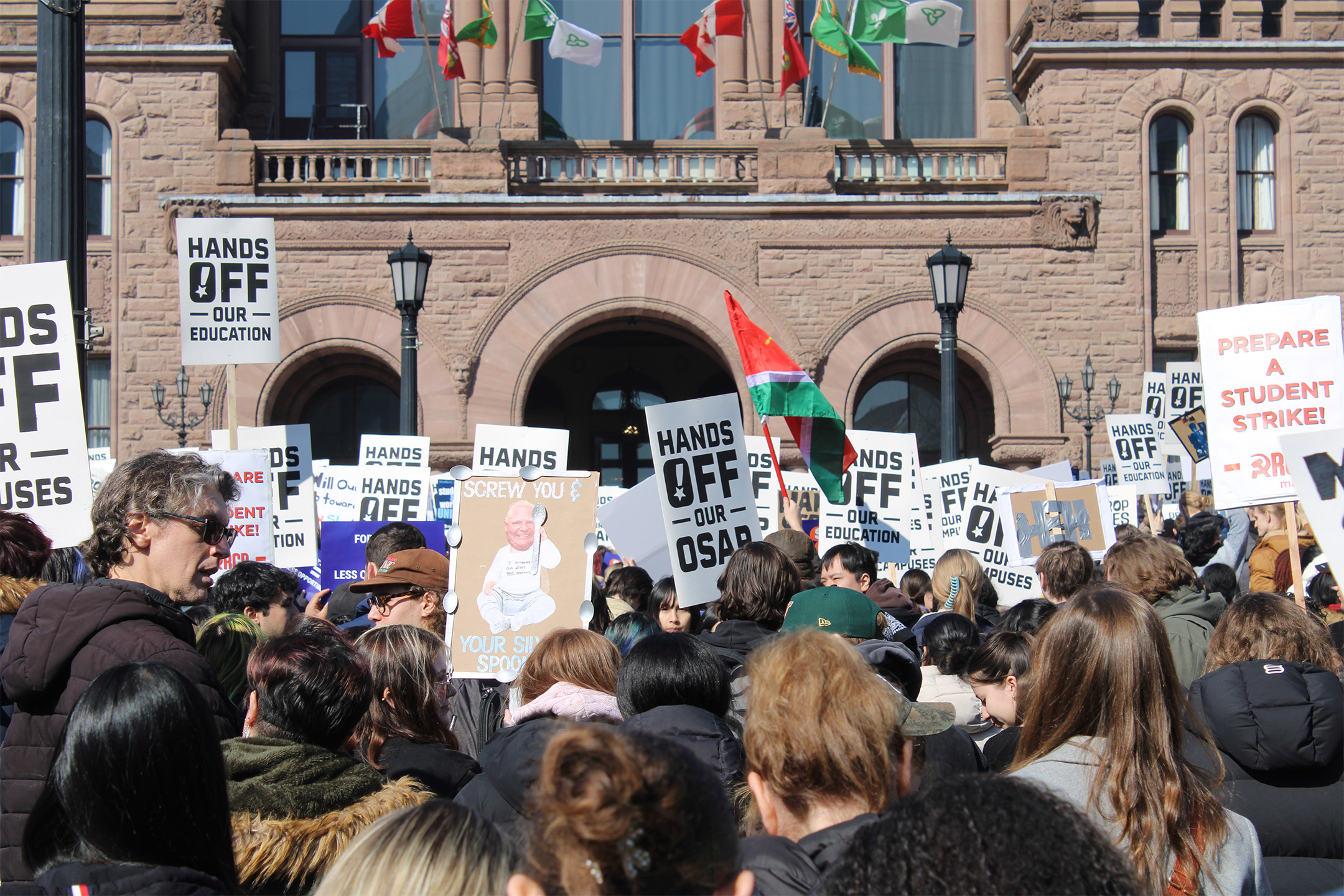
Looking forward
In response to Ford’s cuts to OSAP, Juliet Pieters — one of The Varsity’s own associate senior copy editors — wrote a poem to express her frustrations. She writes that “turning to verse was… [her] first instinct (aside from certain expletives) upon hearing what the Conservative government of Ontario seeks to do with OSAP, and by connection with our education.”
Pieters, in her poem “WTF101: Introduction to Underwater Basket-Weaving,” writes
“The final step, to weave through the streets, shout
And display the baskets we have made.
Dripping with effort trailing corruption
In a blue suit defending the growth of his own wallet
Over the course cuts defunding the future.”
Reading Pieters’ poem provides us with the imaginative possibilities for what student organizing at U of T could look like. As our 2025 Letter From the Editors stated, the UTSU elections have struggled with “a complete lack of vision and broken promises.” But Pieters’ poem reminds us that the UTSU and student organizing on campus doesn’t have to be this way. The poem is a reminder of the power embedded within our student body.
In our current context at U of T, as students remain angry and ready to take to the streets and we usher in a new UTSU team, the time is now to fight against more than just cuts to OSAP, but Ford’s austerity politics and Ontario’s inadequate education system that consistently leaves students behind.
We, the students, have been fighting against Ford’s cuts to education since 2019. This moment offers a unique opportunity for students across the province to organize against austerity and demand a future not subjected to volatile provincial education policy.
We cannot afford to miss this moment.
The Varsity’s masthead elects the editorial board at the beginning of each semester. For more information about the editorial policy, email [email protected].

No comments to display.