
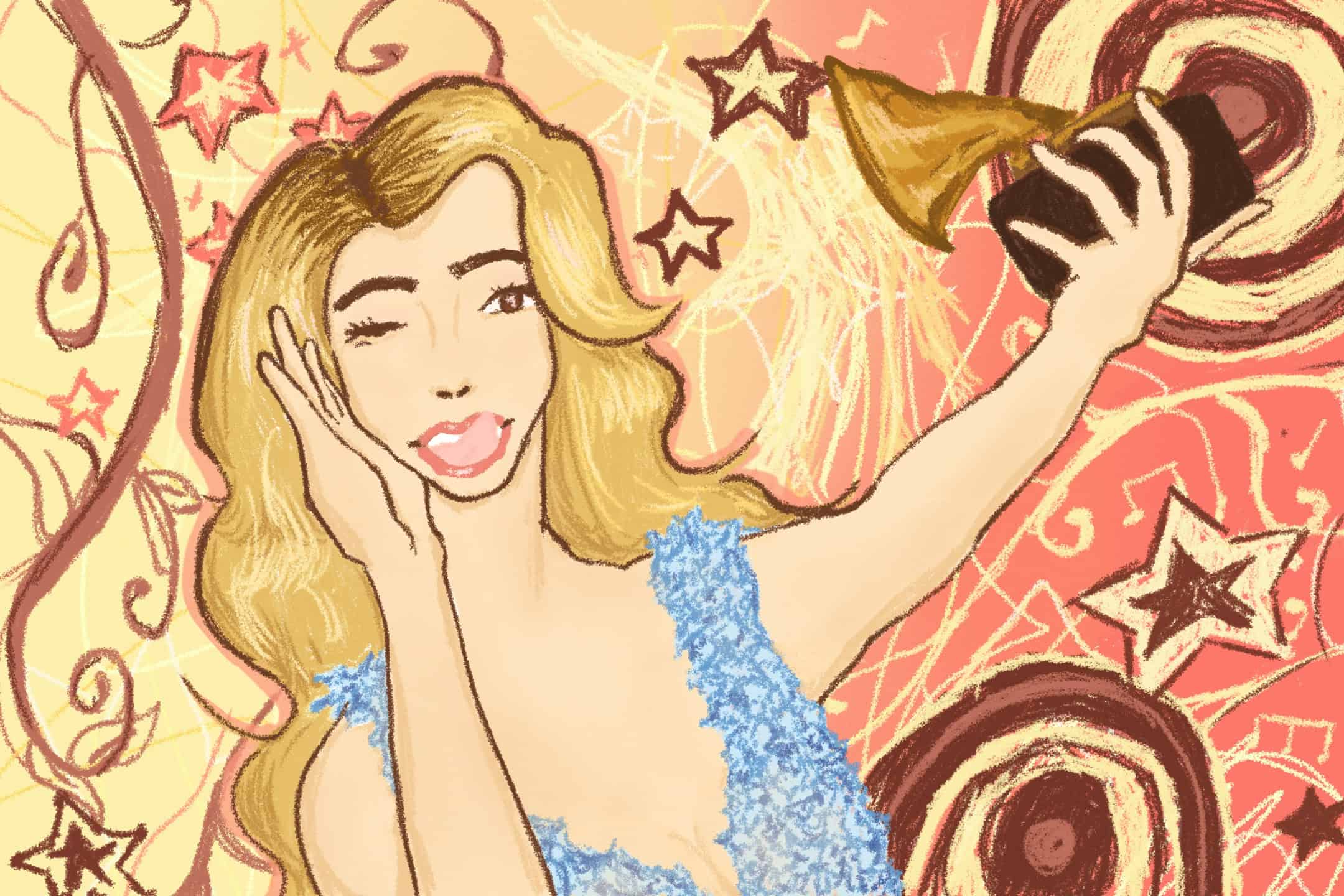
Addison Rae Easterling, popularly known as Addison Rae, is a pop singer, influencer, actress, and dancer who, on November 7, was nominated for the “Best New Artist” Grammy, a decision made controversial due to Rae’s harrowing origins — TikTok. While nearly every musician has an ‘embarrassing’ past, Rae’s origin as a TikTok star seems to haunt her career in particular. Her artistry is frequently questioned by internet detractors whose common critique is that she is “manufactured” and trying too hard to be something she’s not.
Her presence in music was once perceived by PAPER Magazine writer, Joan Summers, as an “omen of certain doom” for the sanctity of the music industry. Despite the criticism, I think Addison Rae has proven herself to be a talented artist. I think the fact that her fame is consistently undermined by her past is a result of the public’s inability to adapt to the changing definition of fame and classist notions of celebrity.
A new kind of fame
With the rise of social media influencers, many dismiss internet fame as “less serious” than traditional stardom, ignoring the reality that modern fame is no longer elusive. Before the internet, fame was gatekept by record labels and studios that hand-selected talent and moulded them into celebrities. Now, nearly anyone can gain social media clout and even mass virality as a result of social media democratizing fame. Rather than executives selecting celebrities, social media has given audiences and algorithms the ability to choose who becomes famous, making fame more accessible than ever.
This is best seen in Rae’s career trajectory, where she garnered over 88 million followers on TikTok by making dance videos before she pivoted to music. Social media’s democratization of fame has allowed artists who would traditionally face barriers to the industry, due to their marginalized identities or alternative sound, to cultivate fan bases.
Although this is seemingly a positive change, Rae’s origins on TikTok are often weaponized against her to question if she is qualified to make music, or if she pivoted to music to seek more fame; hence, why a majority of the discourse surrounding Rae pertains to her authenticity as an artist.
Critics online argue that the lower threshold to fame is cheapening the quality of art and artists’ awards. While these concerns are understandable, I think the origin of fame does not determine its legitimacy. Moving forward, I think celebrities will only further synthesize with influencers, and internet personas will be integrated into the music industry. This has already occurred with the generational talent Justin Bieber, who was discovered through a YouTube video. Even Rae’s fellow nominees, such as Sombr and Alex Warren, are notable TikTok sensations.
Fame for all
I think the growing ease of achieving fame is effectively narrowing the socioeconomic gap in who can become famous. Although Hollywood is filled with “rags to riches” stories; in reality, many celebrities come from wealthy families. Social media virality, in contrast, allows talented individuals with fewer resources to break into mainstream success.
In an era where public discourse often criticizes “nepobabies,” it is quite contradictory to scrutinize Rae, who gained fame organically via social media. The notion that musicians are only legitimate if they spent their youth in music school or on film sets carries a classist connotation, as lower-class children typically lack access to those environments.
Conclusion
I think Rae’s debut album is incredible. It has a distinct dreamy dance-pop sound that distinguishes it from the contemporary musical atmosphere. Although criticisms of Rae are dominated by her past as an influencer and supposed inauthenticity, there is also a gendered aspect to the scrutiny she faces that her male counterparts, such as Alex Warren, have mostly evaded. It seems that the public revels in critiquing women, which is a symptom of a misogynistic culture and would require an additional article to address!
Ultimately, Rae doesn’t represent the depreciation of the music industry; rather, she is a talented musician whose unique fame is a product of the relatively democratic and meritocratic fame created by the internet. Rae proves that striking talent can originate from anywhere, even doing the Renegade on TikTok.
This Grammy season, I’ll definitely be cheering for Addison Rae!
Nicole De Jesus is a third-year student studying history and political science. She is the President of the Second Sex Club and Academic Director of the History Students’ Association.
