
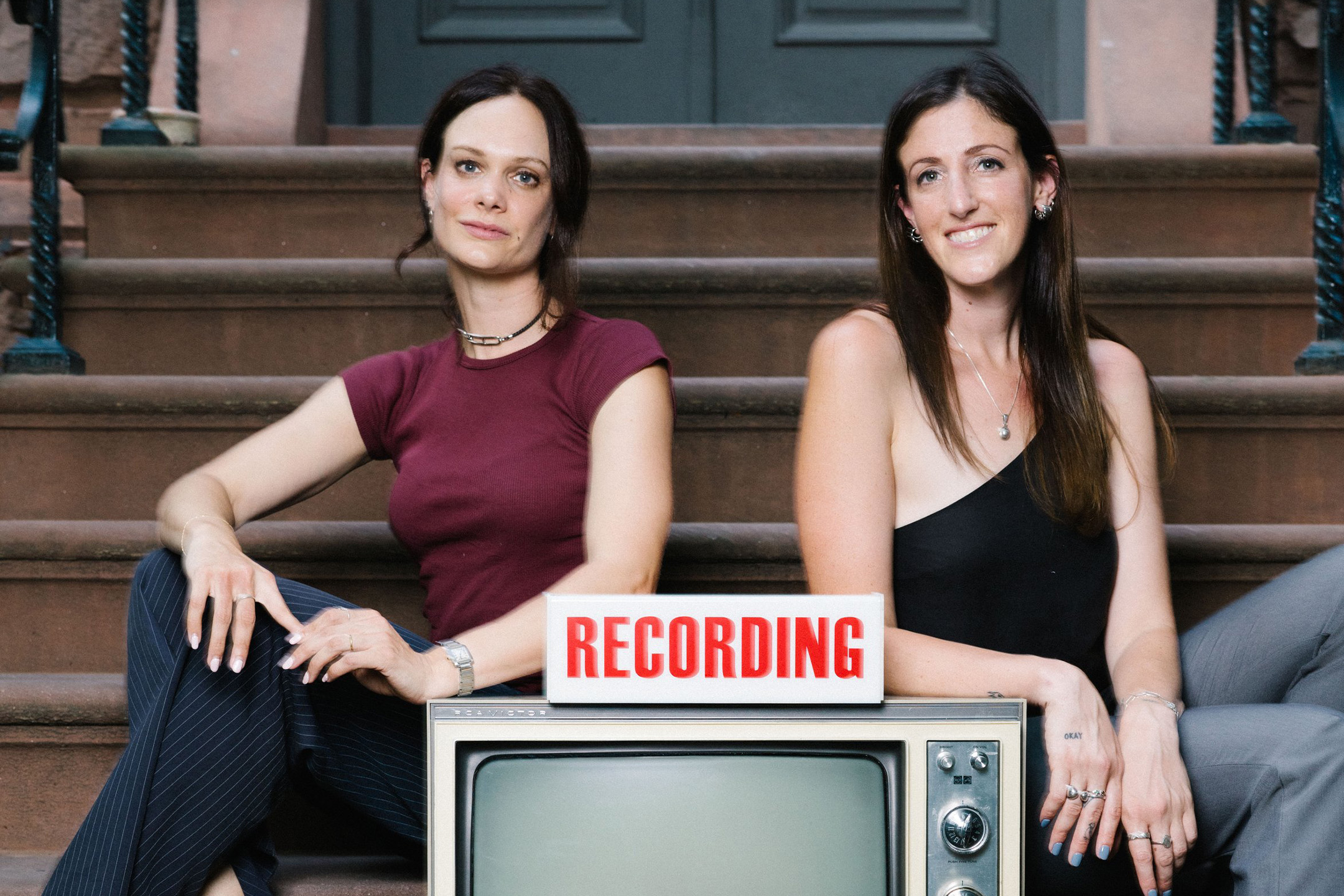
The Varsity chats pop culture, Gen Z, and celebrity criticism with New York comedians and podcasters Claire Parker and Ashley Hamilton, former hosts of the acclaimed podcast, Celebrity Memoir Book Club, and current hosts of Good Noticings, a comedic cultural criticism podcast focused on trending articles, news, and headlines.
The Varsity: We’ll start this off the way you guys start off your podcast. Do you have any recommendations for people in their early 20s figuring things out?
Ashley Hamilton: One of my big recommendations is to embrace uncertainty and not think that there’s a final destination of any kind. I think that there’s no end of the road, so if you’ve got certain benchmarks for when you’ll feel sorted, you never will.
TV: I’m curious what your research process is like. Do you feel like the podcast keeps you chronically online?
Claire Parker: Not more online than I was before. I feel like it’s helped me not get offline but dig deeper. Now, because it’s my job, when I see the discourse start, I go straight to the source and I suss it out. So I actually spend less time online wondering and more time reading and educating myself.
A lot of times we’ll find things that people seem to have been talking about all week, put them in a Slack and then on Sunday night or Monday morning, we read all of them and figure out which ones work and if we have to do secondary research. Then we start building out our segments.
AH: I think I’m almost honestly less online than I was before. With the broadening of the pod’s topics, we set up a situation where we’re reading more books and watching more movies. I feel like it’s helped me rise to the occasion of actually doing a lot more long-form consumption.
TV: You guys bring a lot of celebrity critiques and humour, especially when you’re reviewing memoirs. Do you ever fear that these celebrities are going to listen to the podcast? Do you self-censor because of that?
AH: I think that if they respect themselves, they wouldn’t listen. That’s the mindset that I operate under. There are places on the internet where there’s a chance people are going to be talking shit about us, and I think it’s my responsibility to not go there.
CP: There’s a lot of people that I’m like, “Oh, they’re in our career. Why burn this bridge?” But when we’re recording it’s just me and Ashley alone in a room, and it’s hard to remember how many people listen to the podcast and how far-reaching it could be.
TV: Are there ever moments you feel like you’ve gone too far and then cut things out? Or do you just let it all into the podcast?
AH: There’s probably been a time where we’ve gone off the rails and then been like, okay, let’s walk it back.
CP: I think I’ve said some really petty things about people where I recognize that it’s not constructive criticism, it’s just me being a bitch. So, those I’ll keep for Ashley’s ears only.
AH: I also feel it’s important to note that I don’t stand by everything I’ve ever said.
TV: I was listening to today’s episode and you guys made a point that I liked about how people tend to elevate things like BookTok smut or reality TV, or in your case, celebrity memoirs, just so that you can see it ‘through a lens.’ Do you think conversations around mainstream media should acknowledge that sometimes enjoyable things are bad and not art?
CP: Yes, and I think another thing that’s happening right now is that ‘standoms’ have made it impossible to have non-praising reviews. Social media has given us direct access to celebrities, which has choked the importance and the power of gatekeepers like magazines and profiles. So, now if you are Rolling Stone and you want to interview Taylor Swift you know that if you say anything critical she will not come back for another interview.
The media needs celebrities more than celebrities need the media. It’s created this echo chamber where anything less than positive feels like a personal attack when, in reality, criticism exists to have thoughtful discussions.
AH: Standom makes everybody a baby girl, and everyone has a story, and they’re like “how could you be so rude about this person’s work? They tried really hard on it.” I hope that they tried, they put this out into the world. Hopefully they’re a good person. That doesn’t mean that they are exempt from criticism.
TV: I know you guys recently read the Gooniverse article. I didn’t want to bring this up because my mom reads my articles and I don’t want her Googling what this is –– but, do you guys have any opinions on how Gen Z is written about in the media? Do you think that there’s a panic that everyone in Gen Z is a lonely conservative incel?
CP: I definitely think there’s a panic, but I also think that Gen Z are unfortunately the ones coming into it. I don’t think that millennials are not necessarily gooners. I have a friend who was a journalist and she was saying, “so many people live such isolated lives.” And she was referring to people in their 50s, 60s, and 70s.
I don’t think it’s new how isolated America is. But I do think that the isolation is starting younger and younger. I understand the moral panic; a lot of times people get upset over something that’s just different and new. But I don’t think it’s unreasonable to assume that if you can outsource your social anxiety by just talking to a robot instead of meeting a person, that will work out well in the long arc of things.
AH: I also think there’s something to Gen Z’s validation of social anxiety and loneliness. For millennials and older generations, there was a certain level of social interaction that was expected of you. And now the way you can interact with so many people at once online, it’s very acceptable and almost celebrated now to be someone who is in bed by 9:00 pm every night at 22.
TV: I am a big proponent of that. I think the question “What is it like being a female comedian?” is really stupid because we know that women are funny. But being women talking about pop culture in the podcast sphere, which is dominated by the Joe Rogans and whatnot, do you feel like you’re taken seriously as cultural critics? Do you want to be taken seriously as critics, or more as comedians?
CP: I mean, definitely both. The interesting thing about this podcast is it started taking off right around the time I got engaged. Because of that, I really don’t consider men’s opinions at all, specifically about the podcast.
I understand we’re on the same internet as Joe Rogan, but the beautiful thing about TikTok and podcasts is that these niche communities can be hiding in plain sight. In order to hate us, you’d have to listen to us for two hours every week. That’s a lot of work.
I will say that we have a mostly female audience. I really am talking alone in a room with a woman. Almost everybody we work with is a woman. It very rarely comes to my mind that a man could be listening. Just the other day, we did a live event and the crew that was doing the sound and visuals were men. For the first time, I was noticing the things we say and the jokes we make in a way that I don’t normally. It really did put it into perspective how little I consider men when we’re talking. So I really don’t worry about it.
AH: I feel like we’re taken a correct amount of seriously. Sometimes I wish we could access more intellectual spaces, but in general I think that the people who are being taken overly seriously are being taken too seriously.
I don’t think that we have very many people dismissing us because we’re women or because we talk about pop culture anymore. But I think there is a general gravitas given to certain podcasts that shouldn’t be at all. Like the way Joe Rogan’s podcast is taken so seriously when he is just a man in his own basement who does not leave his compound rambling into the ether. The fact that that is taken more seriously than anything is crazy.
This interview has been edited for length and clarity.

No comments to display.