
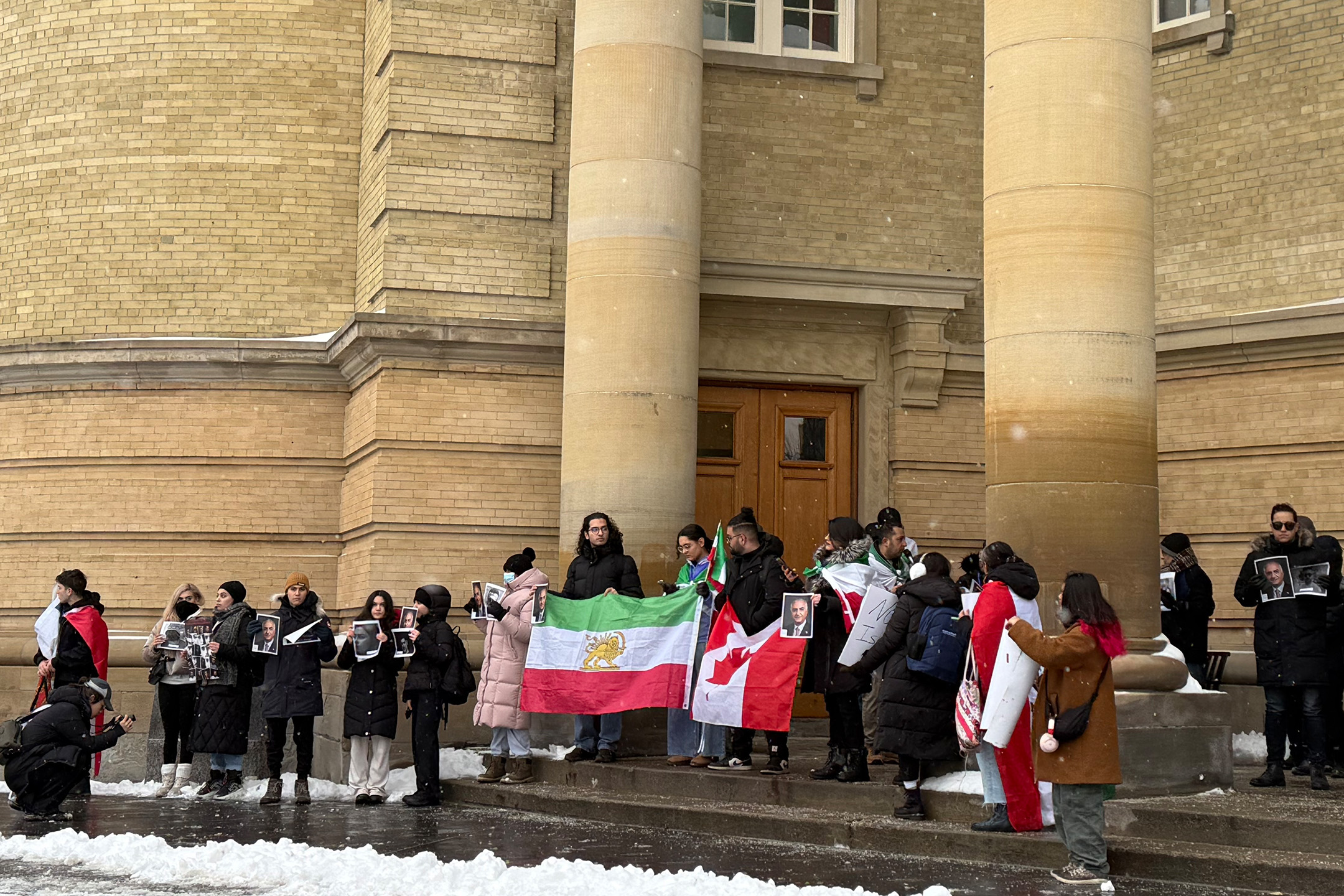
On January 16, the Iranian Students’ Association at the University of Toronto (UTIRAN) led a rally in support of the protesters in Iran, starting at Convocation Hall and ending at the US Consulate in downtown Toronto. In an Instagram post, the U of T group wrote, “We, the Iranian Students’ Associations across Canada, have come together to demonstrate our solidarity and support for our patriots fighting for a free Iran.”
Supporters gathered in front of Convocation Hall at 4:00 pm, raising Iran’s Lion and Sun flag, and holding signs reading, “Woman, Life, Freedom” and “Internet 4 Iran.” Some signs displayed photos of the Crown Prince of Iran, Reza Pahlavi. The supporters called out, “SOS for Iran,” “Be Our Voice,” and “Silence is Violence.”
UTIRAN President Shayan Farzanegan read a joint statement by the Iranian Student Associations, saying that this is not a time to stay silent. “We ask the international community to approach this revolution with compassion and understanding for people fighting [for a free Iran].”
Weeks of protest and deadly crackdown
Anger with the Islamic Republic of Iran, which seized power in 1979, stems from long-standing issues: corruption, mismanagement, civil rights abuse, the rights of women in the country, energy shortages, and the impact of renewed international sanctions targeting Iran’s nuclear and missile programs and freezing assets abroad.
Protests in Iran began on December 28, 2025, over soaring prices and the collapse of the rial, the nation’s currency. It started with store owners in Tehran’s Grand Bazaar and spread quickly to other provinces. By early January 2026, the situation had intensified, with reports of national guard and police forces using live ammunition, tear gas and mass arrests of protestors.
As of January 14, the US-based Human Rights Activist News Agency (HRANA) estimated a death toll of 2,615. One report from Iran International claimed that the death toll in the two-day period from January 8–9 was as high as 12,000, which would make the crackdown the deadliest in modern Iran.
In an effort by the government to suppress protest organizations and reporting, much of Iran has been under an extensive internet and telecommunications blackout since January 8. On January 16, four weeks after Tehran’s stores closed in protest, Al Jazeera reported that demonstrations had waned, following the deaths and detentions of thousands of protesters.
Protesters are calling for an end to the current regime.
“Fighting for their freedoms”
“I feel proud of the people fighting for their freedoms,” Farzanegan told The Varsity in an interview, “Living in poverty, living under oppression; when you see them rising up, that makes you feel proud.”
At the same time, Farzanegan says he is “angry that we’ve lost so many people,” and shared that he has been unable to contact his extended family members in Iran for eight days due to the internet blackout, and does not know what their current situation is in Iran.
During this time, Farzanegan said, the Centre for Learning Strategy Support (CLSS) has been “very empathetic and understanding” in supporting him and other Iranian students during this time. However, some students in the community reflected that they are feeling not being heard of because of a lack of an official statement of support from the university.
To further support Iranian students, Farzanegan suggested that the university consider extending the application deadlines for prospective students in Iran until they have access to the internet, and waive the late registration and application fees until students are able to access their funds at home.
The university did not immediately respond to a request for comment. However, an April 2024 memo on Institutional, Divisional, and Departmental Statements established new guidelines for issuing statements. Vice-President and Provost Trevor Young wrote that the application of the memo “will result in fewer institutional statements.”

No comments to display.