
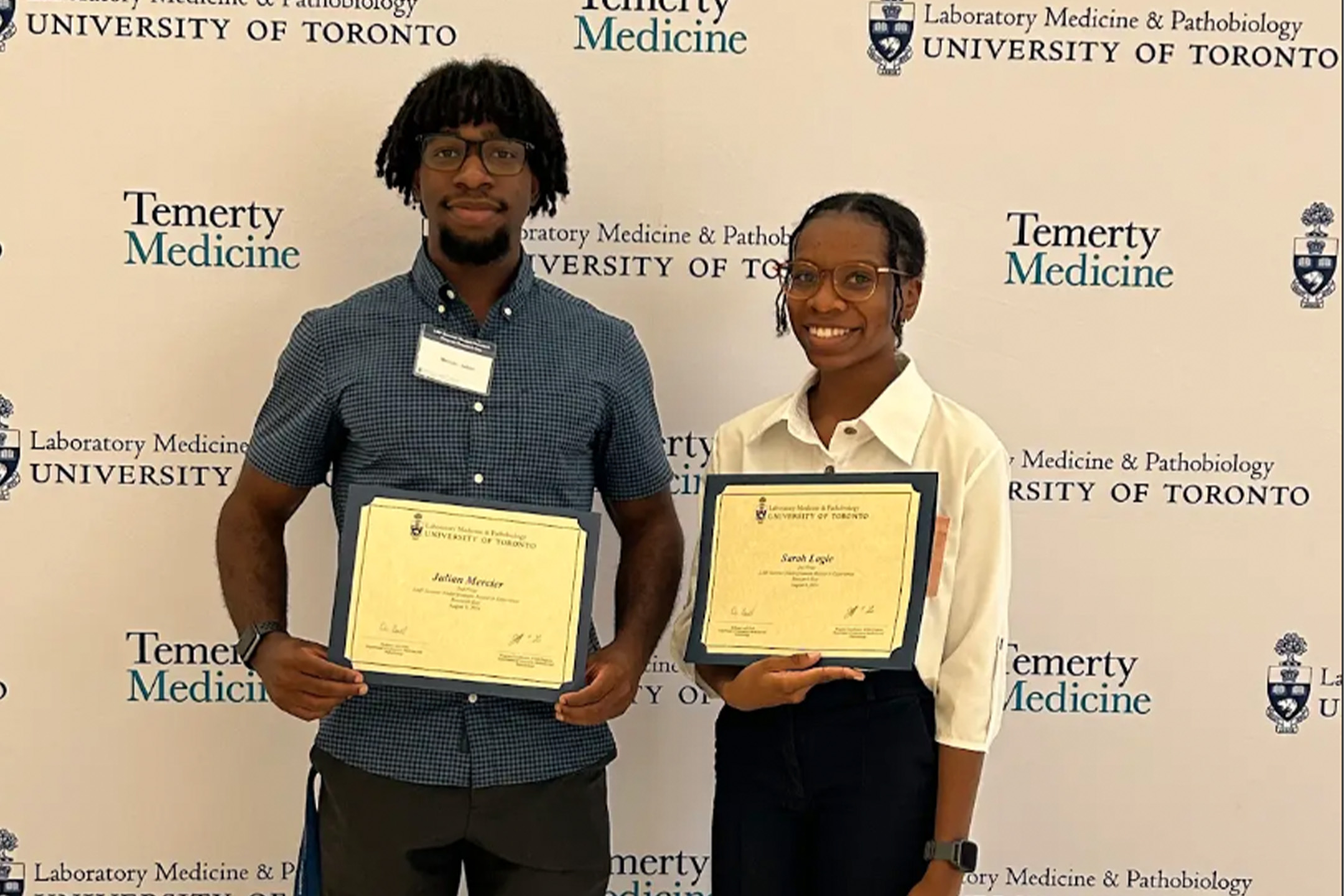
After countless emails and late nights of looking through professors’ research, I finally landed an interview for a 2024 summer research position. I would be taking part in the Laboratory Medicine and Pathobiology Summer Undergraduate Research Experience Program (LMP SURE), which was both an exciting and terrifying opportunity for mentorship in undergraduate research.
The LMP SURE program attracts many talented undergraduates, with the 2024 cohort hosting 67 students from universities across Canada. The culture of STEM-associated fields often frames undergraduate research as a major milestone, with students actively competing for these kinds of positions.
For perspective, the Natural Sciences and Engineering Research Council of Canada (NSERC) is one major source of STEM research funding and only supplies around 3,000 research awards annually for undergraduate students in STEM fields across Canada. Meanwhile, there are 450,000 students enrolled in STEM programs at the university level nationwide, meaning funded research roles remain very limited. While taking part in this internship, I was able to observe how lab culture, representation, and mentorship shape success in research.
As I settled into the lab, the composition of the undergraduate student body immediately stood out. Among the 67 students, including me, only four of us were Black, and we all worked in Professor Paul Hamel’s lab.
Hamel was my principal investigator, leading the research project, and helped spearhead the LMP SURE initiative by expanding the overarching SURE program to include a stream geared towards attracting Black talent. The LMP department then followed suit after recognizing that there were serious gaps in mentorship and access for Black students in STEM.
The program aimed to provide the guidance, support, and opportunity that Black students are routinely excluded from. However, our small numbers made our presence feel very visible within the cohort of SURE students.
The mentorship we received was a result of broader efforts made by the university to help lessen the visible gaps in diversity and representation. LMP facilitated this mentorship by fostering a supportive environment, structured supports, and dedicated funding for Black students.
Structural gaps in STEM
According to the fall 2025 iteration of the U of T Student Equity Census, only 5.97 per cent of U of T students are Black. Barriers, biases, and unequal access to opportunity in lab environments stem from deeper systemic problems with Canadian education.
According to a 2024 Statistics Canada study, STEM-qualified Black students are more likely to not graduate or switch programs than the rest of the student population. Black students consistently ranked lower than their peers in bachelor’s degree enrolment rates, graduation rates, STEM enrolment rates, and STEM graduation rates.
Funding, access, and who gets in
To better understand how these gaps are produced and experienced, I spoke with my former principal investigator, Hamel, and my fellow post-graduate researcher, Sarah Logie. Hamel offered insights into how structural determinants limit access for marginalized students, while Logie reflected on her personal experiences working in the lab. Together, their perspectives highlight the importance of representation and how underrepresentation is a multifaceted issue within the university.
Hamel emphasized that access to undergraduate research is more of a structural issue rather than a question of interest, racial bias, or merit. He found that many of these disparities, such as racial bias, are perpetuated by institutional funding, stating that “there is no institutional support for it. So this represents an impediment to this, because the business we’re in, particularly […] in the biological sciences, costs money.”
This also highlights the issue of unpaid or underpaid research positions. Many students are often left competing for unpaid research positions, like volunteering in labs, creating an even more competitive environment and further financial inequities.
Hamel also explains that “there’s certainly enough people that would take students that are from all kinds of marginalized communities,” but competition against peers with previous lab experience makes it difficult for newer students to get lab opportunities.
These institutional constraints help put into perspective who really gets research positions. Underfunding increases competition for marginalized students, such that these students are less likely to get research positions, meaning a lack of existing representation remains. This reinforces a cycle of limited resources and keeps opportunity sequestered for those who already have them.
Logie reflected on navigating the lab environment as one of the few Black students. She said that while being a part of a visible minority “didn’t affect her research outcome in any way,” she felt there was an internal pressure to represent “yourself, your culture, and your race.”
Initially, underrepresentation for Logie felt daunting. She said, “I felt self-conscious in the rooms and the spaces that I was in, and I felt that pressure […] just trying not to say something, to look stupid in any way.” Over time, she reframed this experience as a source of growth, finding that “I’m proud of myself to be here, and I would be that person who would be the representation for others.”
Logie’s experiences show that Black students can achieve success in these research roles, but often feel burdened by a lack of representation and social pressures. Black students often find that their sense of belonging in an academic setting comes from within, and more importantly, from mentors and spaces that recognize, support, and aid marginalized students.
These experiences show how mentorship, opportunity, and addressing structural barriers are significant contributors to Black students achieving success in spaces where they are underrepresented. The LMP SURE program shows how targeted initiatives can make a meaningful difference by providing guidance, support, and a sense of belonging that is often missing in STEM.
Other initiatives, such as PromoScience by NSERC, are aimed at sponsoring marginalized elementary, high school, and undergraduate students to promote their interest in STEM fields. Overall, more funding, institutional trust, and programs need to continue being delivered to Black students to further build confidence, trust, and impact in a system that has consistently failed us.

No comments to display.