
Disclaimer: The author is affiliated with the student mentorship team of UTSC URSA.
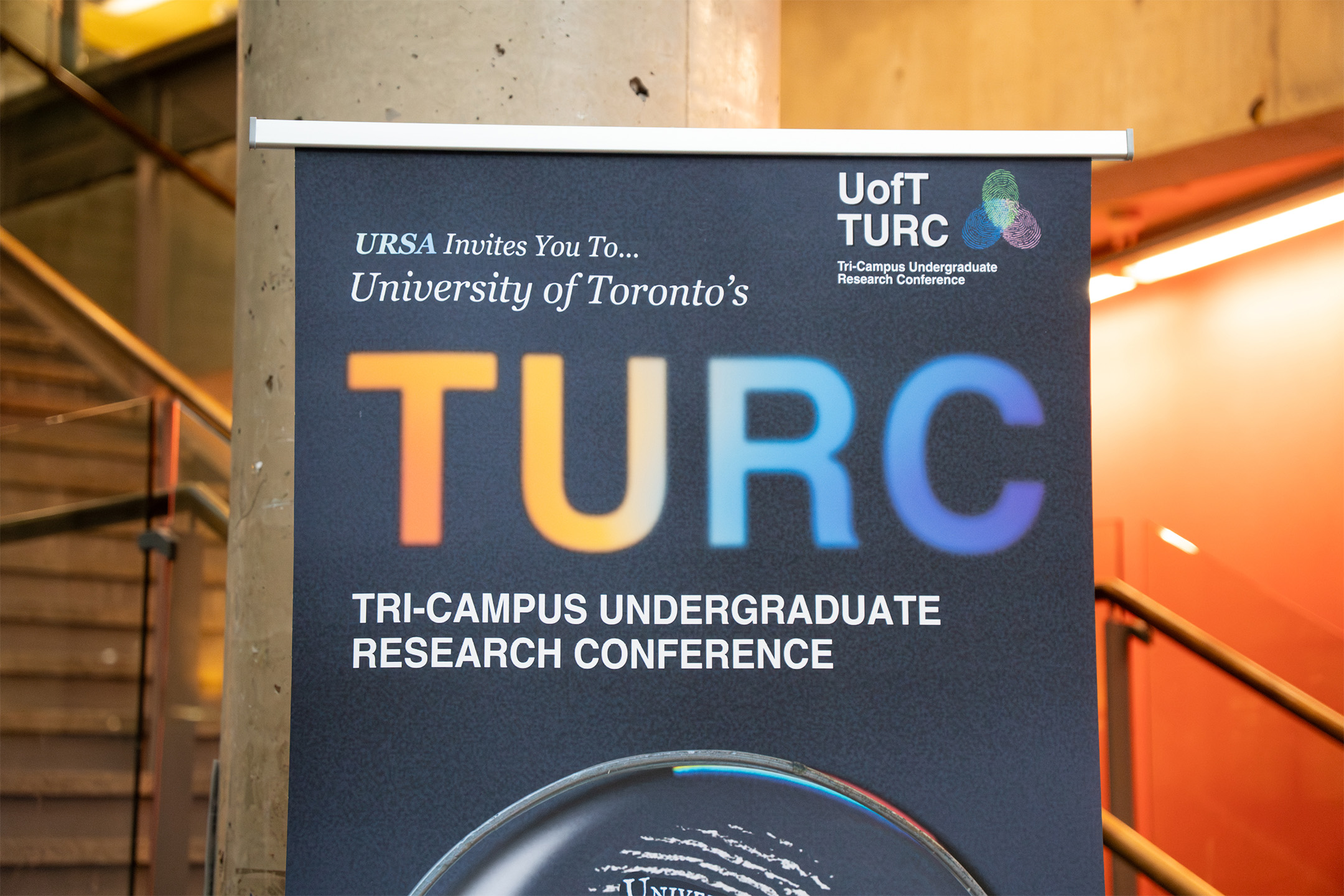
The Tri-Campus Undergraduate Research Conference (TURC) took place on February 18, 2026, at the Bahen Centre of Information Technology, bringing undergraduate students from all three campuses at U of T together for a multidisciplinary celebration of research. The Undergraduate Research Student Association (URSA) organized the event.
In an interview with The Varsity, URSA UTSC’s Co-Vice President Tinu Boboe emphasized the importance of students getting the “opportunity to network with each other from different campuses,” while showcasing current research in a single spot.
TURC’s goal was to “make sure that the undergraduate audience is a real focus,” said Aman Kohli, the Co-President of URSA. He highlighted that regardless of the discipline, TURC offers students the opportunity to present their work. The conference acted as a bridge between the classroom and the professional world, offering a platform for students to step out of the lab and into the broader academic community.
The event’s keynote speaker was Professor Molly Shoichet of the Institute of Biomedical Engineering at U of T. A member of the Order of Ontario and a world-renowned expert in bioengineering, her presence underscored the high quality of research featured at the conference.
Falling at the intersection of engineering, chemistry, and biology, Shoichet’s work exists at the edge of regenerative therapeutics, a growing field that aims to repair injured tissues with cellular components and specifically designed materials.
AI and the multisensory gap
One of the day’s Lightning Talks was presented by Elena Osipyan, a third-year physical sciences and statistics major at UTSC. As a research assistant at the CoNSens Laboratory led by Professor Matthias Niemeier from the Department of Psychology, Osipyan presented a literature review exploring the intersection of AI and biological motor control.
Most undergraduate students will be asked to do a literature review at some point in their degree, but it remains one of the most misunderstood tasks in academia. Rather than a summary of sources, a literature review acts as a comprehensive map of the current research for a topic or research question. Diving into existing databases and research papers, a reviewer synthesizes established knowledge to show the reader not just what is known, but where the current research succeeds, where it falls short, and where the next breakthrough in the research may be.
Osipyan examined the current state of AI-driven motor systems over 178 papers, searching for terms that specified AI-driven motor systems, specifically those designed to mimic the complexity of grasping and reaching. Her goal was to determine how effectively AI systems can model biological motor control. These systems are the root of life-changing technologies such as stroke rehabilitation tools that can ‘re-learn’ movement alongside a patient.
Osipyan’s findings highlighted a significant divide between artificial and biological systems. In her talk, she noted that most AI systems “optimize for success through trial-and-error reward feedback,” instead of employing the underlying mechanisms of human movement.
This lack of understanding makes it difficult to translate findings from AI into human neuroscience. In the brain, the action of movement is not limited to the end result, but the underlying process.
“Human motor control is fundamentally multisensory and predictive,” said Osipyan. For example, when you reach for a cup, your brain is simultaneously processing touch, muscle tension, and the neural feedback to predict the movement’s success in reaching the cup.
The results of Osipyan’s literature review revealed a striking lack of models incorporating the multisensory nature of human movement. Fifty-two per cent of the papers she analyzed only used visual output to guide AI models.
Why this matters
As autonomous systems become embedded in human environments, the stakes of these non-multisensory AI models grow. Without a comprehensive foundation, AI failures can be abrupt and difficult to recover from.
Identifying the gaps in the literature, Osipyan’s research at the CoNSens Laboratory paves the way for a future where AI in neuroscience can guide more robust, ‘human-aligned’ designs that are safe and effective for real-world use, such as robotic surgical assistants.
The TURC was an event that underscores the importance of student-led inquiry. Beyond the posters and slide decks, the TURC served as a critical networking hub, allowing students to step out of their lab space and engage with faculty and peers from across all three campuses.
The culture of early-career research transforms undergraduates from passive learners into active contributors to the scientific community. The conference was a success in bringing together students and faculty from all disciplines to share knowledge on current research.

No comments to display.