
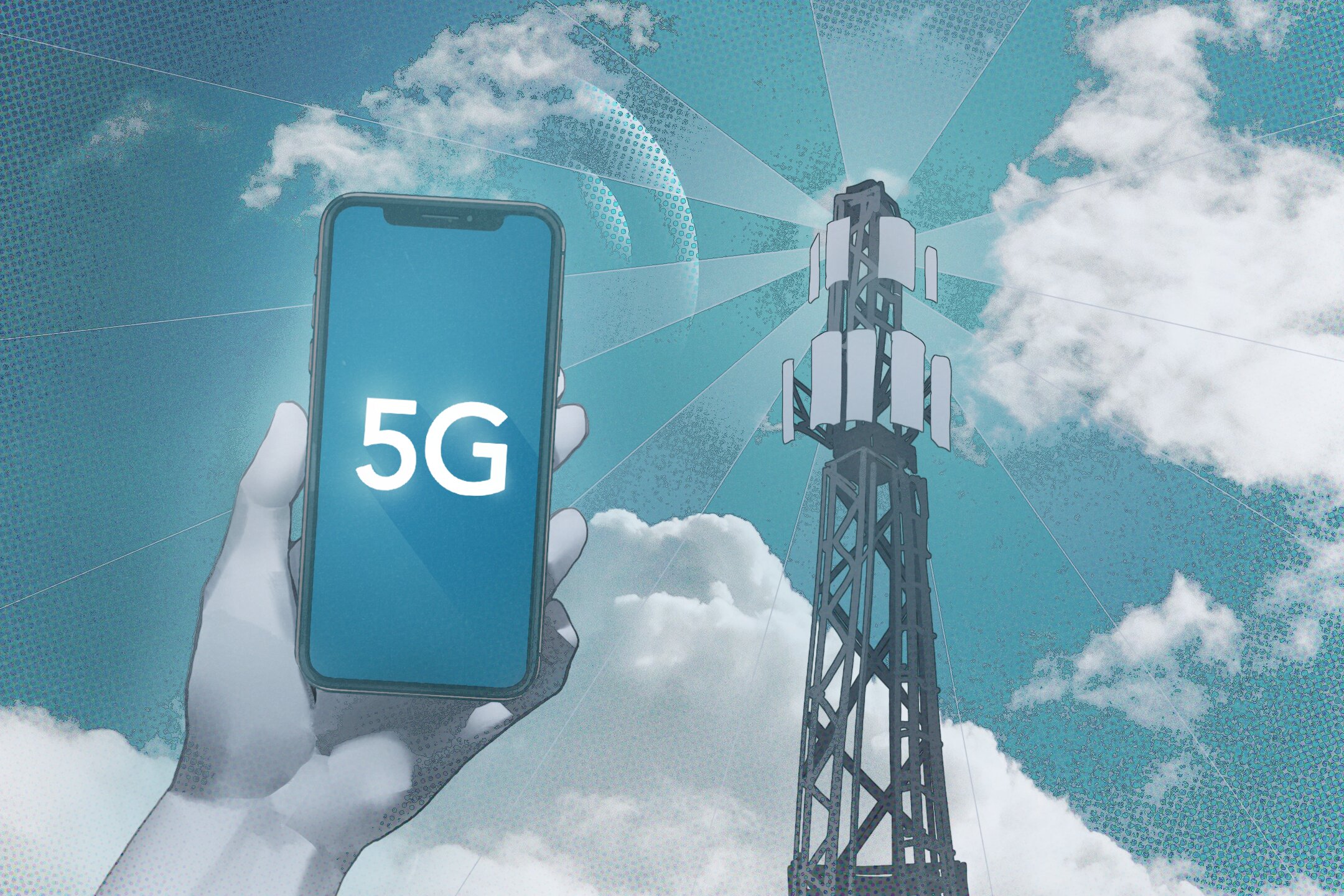
The telecommunications market is projected to generate roughly $200 billion CAD in additional Canadian GDP from 5G between 2020–2040. U of T has secured a strategic industry partner that could shape Canada’s role in the next generation of wireless infrastructure: Ericsson, a Swedish multinational telecommunications company.
On February 18, Ericsson and U of T announced a new three-year framework agreement under which Ericsson will invest $1 million to accelerate research in AI-powered mobile communications technologies.
Projects under the collaboration will examine how artificial intelligence can improve the efficiency and design of wireless networks. Examples include optimizing how limited radio spectrum is allocated, reducing the power consumption of network infrastructure, and improving system architecture for dense urban environments.
5G can greatly improve mobile infrastructure in Canada. Compared to 4G data, 5G networks offer dramatically higher mobile data speeds and lower latency, meaning data can travel across the network with less delay. This enables faster applications and operations ranging from industrial automation to remote healthcare and AI-integrated systems.
According to network performance analysis from Ookla — a company providing network connectivity insights — as of 2026, Canada ranks second among G7 countries for the share of 5G standalone deployments. These are networks providing 5G that do not require 4G infrastructure to operate and are therefore not limited in performance by old technology. This growth reflects the rapid expansion of next-generation wireless infrastructure across the country.
Benefits of the partnership
For Ericsson Canada — whose Ottawa site is one of the largest wireless research and development (R&D) centres they have — the agreement strengthens its North American research ecosystem. The company competes globally with firms such as Nokia and Samsung in supplying telecom infrastructure.
Deepening collaboration with a top-ranked research university allows Ericsson to test AI-network integration in an academic environment while reinforcing its long-term positioning in Canada’s wireless market.
For U of T, the partnership strengthens its role as a major research hub in engineering and AI. Professors Ben Liang and Ravi Adve in the Faculty of Applied Science & Engineering have collaborated with Ericsson for more than a decade on research related to wireless network infrastructure.
The partnership includes a talent development stream across U of T’s Faculty of Applied Science & Engineering, incorporating co-op opportunities and interdisciplinary programs. As AI and telecom infrastructure converge, the demand for engineers fluent in both machine learning and network systems is expected to grow. For students, this may translate into research placements and clearer pathways into high-paying R&D roles.
Economic and broader impacts
By 2040, mobile technologies, including 5G, could contribute over $65 billion annually to GDP, equivalent to roughly 2.5 per cent of Canada’s economic output.
However, these gains are not automatic. Policies related to mobile network spectrums, regulatory timing, and infrastructure investment shape how quickly 5G benefits materialize. Delayed or limited access to key mid-band spectrum — the range of wireless radio frequencies commonly used for 5G networks — can slow rollout and reduce macroeconomic impact.
On the other hand, Canada’s telecom landscape remains highly concentrated, dominated by Rogers, Bell, and TELUS. According to the Canadian Radio-television and Telecommunications Commission (CRTC), the three companies together accounted for nearly 90 per cent of retail mobile phone revenues in 2023.
While the federal government reports that prices for some wireless plans have declined in recent years, affordability and competition in the sector remain during ongoing policy debates. Therefore, improvements in network efficiency and spectrum use can have economic consequences beyond research labs, because they affect how quickly telecom providers can expand capacity and deliver lower-cost services.
The future
Industry analysts continue to stress the financial stakes involved in next-generation network development. Partnerships between universities and telecommunications firms allow companies to test new technologies while universities gain research funding and opportunities for students to work on applied engineering problems.
The agreement between Ericsson and U of T builds on more than a decade of collaboration between the company and researchers in the university’s Faculty of Applied Science & Engineering. If successful, these projects could help shape how future 5G systems evolve and how early research on 6G technologies begins to take form globally.
