
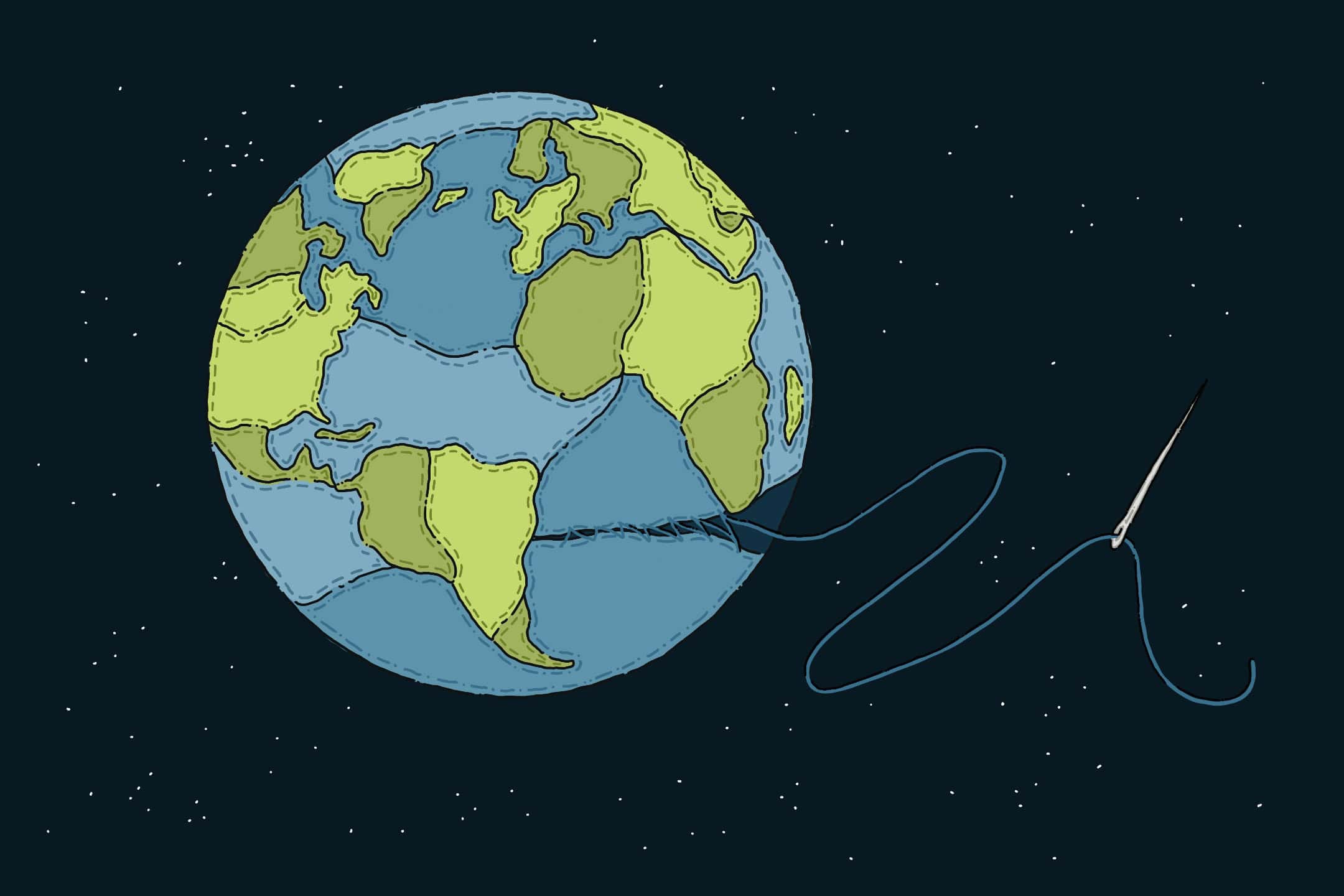
When a crisis hits, it disrupts the basic systems required for society to function — such as hospitals that sterilize medical equipment, electricity that remains stable, clinics that follow up, and supply chains that can deliver resources.
In that context, the role of science and innovation shifts. It becomes less about novelty and more about continuity; keeping people mobile through evacuations, ensuring access to clean drinking water, and preventing healthcare systems from collapsing.
I believe that within this context, science and innovation cease to be categorized as ‘breakthroughs’ and become more like basic infrastructure. Innovation replaces the destroyed practical systems that have been in place for years.
Nowhere is that shift clearer than in disability and rehabilitation. Rehabilitation determines someone’s ability to return to school, work, or regain independence –– aspects of life that are now considered a luxury in places like illegally occupied Palestine. We are currently seeing a crisis of science in conflict zones like Gaza, where researchers are innovating, not for breakthroughs or new research, but to essentially keep their world moving.
However, the role of crises in science is now colliding with mass investments in AI research in what is known as the global ‘AI race’ where countries are competing to develop the best AI technologies. Countries are now allocating a staggering amount of resources to remain competitive in a race where scale and strategic advantage matter as much as social benefit.
A 2025 Forbes column on the AI race argues that the competition hinges heavily on electricity, potentially accounting for 20 per cent of global electricity strain on grid capacity by 2030–2035.
This implies that AI has the potential to cause a strain on state resources. Stanford’s AI 2025 index reports that in 2024, global private investments in generative AI reached $33.9 billion, and corporate AI investment reached $252.3 billion. When governments and private companies pour that much investment into AI, they dedicate energy, infrastructure, and policies to funding research.
The International Energy Agency projects global electricity demand from data centres will more than double by 2030, with AI driving most of the surge. That footprint matters because it turns innovation into a competition over energy systems.
In December 2025, Reuters reported that surging AI data centre demands are keeping older and less environmentally friendly peaking power plants –– a type of power plant that only runs during peak demand for electricity –– in parts of the US, raising concerns about heavy pollution burden in communities in the vicinity.
The World Health Organization (WHO) estimated in a September 2025 report that at least 41,844 people require long-term rehabilitation due to injuries inflicted by Israeli forces, almost double the 22,500 people in July 2024. With over 5,020 limb amputations alongside a surge of major burns and spinal cord injuries, there is a major demand for long hours of care, consistent medical follow-ups, and repeated fittings –– the kind of care that is inaccessible in a conflict zone.
Rehabilitation in Gaza is now a field where long-term harm accumulates quietly, with 6,000 Palestinians amputees, many of whom face delays in prosthetic fitting, limited access to physical therapy, and equipment shortages that can turn survivable injuries into lifelong disability.
We see citizen innovation in people like 23-year old Yasser Alostath, who turned to engineering to develop simple, low-cost prosthetics for amputees in Gaza. ‘Simple’ and ‘low cost’ can sound like limitations, but in conflict zones, they can be the difference between a device existing and the complete destruction of supply chains.
When hospitals barely function, innovation becomes less about optimizing performance and more about rebuilding the core fragments of the medicare industry step-by-step, even if that comes through locally produced citizen innovation to adapt to scarcity.
How should resources be better allocated? The answer doesn’t have to be AI against humanitarian engineering. I believe that a more effective approach is to insist on a portfolio of investments that creates room to fund advanced AI, but prioritizes crisis-ready science. These investments must be conditioned to require the improvement of the common good; deployable tools for healthcare, disability supports, and humanitarian response.
Canada recently committed $42.5 million to expand AI compute infrastructure at U of T. Investments like this can be paired with an equal seriousness about humanitarian scientific innovation. There needs to be dedicated funding for assistive technology that treats rehabilitation as essential health infrastructure, especially in crises where disability is not a side effect, but a central, long-term reality.
Ultimately, science’s function in times of crisis goes beyond simple invention; its purpose is to prevent society from declining below a certain level of human potential. If we can mobilize billions for the strategic AI investment race, we can treat prosthetics, rehabilitation, and assistive devices as core innovative practices — not inspired afterthoughts once the damage is done.
Kazim Abro is a fourth-year undergraduate student double-majoring in new media and media and communication — journalism stream at the University of Toronto Scarborough.

No comments to display.