
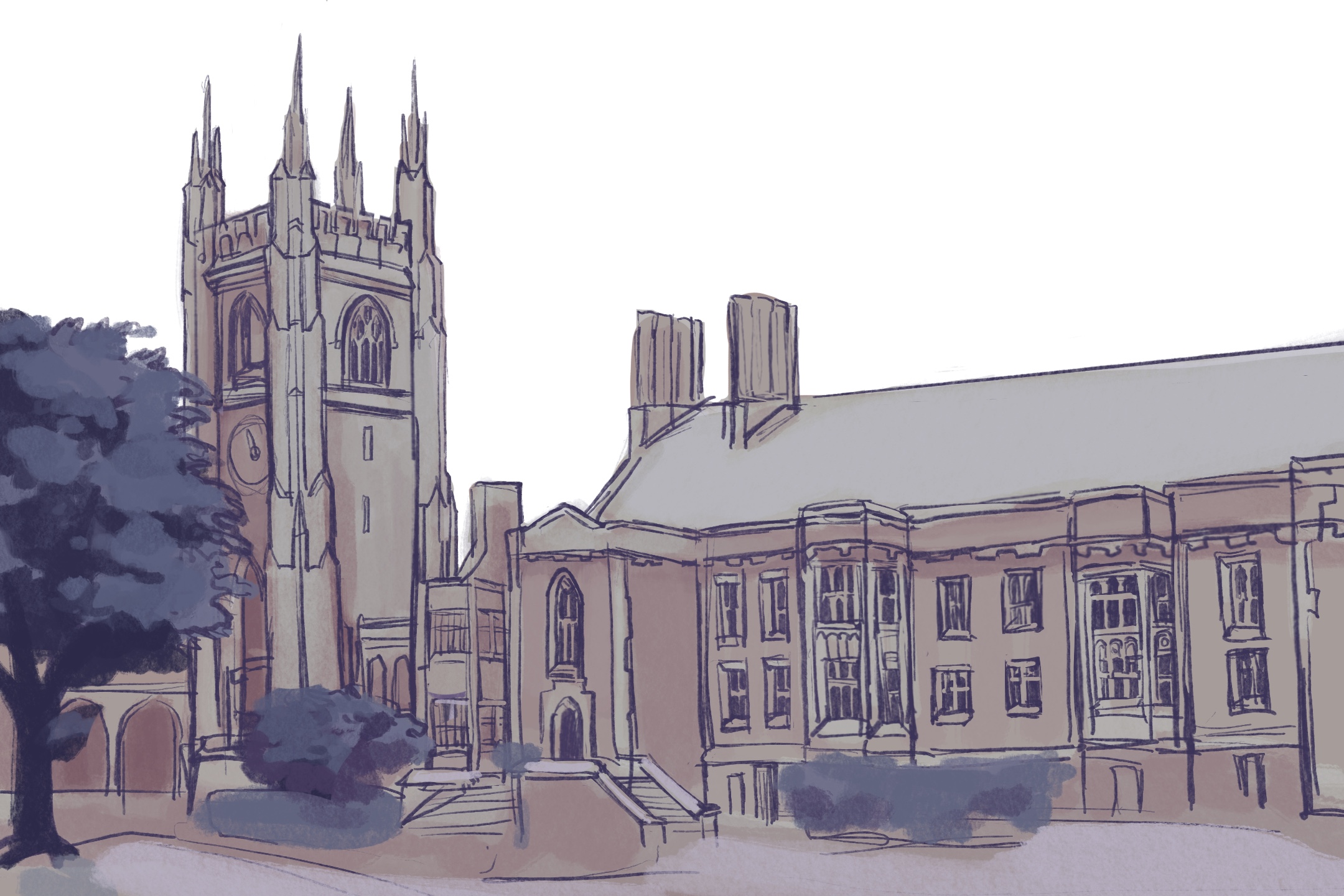
From its fitness centre to its theatre, Hart House has been a vital hub for student life on campus since opening its doors in 1919. Ensuring it remains a vibrant space for students is critical, especially considering the age of the building — over 50 per cent of its infrastructure has exceeded its lifespan.
The Hart House Infrastructure Renewal Project is a multiphase initiative aiming to preserve the Hart House space while ensuring it remains sustainable and accessible in the long-term. Construction work has been underway since the fall of 2024, which you may have already noticed when walking between Hart House and Queen’s Park.
The project is a large financial endeavour — it has a $240 million budget that will be used for construction and renovations taking place over the next 20 years. While the project will improve student spaces on campus, it could also have significant impacts on ancillary fees, which are the fees students pay for activities not supported by tuition or the university’s operating grants.
The construction plan
The renovation is currently in its initial phase, which should be completed by spring 2027. Plans for this period include building the shell of new mechanical and electrical rooms. Funds for this part of the project are not included in the $240 million budget. Instead, a separate $30 million was put together using donations and reserve funds from Hart House, with central administration contributing $6 million.
The rest of the project includes a large number of necessary infrastructure improvements, such as upgrading electrical and water infrastructure, accessibility, and fixing roof leaks. These renovations will amount to $180 million in costs. The remaining $60 million in the budget will be dedicated to building add-ons, including installing an all-gender changeroom at the Fitness Center, and adding a more accessible entrance to the Gallery Grill and the Reading Room.
Project finances
Hart House forecasts an operating surplus of $2.86 million in the 2026–2027 academic year. This signifies the leftover profit after accounting for costs like labour and taxes. This surplus will be redirected towards necessary capital expenditures, which include the building renewal project. In fact, 80 per cent of the projected spend on capital expenditures next year will be on building renovations.
Of course, Hart House’s operating surplus will depend on its revenue. While total revenue is expected to fall $585,000 below target this year, they do expect strong revenue growth next year, which can help maintain the operating surplus to fund capital expenditures.
The university also contributes to funding the renewal project. Beyond the $6 million that central administration contributed for the initial phase of development, the Hart House Infrastructure Renewal Project is a priority in U of T’s Defy Gravity campaign. This fundraising campaign aims to raise $4 billion to support the university.
Impacts on students
The large capital investments associated with the project also resulted in the university proposing a student ancillary fee increase over the next 20 years to support building renovations. The new fee would only be levied on UTSG students, with full-time students paying $60 per term and part-time students paying $12 per term.
This fee would increase by two per cent each year, and would end after 20 years. The levy could end earlier than this if the project ends earlier, or if the university receives further donations to assist with the renovations.
Hart House already charges full-time students $141.35 per term, with part-time students paying $28.27. The proposed fee to support the building renewal project would be added to this existing levy. In addition to the new fee, Hart House also suggested increasing its existing ancillary fees by five per cent.
These changes were brought forward at a January 21 Council on Student Services (COSS) meeting. However, at the February 10 COSS meeting, the motion to add these fees did not receive the two-thirds majority required to pass — and as a result they were not brought forward on March 5 to the University Affairs Board, at which 2026–2027 ancillary fees for UTSG and University-wide student services and student societies were considered for approval.
Future fee increases will require student approval as per a 1996 memorandum of agreement between U of T and the University of Toronto Students’ Union (UTSU), the Graduate Students’ Union (GSU), and the Association of Part-time Undergraduate Students (APUS). This memorandum states that a council composed of members of university leadership, full-time and part-time student representatives, must approve such fee increases by a majority vote.
Editor’s Note: This article was updated on March 24, 2026 to reflect that the Hart House ancillary fee increase was brought to a January 21 Council on Student Services meeting, and to provide clarity for why the changes were not taken to the University Affairs Board meeting on March 5.
