
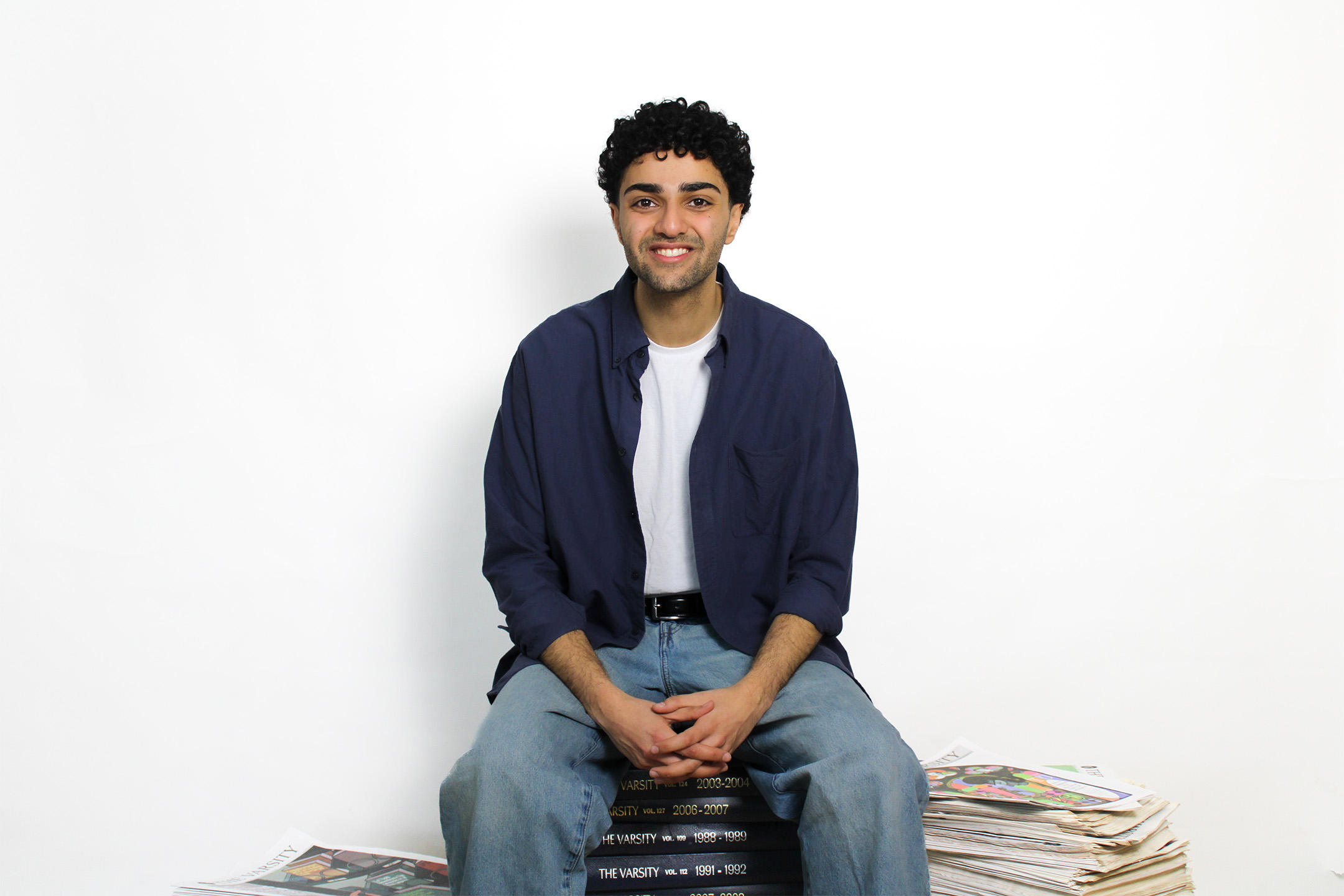
Coming into this job, I didn’t think much about The Varsity. And it made sense; as a student, it can be hard to think much of the paper beyond the stacks of leftovers we receive each week and the newsstands across campus that are rarely out of stock.
In early October, when I woke up to an extensive and angry email from Media Relations at U of T in relation to an article about U of T’s refusal to implement a weapons divestment policy, I knew that The Varsity and my role as Opinion editor was more than just the endless emails in need of responding to, never-ending editing, and annoyingly long visual requests (sorry visuals team).
From that interaction with Media Relations, I learned that it was here, in The Varsity’s Opinion section, where students would not just share their unique perspectives — as is often touted in generic descriptions of Opinion journalism — but hold the university, our government leaders, and peers accountable.
Given the rise of censorship globally, it is more important than ever that we as students continue to dissent and insist that a better world is possible.
Thus, you can understand my disappointment when, throughout the year, I would check my inbox and receive requests from contributors who no longer wanted to move forward with publishing their articles, or wanted to ‘water down’ their opinions, not because they no longer agreed with their stated opinion, but due to a fear of retribution.
Don’t get me wrong, I am no stranger to this feeling. Last year, as the domestic affairs columnist, I was petrified that the wrong word or the wrong opinion would deny me entrance into that grad program, law school, or internship I thought I ‘needed.’ But it was through my work at The Varsity and my time at U of T that I learned that building community is the antidote to this fear. Having people ready to support you after every angry email, comment, and defeat can make a world of difference between deciding whether to take on another ‘controversial’ (journalism code for high-stakes and in need of coverage) article.
I found this community at The Varsity.
I couldn’t have gotten through this year without my Opinion family. To our previous Opinion editor, Charmaine, thank you for taking me under your wing and believing in my ability to tell stories despite having little journalistic experience. To my associate editors, Vesa and Zaneb, thank you for being a light in the office and for helping reduce the tasks of a job that never seemed to make it off my to-do list.
Thank you to Callie, Raina, and the entire copy team for always being thorough fact-checkers for the Opinion section (whose writers tend to be quite liberal in what they count as a source). To Brennan, Erika, Aksaamai, Chloe, and Simona, I am grateful for your creative energy that never failed to inspire me. To Medha and Sophie, thank you for leading with kindness and understanding — you’re the best bosses a student deep in LSAT-induced stress could have ever asked for.
To our Arts & Culture editor, Sofia, thank you for believing in my silly ideas for the section, for your endless support on the editorial board, and for helping me with commas (I have been told I am allergic to commas). At times when the weight of this job got to me, and I didn’t believe in myself, your confidence in me (and our “true diva!” conversations in the arts office) is what allowed me to keep going. I am forever grateful; you are truly the best work bestie I could have asked for.
Lastly, to our talented contributors: thank you for daring to dissent. From advocating for survivors at U of T to critiquing U of T’s protest guidelines and demanding pay equity at U of T, I am incredibly proud of the work we published this year. I hope that, as Opinion Editor, I was able to play even a small part in your community that made you feel supported in sharing your stories.
When I began this job, I decided to reach out to Danya Issawi, a writer at The Cut whom I have always looked up to, to thank her for her work. To my surprise, she responded! Issawi thanked me for my email, writing that publishing can often feel like writing into a void, and that knowing someone is actually reading your work is meaningful.
At the beginning, publishing in Opinion often felt like writing into the void. But when I received that first angry email from Media Relations at U of T, I realized the importance of this work. Despite the claim that student journalism is dead, someone is actually reading The Varsity’s Opinion section, critiquing, and engaging with it (even if it’s just media relations at U of T).
So for the love of dissent, I ask you to not let fear guide your writing; find your community and continue to write unapologetically.
With love,
Ahmed Hawamdeh, Opinion Editor, Volume CXLVI

No comments to display.