
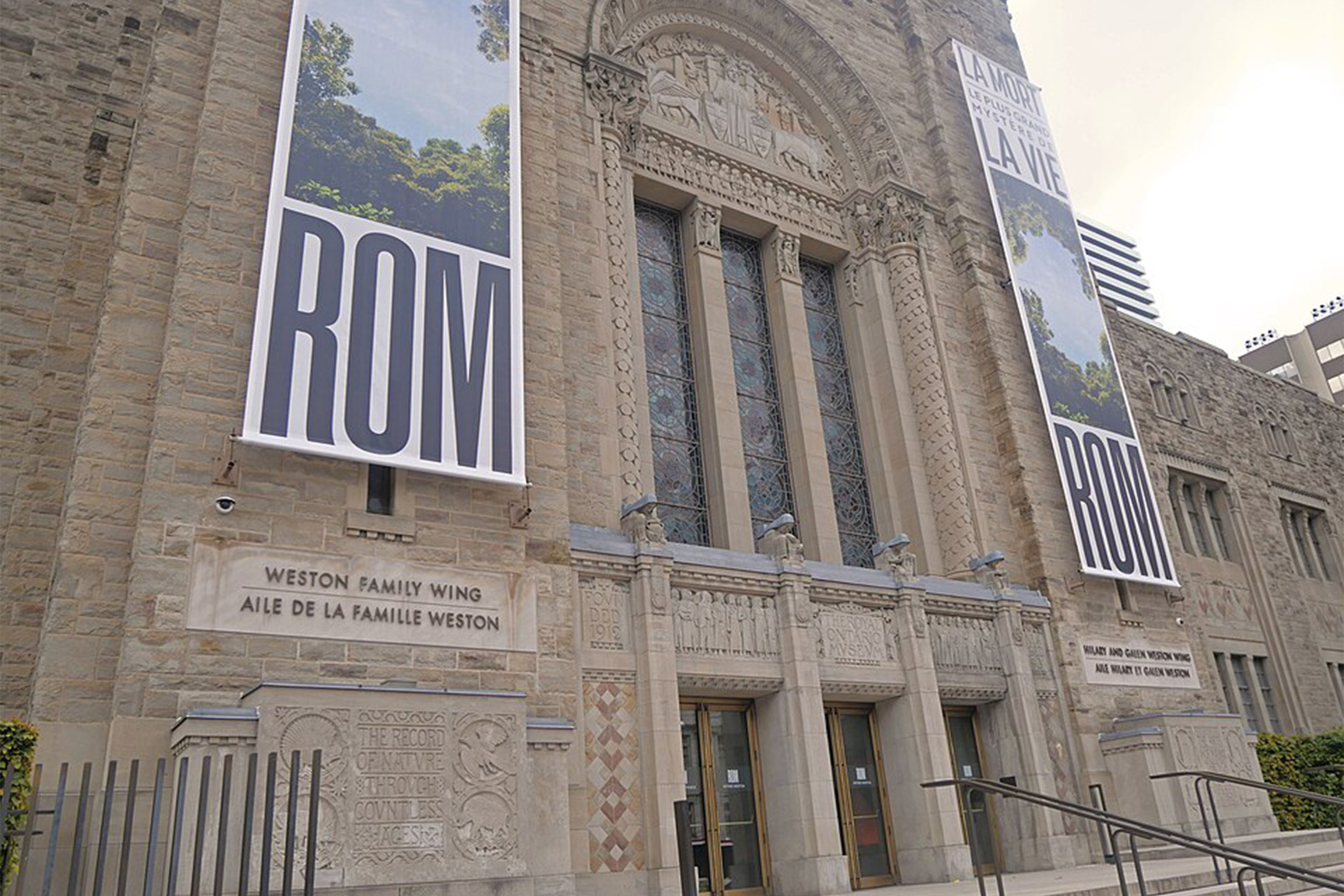
Museums represent the pursuit of knowledge, preserving centuries of history and art. Simultaneously, museums can foster a meditative environment. In April, fourth-year UTSG student Mridula Sathyanarayanan used this concept to create “Look Again: A Meditative Museum Experience” for visitors at the Royal Ontario Museum (ROM).
In total, Sathyanarayanan hosted three sessions in which she encouraged participants to use meditation techniques while touring specific galleries at the ROM.
Why Sathyanarayanan started meditating
“My own journey with meditation started in high school… it was a personal therapeutic outlet,” said Sathyanarayanan in an interview with The Varsity. She started meditating because academic stress was negatively impacting her physical and mental health.
After a few months, she found that guided meditation helped lower this stress. “Meditation is a way of restructuring your relationship with your own thoughts, other people, and your embodied experience,” said Sathyanarayanan. Her positive experience motivated her to learn more about how meditation can impact the body and the brain.
Curating a meditation experience at the ROM
At U of T, Sathyanarayanan studied Buddhist meditation practices as part of the Laidlaw Leadership and Research Program, where students pursue an independent research project and lead a charitable initiative in their local community.
Sathyanarayanan sought to demonstrate the similarities between meditating and touring a museum. Museum tours create a space to observe one’s surroundings, just like how meditation prompts “you to pay more attention to your experiences and your life.”
But how does one bring guided meditation to a museum?
After pitching her idea to the ROM, she spent a year and a half designing the program alongside other researchers at U of T and ROM curators. One of these collaborators was her supervisor, Elli Weissbaum, an assistant professor from New College’s Buddhism, Psychology and Mental Health program.
More about “Look Again”
The tour uses the idea of sense foraging, the practice of focusing on sensory input — such as sight, hearing, or touch — to escape negative emotional thought patterns.
The title of the program, “Look Again,” ties into this idea. “It invites you to look [at] and relate to something that you already do in a different way,” said Sathyanarayanan. She instructed participants to focus on one type of sensory input, like observing how colour is used across different pieces.
One of her goals in using sense foraging was to encourage participants to choose sensation over thinking. Sathyanarayanan told The Varsity that in stressful times, people are often “biased towards thinking,” rather than feeling their problems, adding that “we have this superpower as human beings to sense, and we need to trust in that ability more often.”
Looking beyond the science of meditation
Sathyanarayanan doesn’t think that the scientific benefits, such as lowering stress, should be the only reason people engage with meditation. Instead, she believes that a more compelling reason is rooted in something much deeper — the human experience. In her words, “[meditation] is a richer way to experience life.”
While the three sessions were hosted exclusively in April, Sathyanarayanan hopes that the program will become a regular offering at the ROM and other cultural spaces in Toronto.

No comments to display.