
On Saturday, September 6, Toronto International Film Festival (TIFF) attendees embarked on an intergalactic journey of epic proportions, experiencing the North American premiere of director Momoko Seto’s first feature film, Dandelion’s Odyssey.
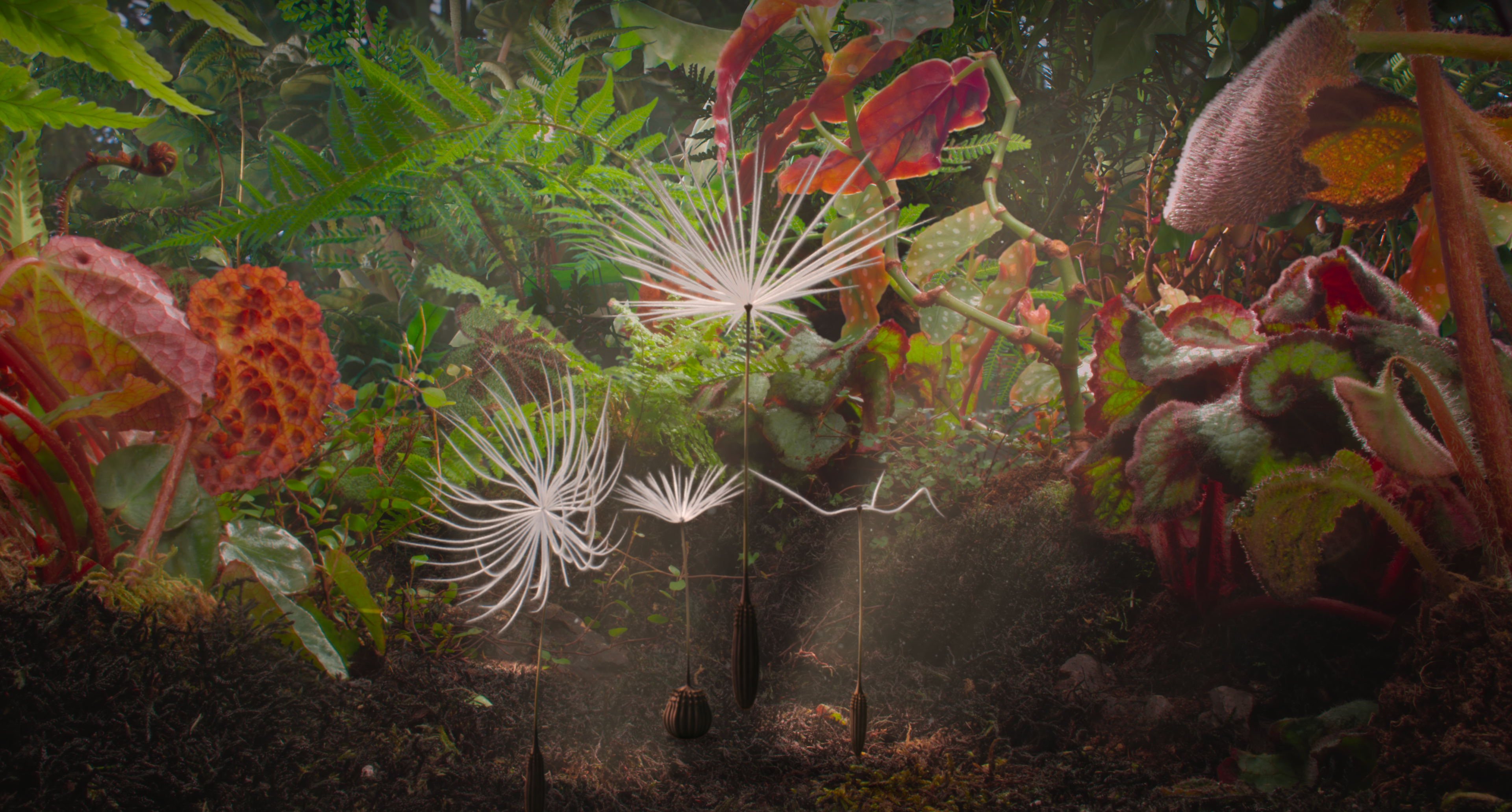
The main characters in this dialogue-free film are four dandelion seeds, also known as achenes, which float from an Earth destroyed by nuclear war to seek refuge among the stars. The harrowing opening sequence, featuring a series of nuclear detonations destroying the achenes’ — and our — home, sets a sombre tone, making the stakes of their journey clear: their survival. Some small piece of Earth’s life rests upon their ability to adapt to life on an alien planet.
Dandelion’s Odyssey’s reinvention of native Earth species as fantastical alien beings, combined with its exploration of the contemporary issues of nuclear warfare and climate change, renders it an impressive addition to the science fiction genre. It urges the audience to consider our own world in a way that decentres humans.
A journey to the center of another planet
Throughout the achenes’ journey, audience members are introduced to a realm where the design of alien creatures and their biomes, while inspired by real Earth species, align closer with fantasy than scientific fact.
The planet where the achenes strive to plant themselves is circled by rings of floating squids. Glaciers melt to free tadpoles that swim through the air. Even the planet’s flora sings in the brassy tones of trumpets, startling the achenes from their rest and forcing them onwards to find a safe place to land.
Juxtaposed with these bizarre species, however, are a handful of creatures that international audiences would be familiar with: slugs, slime moulds, moths and mantises. These earthen creatures act as both allies and opponents in the achenes’ quest for safety, either assisting them in transportation from one strange locale to the next or driving them away with threatening displays of aggression.
This mesh of the fantastic and the familiar serves to highlight the wonders we might find in our own world. By showing a version of nature that is both otherworldly yet recognizable, it rekindles a sense of wonder for nature that can often be forgotten in the hustle and bustle of life, especially for the smaller critters and plants in our environments that we don’t need to search for, like achenes.
As the only surviving piece of Earth, the audience is forced to root for and connect with what most label as weeds, pushing us to reevaluate our view of nature and have empathy for all the beings with which we share a planet.
On empathy
This empathy for the natural world was a topic of the question-and-answer period following the film screening. During this insightful dive into the making of Dandelion’s Odyssey, Seto shared a desire for audience members to view the story and its world from the perspective of a plant. She hopes they might experience empathy, moving them to protect the species on the planet they call home from the repercussions of climate change.
This dream was communicated through each frame of the film, from the tender moments where the achenes shared a remarkably human-like embrace, to the scenes of panic and peril unfolding in hot springs and sandstorms.
The powerful relatability that permeates each of Dandelion’s Odyssey’s scenes speaks to the unique angle science fiction movies bring to film discourse. Although sometimes outlandish in story and experimental in technique, the science fiction genre sheds new light on pressing topics, encouraging viewers to contemplate how their worldview might evolve as science shifts.
Seto’s Dandelion’s Odyssey is no exception, raising questions of whether climate change or nuclear weaponry, like within the film, might threaten the natural beauty across our world, and whether humanity could adapt as readily to the consequences as Seto’s four non-human protagonists.
With its creative premise and sensitive approach to its contemporary topics, Dandelion’s Odyssey will undoubtedly leave a lasting impression on Canadian audiences, showing director Momoko Seto’s promise as an up-and-coming director of sci-fi films.

No comments to display.