
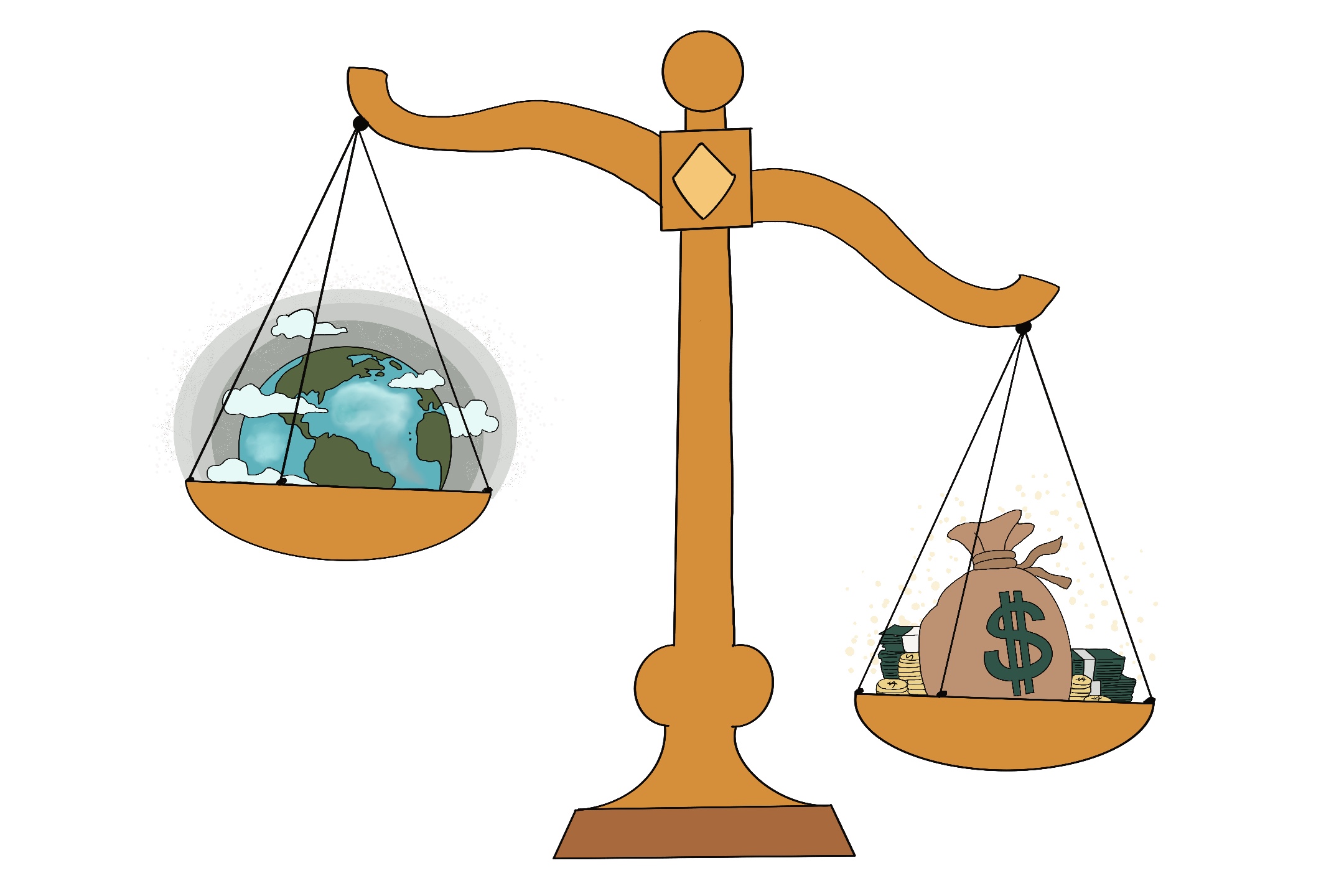
At a Toronto café, a carton of oat milk — a more sustainable choice — consistently costs more than regular dairy. At the gas station, drivers felt brief relief in April when the federal carbon tax was removed, shaving a few cents off each litre.
While the rollback may have made driving slightly cheaper, the environmental costs are very clear. If this is what we call affordability, it comes with a catch: the bill arrives later — and this time, it’s paid by our environment.
The carbon tax removal
On April 1, Canada removed its federal carbon tax, which had raised the price of gasoline and other carbon-based goods. While it was in place, the revenue was returned to provinces and territories through the Canada Carbon Rebate, with residents receiving direct proceeds from the federal fuel charge.
Since its removal, Canadians have felt small but immediate relief. Gas prices dropped, household bills eased, and even an extra iced coffee no longer felt like a reckless financial decision.
The policy shift contributed to a decline in inflation. Statistics Canada reported that in April 2025, headline inflation fell to 1.7 per cent from 2.3 per cent in March, largely due to lower energy prices. Gas prices dropped by 18.1 per cent, while natural gas fell by 14.1 per cent.
But experts warn the comfort may be temporary. Carbon pricing is designed not to punish consumers but to make pollution more costly. “Carbon pricing is efficient and cost effective because it allows businesses and households to decide for themselves how to reduce pollution- and will often save money in the process,” the Government of Canada explained.
The government projected that carbon pricing would cut 80 million–90 million tonnes of emissions by 2022 compared to a no-carbon-pricing situation. By contrast, recent analysis by the Canadian Climate Institute shows that removing the tax from all provinces except British Columbia and Québec would raise national emissions by about 13.5 megatonnes by 2030. The institute further projects that Canada is not on track to meet its 2030 emissions target, with this increase accounting for 23 per cent of the surplus of emissions.
Beyond the environmental costs, carbon rebate payments would also end — eliminating a source of income for many households. What seemed like a short-term gain in affordability may in fact erode household finances while driving up the long-term cost of climate action.
The EV mandate delay
This year, carbon taxes were not the only climate incentive put on hold. The federal government also paused the electric vehicle (EV) mandate, waiving the requirement for 2026 models. The mandate required automakers to ensure that a growing share of their sales were zero-emission vehicles, with the target rising until all new vehicles sold are electric by 2035.
The short-term benefit is lower costs. Electric vehicles remain more expensive than gas-powered cars, and owners currently pay about 36 per cent more to insure them.
But the suspension comes at a steep environmental price. Gas vehicles are a major source of pollution, accounting for 21 per cent of Canada’s nitrogen oxide emissions and about 50 per cent of volatile organic compound emissions — both of which significantly harm air quality.
According to the federal government, these emissions have “major adverse impacts on the environment and health of Canada.” Vehicle combustion also produces pollutants that drive smog and acid rain.
Delaying the transition away from fossil fuels in major sectors like oil and gas creates long-term costs. By removing the EV, Canada risks falling further behind on its climate goals. To meet its 2030 climate target, the country would need to cut 40 megatonnes of carbon emissions every year from now until the end of the decade.
Everyday “green” costs
The tradeoff between affordability and the climate isn’t just visible in government regulations — it’s also seen in the supermarket. Statistics Canada shows that plant-based beverages like oat or soy milk have been about 15 per cent cheaper than dairy milk, yet consumers face surcharges of $0.50–$0.80 for these alternatives at cafés — a practice that made millions of dollars in revenue.
High price tags associated with green options usually arise from hidden costs for food preparation, biodegradable containers, and more. Grocery stores like Whole Foods price their items at a premium, with many of their products being organic produce and plant-based proteins.
Alternatively, Costco fills the fridge without emptying the bank account. The trade-off, however, is that options at Costco come with more plastic packaging and an overall higher environmental footprint.
Looking at the bigger climate picture
Expensive grocery bills and car prices might serve as a shock that captures our immediate attention, but the hidden costs that our climate endures slowly creep up on us. Not to mention, these costs are far worse.
In recent years, Canada has faced headlines dominated by wildfires, floods, and extreme heat waves. By August alone, more than 7.3 million hectares of forest had burned — over twice the 10-year average for that time of year. Experts warn that this may be the new normal.
The health tolls of our warming climate are also at an all-time high. Extreme heat events, like the 2021 BC heat dome, are prime examples of this. Climate change also affects mental health, according to the United Nations Children’s Fund, contributing to feelings like grief and eco-anxiety.
Each of these disasters leaves a long financial trail with billions of dollars in federal relief spending, calling into question whether avoiding ‘green’ spending is really more affordable. Between 2011–2024, the insured severe-weather losses all over Canada have constantly reached billions of dollars, peaking at $8.55 billion in 2024. These high costs show just how climate change is continuously straining affordability, disaster relief systems, and the broader economy.
A holistic approach is currently needed to slow down warming, and integrating affordability into climate policy is more reasonable than treating the two as opposing forces.

No comments to display.