
Content warning: This article contains mentions of death, genocide, war, and racism.
On October 7, 2025, we stood quietly, watching history repeat itself — silence meant for remembrance, once more labelled as hateful. Outside UTM’s Student Centre, students gathered with bowed heads and cold hands, mourning over 69,000 lives lost in Gaza. A land acknowledgement was read. An equity statement promised safety.
Then came two minutes of silence — for the murdered, the families erased, and the names silently buried. Not a rally or protest, but a eulogy — a small act of mourning in a world that keeps saying “never again,” while watching genocide repeat in Rwanda, Darfur, and now Gaza.
As we whispered prayers and wiped quiet tears, a line of police lingered, postures tense as though waiting for something to happen. There was no hate, no disruption — only grief that institutions of power refuse to see as peaceful.
Former Ontario Education Minister Stephen Lecce called the vigil a “hateful, antisemitic, and anti-democratic mob” and the student organizers a “morally degenerate group.”
I believe that Lecce’s sentiment reflects a world that is quick to label Palestinian mourning as hate, where simple acts of empathy are punished as if they are crimes. As an attendee, I can say that it wasn’t hatred that filled the crowd, but a desperate plea for peace.
Neutrality in the face of injustice isn’t a virtue; it is complicity. Those who gathered at UTM understood this. I believe that by portraying such mourning as violent, Lecce exposed the anti-Palestinian racism and Islamophobia beneath the accusation — the fear of Palestinian grief itself.
The politics of mourning
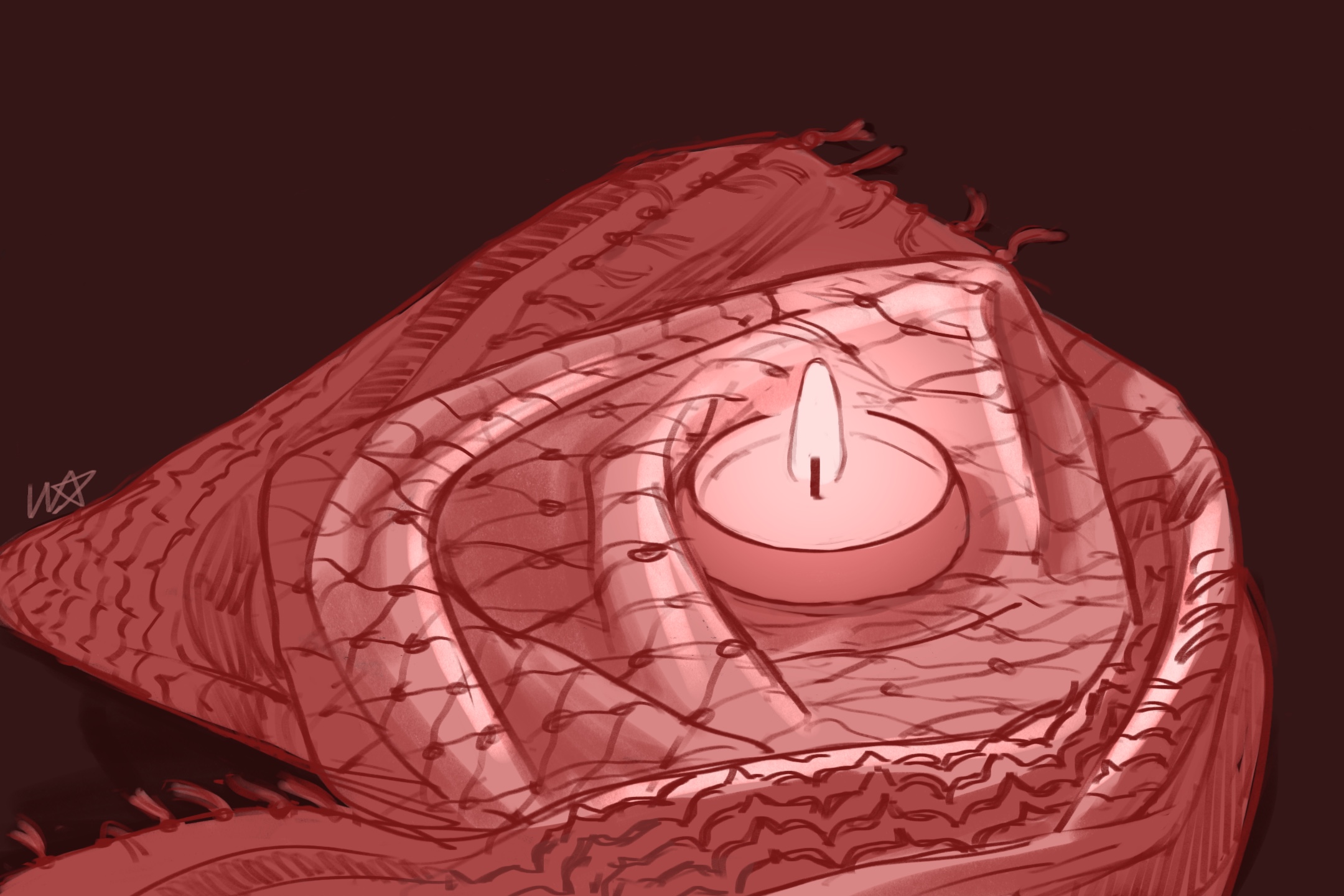
To call a vigil “hateful” and mistake grief for ‘terrorist sympathy,’ is to confuse a candle for a weapon, a eulogy for a threat. I believe that Lecce’s response to the vigil at UTM is proof that, especially since October 2023, the mere mourning of life lost in Gaza is politicized.
No student should be labelled as hateful for simply mourning their community. Palestinian grief is delegitimized when Palestinians are unable to mourn their community members without being labelled as a threat.
Such accusations distort intent, erase grief, and feed Islamophobic narratives that frame Muslim and Arab expression as dangerous, mistaking their mourning for violence. This places a target on these communities that fuels anti-Palestinian, anti-Arab, and anti-Muslim racism that has risen since October 2023.
Education in Gaza
As we watch the death toll in Gaza continue to rise, we must remember that these are not just statistics. Each number was an entire universe.
By June 2024, The Lancet released a report estimating that when accounting for starvation, disease, and other indirect causes, the death toll in Gaza may be past 180,000. The British Medical Journal (BMJ) called it “a child health catastrophe,” reporting that 70 per cent of the dead were women and children.
All 12 universities in Gaza have been reduced to rubble. More than 90,000 students have been unable to attend university. By May of 2024, over 350 teachers and scholars were killed. Euro-Med Human Rights Monitor labelled these attacks as an “intentional destruction” of Palestinian cultural, academic, and social life.
Twin 26-year-old sisters Sally and Dalia Ghazi Ibaid were accepted into a PhD program at the University of Waterloo. They had begun their visa process, planning for their academic futures, hoping for a way out. Before they could escape, an Israeli airstrike killed them.
And yet, we, fellow students, are deemed hateful for grieving them; antisemitic for saying that not another Palestinian student should be killed; antidemocratic for believing universities should be protected spaces.
The cost of silence
As Palestinians are forced to confront the devastating realities of genocide, occupation, and apartheid, we’re told to stay silent, as if mourning were shameful.
We always say never again whenever it’s too late. We watch horrors unfold, then build monuments to our delay. Our grief isn’t forbidden, only postponed — offered when there is no one left to save.
The vigil was never born of hate, but of remembrance — of holding onto names the genocide tried to erase. Why must it always fall on Palestinian and marginalized students to defend their right to speak for the graves of their community members, for dreams and entire universes that never reached their last breath?
The eulogy of again
‘Never again’ has become a ritual without meaning — a promise without practice. But those who stood together at the vigil knew better.
At the vigil, we allowed memory to become resistance, for grief to become witness. To call the vigil hateful is to reveal prejudice, not truth. It becomes clear that the problem was never the vigil — it was who was grieving.
It’s easier to justify the death of innocent lives when their voices rest beneath the soil — and no one digs deep enough to hear them.
To mourn Gaza isn’t to deny another’s pain. It’s to affirm that our empathy should know no borders.
Eshal Saad is a biology specialist student at the University of Toronto with a passion for blending science, history, and identity through her written work.
