
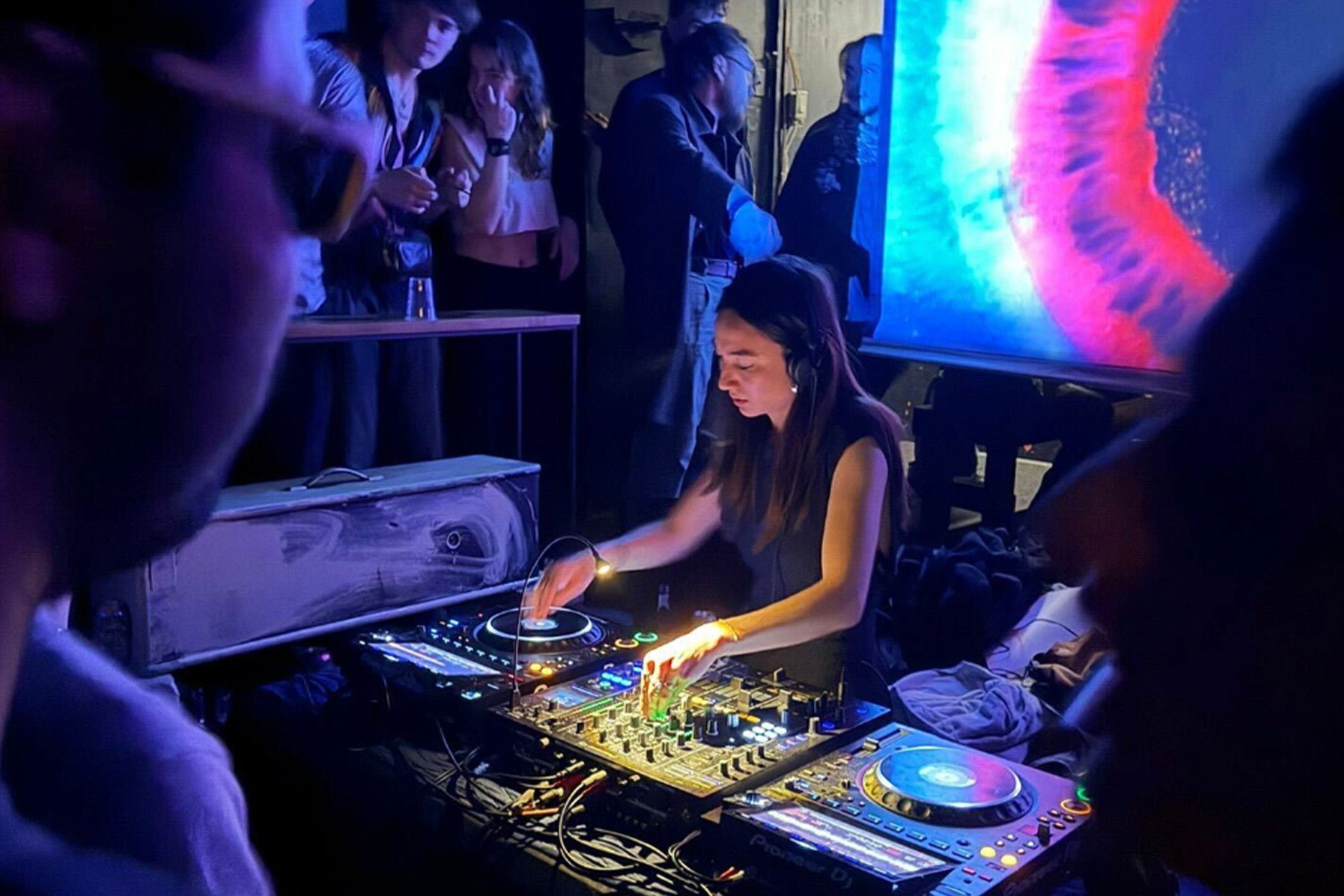
“A rave? In Toronto? Like a Toronto rave?” My swing-dancing partner’s nose crinkles in distaste as I try to explain to them why this rave was different.
I knew exactly the image those words conjured up: 20-somethings doing bottle service, garish Instagram posts from faceless ‘content creators,’ tech bros crowding college girls in King Street clubs like sharks around a minnow. There are many times I have been left with the expensive regret of a $40 cover and a $20 drink, two all-too-common elements of going out in this city. These doubts crowded my mind as I traipsed to a little club called The Jama on College and Dovercourt.
As usual, I anxiously prepared my French passport to be inspected by a suspicious bouncer, but was instead surprised to be greeted by Nina Rossing, one-third of the DJ collective Concrete Breaks playing that night. She welcomed me in and drew a small heart on my wrist. There was no bouncer, no bottle service, and no photo booth. And when I walked down the stairs, into the pounding rave room, I was plunged for four hours into an authentic musical experience that I thought I’d given up on finding in this corporatized city.
Concrete Breaks is a rave collective formed by U of T student Matt Pindera, his brother Luke, and their childhood friend Rossing. The three met in high school in Vancouver, but it was only after they had each been to Europe and discovered a love for UK rave music that they came together. They’ve hosted several successful events in Montréal and have started to venture into the Toronto rave scene.
On this night, they were hosting an art expo and rave, featuring work from student poets, painters, photographers, and sculptors. DJs took turns playing a UK bass soundtrack focused on breakbeats and atmospheric, melodic samples. With so many components in motion, it was impressive that the whole thing had been organized by three students who are barely 22.
The art expo and rave format came about from wanting to include both the people who wanted to socialize around art and those who wanted to bliss out to the music. Jo Fish, an attendee, said in an interview with The Varsity, “I do feel like that’s the special thing about events like this: nobody’s paying attention to you. You can just close your eyes and do whatever you want.”
Concrete Breaks’ driving values are authenticity and the experience of quality live music. “It’s really about putting the artists first, and giving people a real experience of something cool that they’re not going to see every night,” Matt told me. They’ve lived up to those principles: $10 tickets, events run by DJs, and providing a space for up-and-coming student artists.
And what music! The beats were a mix of ghostly melodies interrupted by hard, progressive breakdowns, which kept the audience moving. The best parts of the music were inventive and new, leaving you swaying to a woman’s voice just when you were expecting a beat to drop. A special standout was the event’s closer, SZETO, who played an inventive, pounding mix of fast-paced drum ‘n’ bass.
Concrete Breaks was inspired to move to Toronto because it was “the biggest hub for UK rave music outside of London in the ’90s and 2000s,” as Matt described it. The collective also named artists in the modern minimalist UK bass scene, like Overmono, BICEP, Cameo Blush, Bakey, Frazer Ray, Ivy Lab, and Fold, as some of their influences. Rossing, meanwhile, is trained in techno from ’90s rave groups Underworld and Leftfield.
The walls of the rave room were covered with art. There was also a backlit screen with video playing behind the DJ. Students mostly stood talking around the visual arts and poetry exhibits in throngs. I found the art surprisingly skilled and unsentimental compared to other student art events I’d seen in Toronto.
I was moved by many of the paintings, including one of Viktoriia Doroshenko’s, which featured a hellish figure, bent over and vaporizing into the surrounding air, which she titled “RAGE.” In an interview with The Varsity, Doroshenko said, “The popular raves in Toronto, they’re mostly all about music. And this one combines all kinds of people, which I really like.”
For many of the artists, the expo was their first time putting their art on display. All the artists that I spoke with were motivated by this experience to put more of their art out there.
In the face of rising social inequality and climate disasters, Concrete Breaks thinks you should still care about raving. “This general feeling of social decline has made us very pessimistic about the future,” Matt said. “But that kind of struggle with the impending sense of hate also creates new spaces for community. Because what fun is life without music or dancing?”
The collective’s next Toronto rave will be in early spring. When the doors open, I hope to see you there.
Editor’s note: On March 28, 2026, this article was updated to better reflect the identity of one of the interviewees.

No comments to display.