
sometimes i forget how to do things i say i like to do is a cross-disciplinary art exhibition exploring creative paralysis and unfinished art. Curated by Eejin Choi and Mario Zhang, the exhibition is on view until March 15 at Hart House on the second floor outside the Debates Room.
The exhibition is the latest iteration of the Hart House Student Art Committee’s ongoing Talking Walls series. Curated every semester, the exhibition series provides a space for students to share their artwork with the student body.
The opening night began with Choi and Zhang’s curators’ statement, explaining the theme and selection process of the exhibition. As Choi said, “This exhibition is our response to the fact that difficulty matters; paralysis itself deserves to be seen.”
Choi recounted that, through studio art courses and conversations with other students, she had discovered that many U of T students felt so overwhelmed by academics and career pressures that they had lost touch with making art. Instead of focusing on completed works, she wanted this exhibition to be a space for the artistic expression of that dissonance between desire and action. Creative struggle is captured by the unfinished paintings, half-rendered landscapes, photographs, and needlework.
Crossing the threshold of reflection to find home
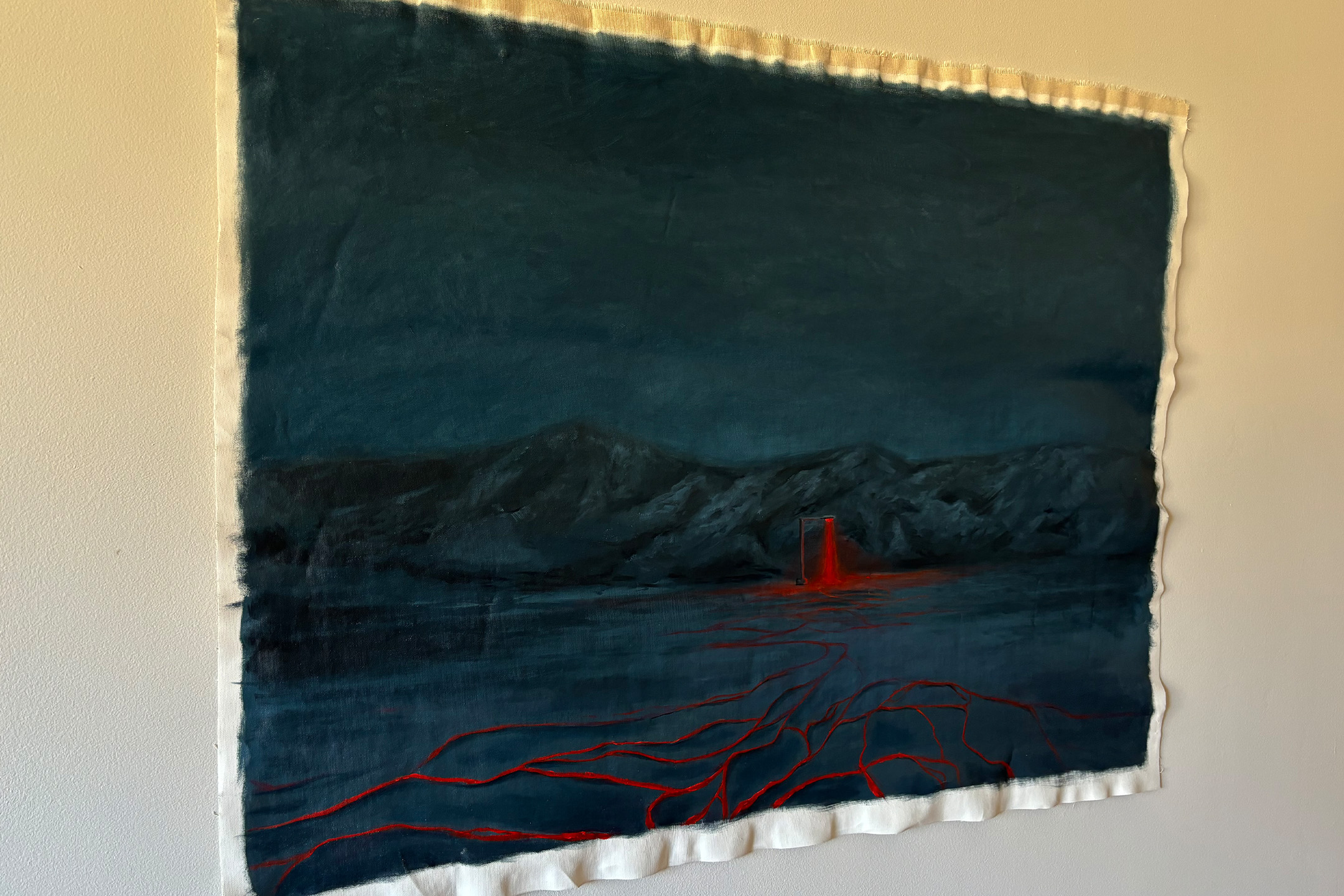
A section of the night was dedicated to three of the artists and learning more about their artworks through a Q&A session. I heard from Stacey Joseph, whose “At the Threshold of Reflection” and “Have You Found Your Way Home?” represent the struggle to complete an artwork in fear of ruining the work in progress. Rather than viewing it as a loss, the exhibited works revel in their incompletion.
I saw “At the Threshold of Reflection” in the hallway before entering the Debates Room, and it had not occurred to me, then, that it was an unfinished piece. A willow tree stands among a grove of willows, sheltering a vacant space, which was the spotlight of the piece. The line between a ‘finished’ work and an ‘unfinished’ one is fainter than I had thought.
“Have You Found Your Way Home?” struck me with its ominous red streetlight and vermillion webs against a dark backdrop that cannot be properly captured on camera. Interestingly, home is a place that you should be most familiar with and feel the safest in. Forgetting the way home is akin to forgetting how to do the things you love.
Synergy of arts and science
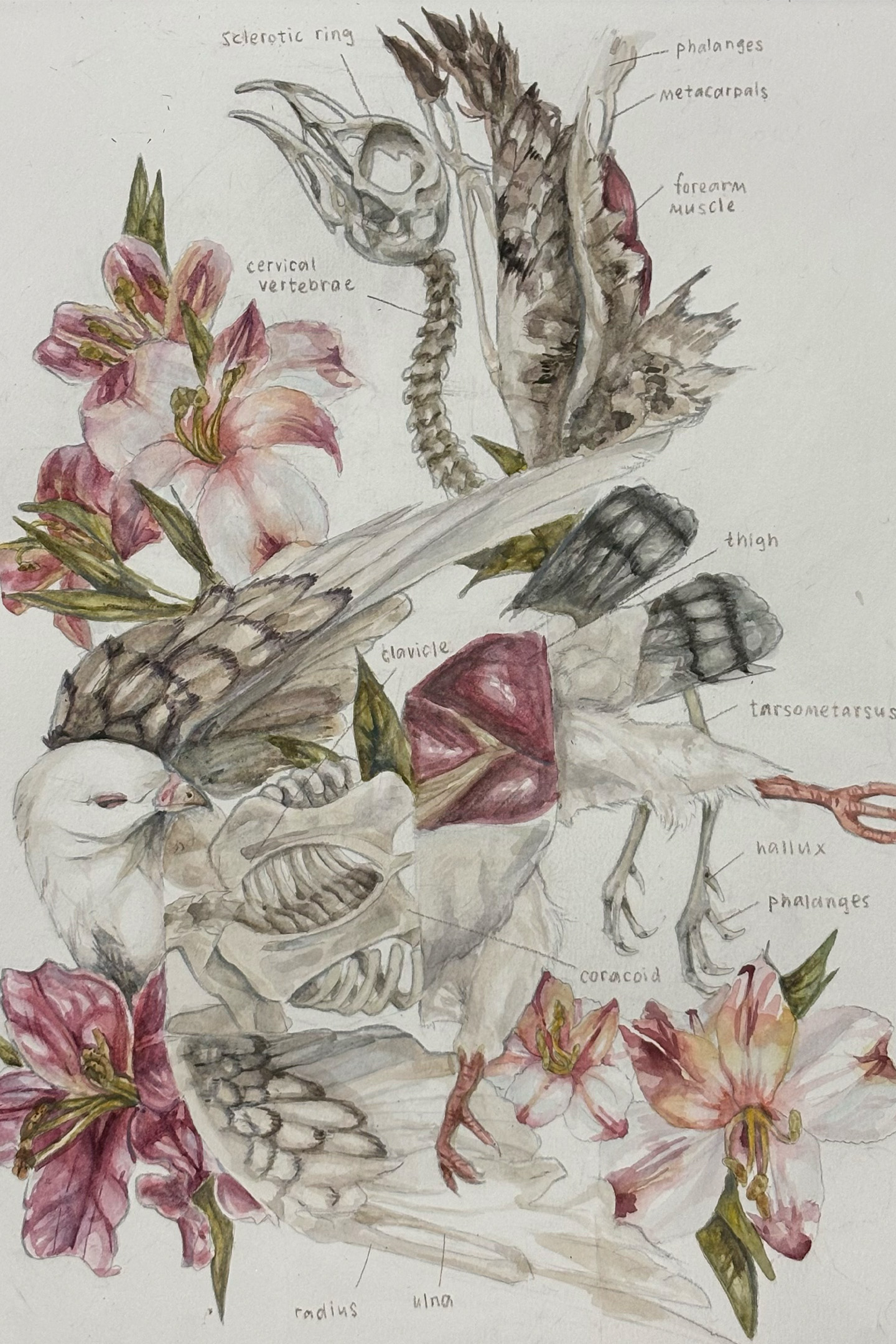
Beyond visual arts and art history students, I was told by the curators that the exhibition also received submissions from STEM students. Sze Yin Shelby Wai’s “Columba livia, Lilium ‘Stargazer’, et Alstroemeria aurea” sends a message to all the students who feel that they have discarded their artistic passions for a comparatively pragmatic program.
Using watercolour and pencil sketches, Wai depicted a half x-ray structure of bird bones and muscles, with flowers blooming neatly out of feathers. Around this structure are labels found in textbook diagrams identifying the bird’s muscles and bones, expressing her love for art through her conflicting academic duties. This work acknowledges the tension many STEM students face: wanting to create but feeling constrained by schedules, expectations, or a sense that art no longer ‘fits’ into their lives.
By inviting viewers into a space that permits experimentation and imperfection, the piece offers a moment to reconnect with the joy of making art, to recognize that their analytical and artistic selves can coexist and enrich one another. Arts and science are not opposites of each other; they are merely different languages for understanding the same world.
Returning home
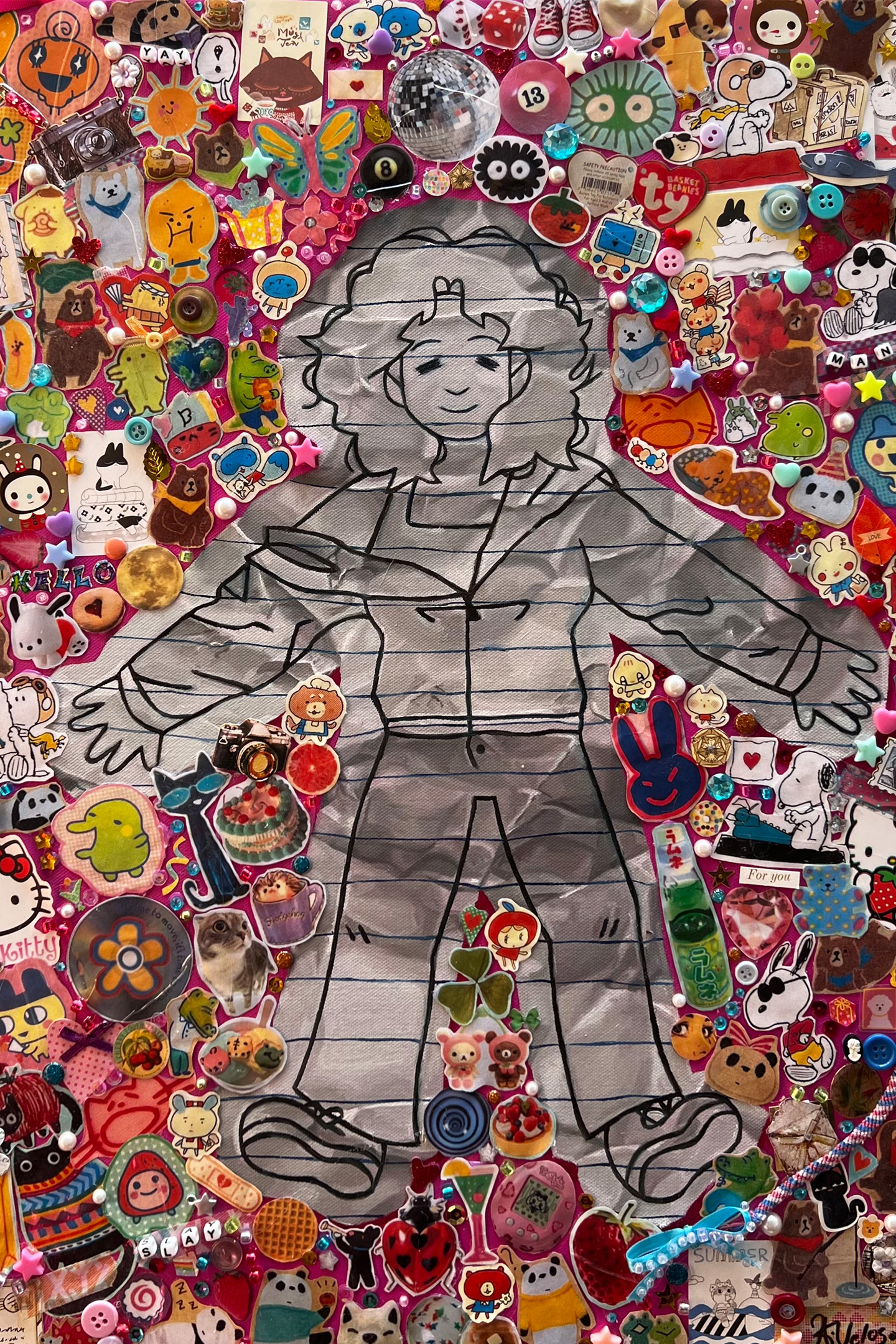
The last artist to speak at the Q&A session was Amanda Veloso, who created “You’ll Always Be an Art Kid.” This piece is a canvas covered with common childhood objects — cartoon stickers, beads, and buttons — that encircle a person drawn on lined notebook paper. It suggests the artist’s return to a stage in life that is so easily forgotten.
This piece felt like a reassuring send-off message to remind artists that they have not lost themselves in the pursuit of their studies or careers, and that they can stay true to themselves as artists despite having less time for their art.
The exhibition was a testament to creating for the love of art. To find oneself again by depicting what’s often left unseen. Most exhibitions I have seen showcase completed works with thoughtful symbolism carefully hidden within. However, Choi told The Varsity in an interview that the exhibition “was meant to be full of incompleteness and failures of intention.”
sometimes i forget how to do things i say i like to do is like a mise en abyme — an artwork within an artwork — particularly in what it stands for. The exhibition itself is meant to be incomplete yet invigorating, experimental yet expressive — just like the artworks it contains. Even the opening night of this exhibition is part of its collection; the conversations I had with the showcase artists there only enriched the experience.

No comments to display.