
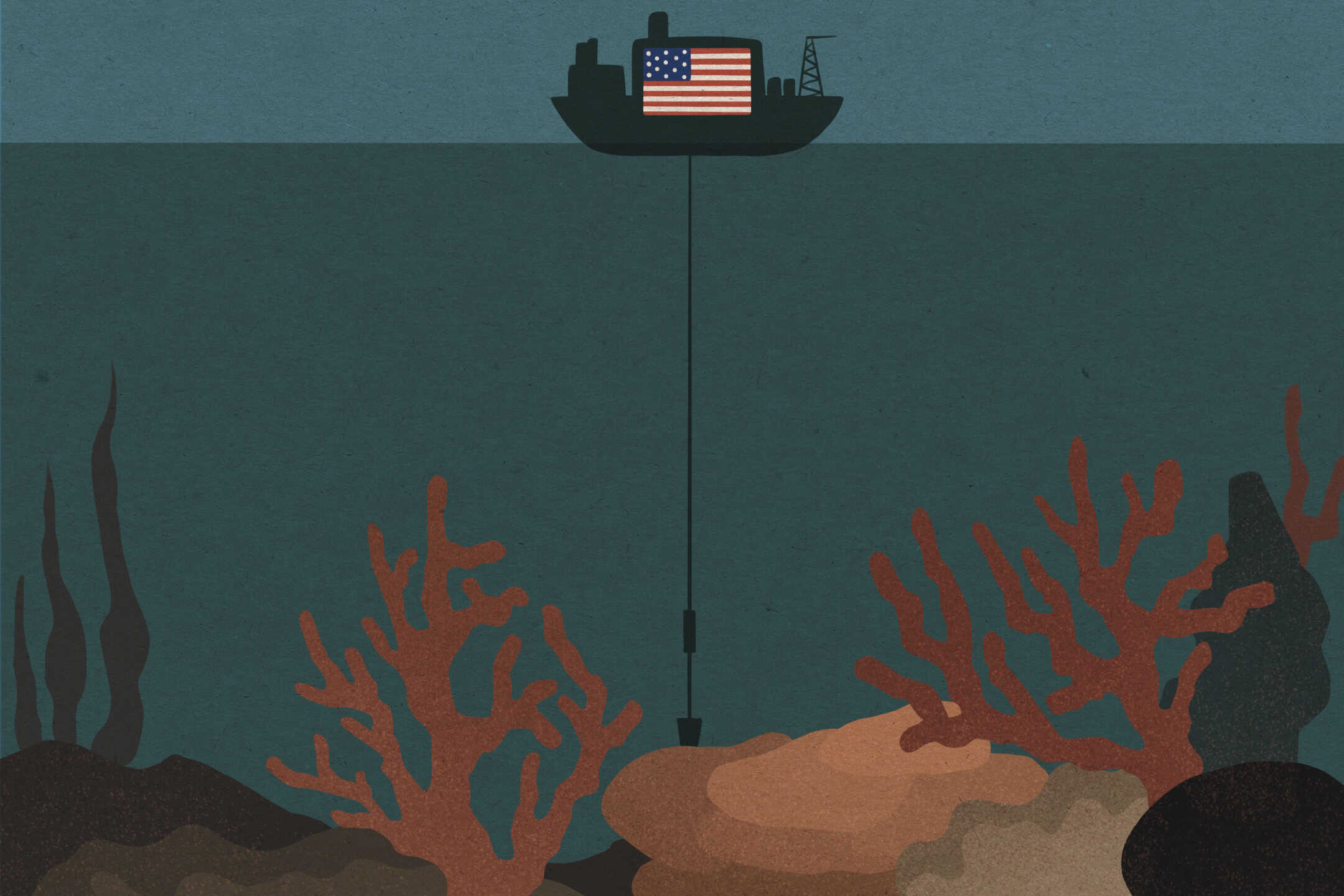
On April 24, Donald Trump signed an executive order to expedite the development of offshore mining of polymetallic nodules. The nodules in question are small, apple-sized metal balls that form on the bottom of the ocean floor, primarily containing metals like copper, cobalt, and iron. All of these metals are critical for sustainable tech.
I believe that his decision wasn’t just about metal extraction, but about power, and was a blatant disregard for international laws.
Polymetallic nodules are highly concentrated in the Clarion Clipperton Zone (CCZ), far off the west coast of Mexico in international waters. This zone, which is roughly 1.7 million square miles large, holds an estimated 18 trillion dollars worth of metals.
But here’s the catch –– these resources do not belong directly to any state, but are governed by the United Nations Convention on the Law of the Sea (UNCLOS).
Therefore, I believe that Trump’s orders sent a clear message: the US does not feel the need to follow the rules everyone else has agreed to follow. That is exactly why I find Trump’s decision so dangerous.
Some may argue that because the CCZ belongs to no nation, the US has every right to stake a claim. I disagree. The fact that this area belongs to no single entity makes managing it collectively, as outlined in the UNCLOS international law, so important. To have one country decide it can operate unilaterally places global cooperation and the ecosystems that live in the CCZ at risk.
I believe US actions will pressure those who have been working in the area for years to develop offshore mining before an official decision has been reached by the International Seabed Authority (ISA), regarding permission to use resources in international waters. The ISA was created under UNCLOS and is driven by the mission to organize and control seabed activities in international waters to ensure they benefit humankind. Therefore, nations and companies that have been –– not so –– patiently waiting for ISA guidance may now feel the need to move faster, and even violate ISA regulations in order to remain in the competition for resources.
16 government-backed corporations have already invested time researching and investing in the area. Yet not a single nodule has been harvested in international waters.
This is a result of two factors. Firstly, environmental concerns: since this is a part of the ocean that has been scarcely explored, scientists do not fully understand the consequences of disrupting it.
Secondly, legality: these companies are waiting for the ISA to finalize regulations on how seabed resources can be harvested and who profits from them. No decision has been released as to how countries can use the CCZ. Despite this, Trump has ordered US companies to proceed.
The most notable of these companies is The Metals Company (TMC), which is based in Vancouver. While Canada has taken a cautious approach to deep-sea mining, TMC has taken full advantage of Trump’s position. The company has already submitted an application to the US government under a US subsidiary of its company to mine the CCZ. In doing so, they are undermining both international laws and cooperation as well as Canada’s position in the matter.
I’m not denying the reality that we need more metals to meet global needs. Our land-based mines cannot keep up with the current demands, and the environmental toll of expanding them is significant. I can understand the appeal of deep-sea mining; it is out of sight, and some research suggests it may be less destructive than land mining. However, I do not believe this justifies rushing ahead without any safeguards.
For me, the question is not whether we mine the seabed, but how we do it and, perhaps more importantly, who decides. I believe that global cooperation, scientific oversight, and clear, adhered-to regulations must come before profit. Without these, we risk triggering irreversible ecological damage and global distrust.
I am looking at what is unfolding in the CCZ with unease. The decision made will shape not only how we treat the deep sea, but also how we share resources globally in the decades to come.
We are watching the race to the bottom, both literally and figuratively. I believe that how the US and other companies, like TMC, choose to mine the deep sea as either rogue or lawful actors will aid in setting the global tone towards the environment and international law for the next four years and beyond.
If we get this wrong, the damage will not be confined to the ocean floor, it will ripple across the world.
Elizabeth Coffin-MacDougall is a second-year student studying political science and contemporary Asian studies.
